


A video game collection can look excellent on a shelf, inside a cabinet or across a dedicated gaming-room wall. The part collectors sometimes overlook is that the same daylight that makes the artwork easy to see can gradually change the appearance of the packaging. For anyone collecting PlayStation, Xbox, Nintendo Switch, Nintendo Switch 2, retro games, complete-in-box editions or factory-sealed video games, sunlight deserves as much thought as dust, handling and storage space.
If you have searched for can sunlight fade video game cases, do PS5 game covers fade in the sun, Nintendo Switch cover art sun damage, Xbox game case UV protection or how to prevent video game box fading, the short answer is yes: printed artwork and some packaging materials can change when exposed to light. The difficult part is predicting how quickly a particular game will change. Printing processes, paper stocks, inks, coatings, case plastics, window direction and daily exposure vary.
This is an educational guide to recognising the risks, choosing safer display locations and comparing inexpensive storage with more specialised presentation options. It also covers valuable and sealed games, UV-filtering glazing, lighting, case materials and the difference between cosmetic packaging damage and damage to the game itself. No display method should be treated as a guarantee that an original paper cover will never fade.
Can sunlight really fade a video game cover?
Yes. Video game box art and printed inserts are coloured printed materials. Many dyes and pigments can undergo light-driven changes, and the paper, coatings and plastics around them can also deteriorate. A colourful PlayStation sleeve or Nintendo cover may look unchanged for a long period before the difference becomes apparent. Another print, produced using a different process, may respond more quickly. That variation is why universal claims such as “a game fades after six months” are not dependable.
The Canadian Conservation Institute explains that fading is primarily influenced by the sensitivity of the colourants and the quantity of light they receive. Its guidance concerns museum collections, not a laboratory study of every video game cover ever printed, but the underlying preservation principles apply to printed game packaging. See its guide to light, ultraviolet and infrared deterioration.
A useful starting distinction is between the original game cover, which may be collectible, and an easily replaced printed reproduction. A collector might be happy to display a duplicate insert in strong light while preserving the original in darkness. For a sealed game, removing the insert is usually not an option without changing the collectible's condition, so wall position becomes more important.
What actually fades: printed artwork, plastic cases or both?
A physical game package is not one uniform material. Modern disc games usually combine a paper cover insert, a transparent outer sleeve and a moulded plastic case. Older cartridge games may use printed cardboard boxes, labels, plastic cartridges, manuals and sometimes a clear protective sleeve. Special editions add metallic finishes, foil stamping, coatings, adhesives and unusual packaging.
Different parts can show different symptoms. A cover image may lose contrast or shift colour. White or pale plastic may yellow. A cardboard spine may discolour while the front looks unaffected because it has faced a different direction. Glossy coatings may change, and brittle packaging may become more prone to cracking or damage during handling. Light is not the only cause of these changes: heat, moisture and manufacturing chemistry can contribute.
For preservation, treat the cover, the case and any sealed wrap as separate materials rather than assuming that a hard plastic case automatically protects everything inside it. The Canadian Conservation Institute's guidance on plastics documents why polymer response to light and UV depends on the formulation.
Why is printed game cover artwork vulnerable to light?
Game covers are designed to be attractive and readable, not necessarily to survive decades of high-intensity exhibition lighting. The artwork is created from inks or toner laid onto a substrate, often with a protective finish. Some colourants are comparatively lightfast; others are not. Without the printer's formulation and controlled testing, nobody can responsibly assign one fading rate to all PS2, PS3, PS4, PS5, Xbox or Nintendo covers.
Some printed materials fade unevenly because one colour component changes faster than others. A previously vivid image may appear flatter, paler or shifted toward another colour. Those visual symptoms do not reveal exactly which chemical process occurred, and an apparently faded cover may also have been printed differently from another regional edition. Before making a condition judgement, compare like with like: the same region, release, print version and artwork.
A change that is barely visible on its own can become obvious when a sun-exposed spine is placed beside a copy that has been stored in a box. This matters to collectors assembling complete franchise sets where consistent packaging colour is part of the appeal.
Ultraviolet light and visible light are not the same thing
Ultraviolet radiation (UV) is outside the range of light visible to the human eye. It can contribute to chemical deterioration, yellowing and weakening in organic materials. Visible light allows us to appreciate the artwork but can also cause fading. Infrared radiation and absorbed sunlight can contribute to heating. The three are related in a real room, but reducing one does not remove the others.
The crucial point is that UV-filtering acrylic or glass is helpful, but it cannot make sun-exposed game artwork immune to visible-light fading. A display can have excellent UV-filtering glazing and still be positioned in a location receiving much more visible light than a nearby shaded wall. The Library of Congress explains this principle in its preservation guidance for paper.
For most home collectors, reducing direct sunlight is the first and least expensive improvement. It is often more useful than buying a specialist UV-filtering cover while leaving a collection in an aggressively sunny window.
UVA, UVB, UVC and visible light: a practical comparison
| Radiation | Approximate wavelength | What collectors should understand |
|---|---|---|
| UVC | 100–280 nm | Solar UVC is effectively prevented from reaching typical indoor collections by the atmosphere. |
| UVB | 280–315 nm | Much is reduced by the atmosphere and ordinary building glazing; transmission depends on the glass. |
| UVA | 315–400 nm | Particularly relevant when comparing window glazing, acrylic and specialist UV filters. |
| Visible light | Around 400–700 nm | Lets people see the cover artwork, but can fade sensitive printed colourants. |
| Infrared | Beyond the visible range | Can contribute to heating; temperature affects packaging preservation. |
These bands are approximate scientific conventions, not a product-specific UV test report. A game display advertised as UV-resistant should be evaluated against the actual wavelengths and measured transmission of its glazing, not just a single headline percentage.
Does sunlight through a window still damage games?
It can. Ordinary windows reduce some ultraviolet wavelengths, but they still transmit visible daylight and may transmit part of the UVA range. A sunlit window can illuminate a room far more intensely than typical interior lighting. The resulting exposure may affect printed covers even if the game never goes outdoors.
A wall can also experience changing sunlight throughout the day and year. A shelf that never receives direct morning sun might be struck by late-afternoon sun in summer. Another shelf might catch glare reflected from a neighbouring building, a mirror or a glossy floor. It is better to observe the actual location than to assume an indoor room is safe because it has double glazing or blinds.
For collectors choosing between two walls, the one without regular direct sunlight is generally the better starting point. That recommendation does not depend on the gaming platform or the market value of the collection.
Why direct sunlight is different from a bright but shaded room
Direct sun places a high amount of energy onto a small area. That affects the cover's light exposure and can raise the temperature of the case and nearby surfaces. Indirect daylight is often a less demanding environment, but it is not synonymous with complete darkness. A very bright room over many years can still deliver meaningful cumulative exposure.
The distinction is relevant for both everyday collections and valuable originals. A 12-game Xbox wall display on a shaded interior wall is a different preservation situation from the same display placed in front of a west-facing window. The number of cases and quality of the surrounding frame do not cancel out the location.
If daylight is important to the room's appearance, consider adjustable blinds, a UV-filtering window treatment or a shaded alcove, while recognising that UV-filtering window film alone does not stop all visible-light exposure.
Light intensity and exposure time work together
Collectors often ask how long a PS5, Switch or Xbox game can be left in sunlight before it fades. There is no universal safe number of days because the printing materials and light conditions differ. A useful conservation concept is cumulative exposure: a cover under moderate light for a long time may receive a significant total dose even if it never sees a dramatic afternoon sunbeam.
That is why display lighting should be assessed as both intensity and duration. Turning off decorative lights when nobody is in the room, closing blinds during the brightest hours and rotating valuable original packaging are straightforward ways to reduce exposure. One beautiful photograph of a collection in a sunlit room does not tell you what the packaging will experience over several years.
For a rare original, preservation may matter more than uninterrupted display. For an ordinary game with strong sentimental value, you may choose a reasonable balance between enjoying it and limiting exposure.
What are lux and lux-hours?
Lux measures visible illuminance, or how much light falls on a surface. Lux-hours are a way of expressing exposure across time. For example, a cover receiving an illustrative 100 lux for 10 hours has accumulated 1,000 lux-hours during that period. The calculation is useful for understanding why both brightness and duration matter, not for predicting exactly when a Nintendo cover will fade.
Museum guidance sometimes discusses low exhibition light levels for sensitive paper objects. Those values are museum risk-management benchmarks, not universally validated limits for game packaging. The dyes, inks and coatings used on a specific print would have to be tested before anyone could calculate its expected fading rate with confidence.
A light meter can help compare wall positions. An ordinary phone app can be a rough orientation tool but should not be relied on to certify conservation lighting or UV filtration.
Can game covers fade in a room with no direct sunlight?
Yes, although a shaded room often poses a lower light-exposure risk than a sunlit window. Artificial lamps produce visible light; some sources also emit UV. A collection that is illuminated brightly for many hours every day can accumulate exposure even without sunlight.
This does not mean gaming rooms should be kept permanently dark. It means that the collector should choose lighting intentionally. Moderate brightness, well-directed light and turning fixtures off outside viewing hours are more useful than assuming every LED, RGB strip or enclosed display is automatically harmless.
For expensive original paper packaging, a collector can also choose to display a reproduction cover while storing the genuine insert separately. That approach preserves the visual appearance of the room without continuously exposing the original.
Is the colour of a plastic game case protection against fading?
A blue PlayStation case, green Xbox case or red Nintendo Switch case might change the appearance of light passing through the plastic, but its colour is not a verified UV-filtration specification. Without product-specific optical test data, do not assume blue cases offer superior protection or that green cases stop damaging wavelengths.
Some case plastics and outer sleeves may attenuate particular wavelengths. The actual result depends on polymer type, pigments, additives, thickness and the design of the package. A clear sleeve may look completely transparent while still reducing some UV, and a coloured plastic may let important wavelengths through.
If strong UV reduction matters, look for documented UV-filtering materials outside the original case rather than relying on its colour or console branding.
Do PS5 and PS4 game case sleeves protect the cover artwork?
PS5 and PS4 cases commonly use a clear plastic outer sleeve that holds a printed cover insert. The sleeve offers useful physical containment, helping protect the paper from casual handling and dust. It should not be treated as a guaranteed conservation-grade light filter.
A collector displaying a PS5 game with striking cover artwork, such as a favourite action or role-playing title, can reduce fading risk by choosing an interior wall and a display method that does not expose the case to direct sunlight. If using an additional acrylic front, check the documented UV performance of that separate material.
Owners of limited-edition variants should be careful about swapping covers or cases unnecessarily. For a collector, originality and completeness can matter as much as outward appearance.
Can PS3 game cases fade or yellow over time?
Yes, printed PS3 cover art may change with cumulative light exposure, while plastic cases can undergo their own ageing processes. Not every change is caused by sunlight. Manufacturing differences, older packaging materials, previous storage conditions and environmental factors can all affect appearance.
This is especially relevant for collections assembled from multiple second-hand sources. A PS3 spine that looks paler than the others may have spent years facing a bright shelf. Another may have been printed differently from the start. Compare regional releases and the specific version before drawing conclusions about condition.
For a cohesive PS3 display, organise covers by series or colour if desired, but prioritise safe wall positioning over trying to keep a perfect colour gradient in a sunny location.
What about original PlayStation and PS2 game packaging?
Original PlayStation games often use jewel-style cases or region-specific packaging, while PS2 releases commonly use DVD-style cases. Both can contain original printed paper and plastic components that are now decades old. Their existing condition and manufacturing materials may differ from modern packaging.
A collector displaying original PlayStation, PS1 or PS2 games should look carefully at the front insert, spine, manual and any cardboard outer packaging. Small changes in colour, surface gloss or paper shape may already be present. Avoid direct sun and do not assume that a rigid case means the printed contents are safe from cumulative exposure.
Replacement cases can improve the appearance of everyday collections, but preserve original components separately when originality or resale value matters.
Can Xbox game cases and green spines fade?
Xbox generations have used different case formats and branding treatments. Printed sleeves on Original Xbox, Xbox 360, Xbox One and Xbox Series X physical games remain susceptible to the same broad issues as other printed materials: light exposure, handling and environmental change. The green plastic and green graphic branding should not be confused with measured UV filtration.
A display built around Halo, Gears of War, Forza or Fable may include several generations with different outer dimensions, cover designs and spine colours. That can make one sun-faded package stand out more clearly beside the others. For long-term presentation, choose a low-sunlight wall and measure the individual cases before selecting a fitted holder.
For mixed-generation Xbox shelves, remember that an attractive arrangement still needs accessible storage and consistent support. Avoid forcing slightly different cases into rigid openings just to keep the line visually even.
Does Nintendo Switch red-spine artwork fade?
Nintendo Switch packaging is visually distinctive because many releases use a narrow case with a prominent red spine or red branding area. That makes a wall of Switch cases striking, but also makes colour inconsistency easy to notice if some covers have experienced more light than others.
The red appearance does not establish a particular fading rate. Printing materials can differ between publishers and editions, and a case displayed in a window for years may not behave like one kept on an interior shelf. As with PlayStation and Xbox games, the sensible approach is to keep valuable original paper inserts away from direct sunlight and use a display position suited to the collection.
The same logic applies to Nintendo Switch 2 packaging. Check actual case dimensions and artwork construction before assuming that a Switch 2 item is identical to a first-generation Switch release.
Pokémon, Zelda and Mario Switch collections: why matching covers matter
Collectors sometimes organise Nintendo displays by franchise rather than by console generation. A Pokémon display might combine Sword, Shield, Scarlet, Violet and related releases. A Zelda arrangement may showcase Breath of the Wild, Tears of the Kingdom and earlier games, while Mario collections can mix platformers, kart racing and role-playing titles.
In these themed displays, the artwork is often central to the appeal. The relative condition of the covers can therefore matter visually even if the underlying game cartridges work perfectly. If the goal is a colourful wall, choose a location that limits light damage before worrying about the choice of frame colour or layout.
There is no basis for claiming that a Zelda cover is inherently more UV sensitive than a Pokémon cover just because the palette differs. The relevant comparison is the actual printed material and exposure history.
Can sunlight yellow a clear case or transparent protector?
Some plastics can yellow or change in appearance under light and environmental exposure, though the rate and type of change depend on the exact polymer, additives and conditions. A yellowed protector can make otherwise intact cover art look discoloured. Replacing that protector might improve the presentation, but it will not restore an original cover if its inks have already faded.
In a collectible sealed game, the shrink-wrap or outer packaging itself may be part of what a buyer values. Do not remove original packaging simply because it has aged. For a valuable or professionally graded game, preservation of the original state is generally a separate issue from making it look cosmetically new.
The Canadian Conservation Institute's plastics guidance is a useful reminder that different formulations age differently and no single percentage or timeline applies to all clear plastic game protectors.
Fading versus yellowing versus sun bleaching
These terms are often used interchangeably in listings, but they describe different visible effects. Fading is a reduction or change in colour intensity. Yellowing describes a yellow or brown colour shift, often noticeable in some plastics or paper. Sun bleaching is a casual term that can describe noticeable loss of colour caused by strong light exposure.
The distinctions matter when inspecting second-hand collectibles. If a cover's red spine has become pale, that may be fading. If an originally clear protector has turned amber while the printed cover beneath remains vivid, the plastic may be the main affected component. If a cardboard box has yellowed at one edge, light could be one contributor among several.
Describe what is visible rather than assigning a precise chemical cause without evidence.
Why one edge of a game case can fade more than another
Light exposure is directional. A game standing upright on a shelf might show its spine to the room while the front is largely hidden. A framed game might have its entire front exposed while the rear is shaded. If a display sits near a window, the top row might catch an afternoon beam while lower games remain in shade.
This can create uneven differences across a collection. A photo of the entire wall may conceal small changes, but a side-by-side comparison can reveal that the same console branding has become inconsistent between cases.
When planning a display, look at seasonal light patterns and window reflections. If only one corner gets regular direct sun, moving the entire display a short distance may make a bigger preservation difference than adding a decorative shade to one game.
What does a sun-faded game case look like?
Possible clues include a paler spine, reduced contrast in dark artwork, uneven colour, a front that differs from an unexposed back, or a printed insert that no longer resembles a known reference image. However, printing revisions and regional variants can produce legitimate differences, so visual comparison is imperfect.
For a rare game, document its current condition with photographs made under consistent, neutral lighting. Photograph front, back, spine and any seals or labels. If you later notice a change, you will have a stronger reference than memory alone. Avoid running an intentional sunlight test on a valuable original just to see how quickly the artwork reacts.
If a seller describes “sun fading,” ask for photographs in even light and compare the actual condition rather than relying on the description's wording.
Does sunlight damage the game disc or cartridge itself?
The risks to cover artwork and the playable media are different. Printed covers may fade while a disc remains playable. Conversely, a disc can become unreadable because of scratching, manufacturing deterioration or poor storage even when its case looks excellent. A cartridge has electronic and plastic components with their own environmental vulnerabilities.
This guide focuses on packaging appearance and display conditions. For discs and electronic media, use preservation guidance for the particular format and avoid elevated temperatures, moisture and poor handling. Never assume that a game is functionally sound solely because the outside of its case is in near-perfect condition.
It is sensible to preserve the cover, manual, disc or cartridge, and external case as separate parts of a complete collectible.
Are factory-sealed games more vulnerable to sun damage?
A factory-sealed game is not necessarily more chemically sensitive than an opened copy of the same release, but the consequences of damage can be different. The original wrap, seals, stickers and packaging condition may affect a sealed game's desirability, and opening it to replace a faded insert would fundamentally change its status.
A sun-faded sealed game may therefore be a more consequential preservation problem than a faded everyday playing copy. For valuable sealed games, a shaded location, suitable protective materials and limited handling are sensible priorities. Some collectors prefer dark storage and use photographs or reproductions for display.
Do not interpret a sealed wrapper as a UV barrier unless its specific optical performance has been documented. Thin, clear packaging can provide physical separation without providing broad UV filtration.
Complete-in-box games, manuals and collectible value
“Complete in box,” commonly shortened to CIB, generally refers to a game that retains the case or box and expected accompanying materials, though the exact meaning varies by platform and seller. For retro games, manuals, inserts, registration cards and outer boxes may be important to completeness.
When evaluating the effect of sunlight, inspect all original paper components, not merely the front cover. A game might have a bright front but a pale spine, or an intact outer case but a faded manual cover. For collecting and potential resale, condition should be described accurately and in context.
Never assume that an expensive franchise title automatically has a high resale value. Research the specific edition, region, completeness, actual sold comparables and condition rather than relying on asking prices.
Can sunlight lower the value of a rare video game?
It may, because condition can influence demand and realised sale prices. Collectors of sealed, graded and complete-in-box games may pay close attention to colour, labels, corner wear, wraps and other packaging details. However, there is no reliable universal percentage by which a faded cover reduces value.
A rare original with modest fading may remain highly desirable. An ordinary mass-produced game may attract little premium even in perfect packaging. Compare recent completed transactions for matching editions and similar condition rather than subtracting an arbitrary figure from a price guide. The more unusual the game, the harder it may be to find close comparables.
The practical lesson is to preserve condition where reasonably possible, not to treat every minor packaging change as a catastrophic financial loss.
Are graded video game holders sunlight-proof?
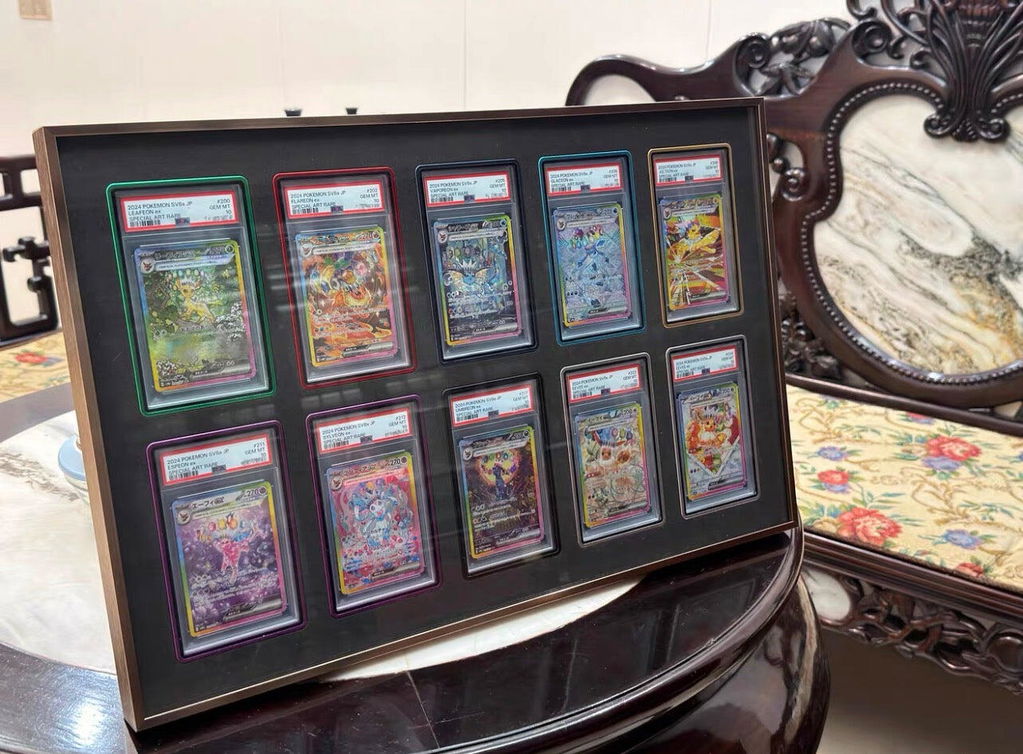
No holder should be assumed sunlight-proof without a relevant material specification. Grading cases provide an enclosure and may reduce handling, but the presence of clear hard plastic does not establish that all damaging wavelengths are filtered. Different grading services, case generations and materials may differ.
A graded game can still sit in a bright environment with visible-light exposure and heat. For valuable graded copies, position the display away from direct sunlight and refer to the grading company for any stated material properties. An external wall frame can provide another glazing layer, but its performance must also be evaluated independently.
Protecting the surrounding holder matters too. Scratches, heat and ageing can reduce the viewing quality even if the original artwork inside remains unchanged.
Do protective sleeves or clear plastic cases block UV?
Some products are specifically marketed with UV filtering, while others are simply protective against handling and dust. A soft sleeve, PET protector or rigid clear case should not be assumed to offer any particular UV percentage without documentation for that exact product.
When comparing options, check the material, the manufacturer's measured wavelength coverage and the intended use. A protector described as “archival” may address chemical stability, surface protection or storage suitability rather than broad UV filtration. The word alone does not establish a numeric blocking level.
For ordinary game shelves, adding clear protectors can help reduce handling wear. For sunlight control, changing the location or reducing window exposure may be more important than the protector.
Is UV-protective acrylic worth it for game displays?
UV-filtering acrylic can reduce the ultraviolet radiation that reaches the cover, depending on its documented performance. It can be particularly attractive when creating a display with a large clear front or when a collector wants specialist framing materials. That does not mean the highest-priced material is required for every game room.
A quality clear acrylic may already have useful UV resistance, while specialist conservation or museum-grade products can extend protection across a broader UV range and may improve reflections. Compare the actual sheet's data rather than interpreting brand names or marketing language as interchangeable specifications.
Even with excellent UV glazing, keep the display out of direct sunlight wherever practical. That advice follows directly from the fact that visible light can also fade printed covers.
How does ordinary acrylic compare with conservation or museum acrylic?
| Material option | Main advantage | Important limitation | When it may suit a collection |
|---|---|---|---|
| Open shelf or stand | Low cost and easy access | No external front glazing | Everyday games on a shaded wall |
| Ordinary clear case protector | Reduces handling and dust | UV filtering may be undocumented | Collections that are frequently rearranged |
| Quality clear acrylic front | Lightweight, clear presentation | Actual UV performance depends on product | Purpose-built indoor wall displays |
| Specialist UV-filtering acrylic | Documented reduction over specified wavelengths | Does not remove visible-light fading | Valuable collections where extra filtering is preferred |
| Anti-reflective museum-grade acrylic | Can combine UV filtering and reduced reflections | Higher cost; coating care and geometry matter | Collectors prioritising optical presentation |
| Conservation-grade glass | Specialist glazing performance available | Generally heavier and more breakable | Some smaller framed displays |
No one row is the “best” solution for every collector. Compare the planned wall position, package dimensions, budget, value of the original artwork and how frequently the games will be accessed.
How much UV does 99% UV-filtering acrylic actually block?
The figure depends on the test method and wavelength range. “99% UV blocking” does not necessarily mean an exactly 99% reduction at every individual wavelength between 100 and 400 nm. A manufacturer may report performance over a defined band or at particular wavelengths. In practice, the spectral transmission graph is more informative than the headline alone.
For a collector, the correct questions are: which product was tested, at what thickness, across which wavelengths, and is the result for the actual glazing supplied? A claim about UV resistance in the sheet itself is also not identical to UV filtering for the game cover behind it.
Avoid adding two protective layers' advertised percentages together or claiming complete protection from combining a plastic game case with a UV-filtering outer panel.
Can anti-reflective acrylic improve a video game display?
Yes, when reflections are a practical problem. Game cases already have glossy plastic sleeves, so they can reflect windows and ceiling lights. An external frame front adds another reflective surface. A suitable anti-reflective glazing product may make the artwork easier to see from different angles, but not all “anti-glare” products work in the same way.
Matte diffusing sheets can soften detail when the game sits behind a significant air gap. High-quality coated anti-reflective acrylic is intended to reduce surface reflections while maintaining clarity, but its performance depends on the product and viewing arrangement. This is a presentation consideration, separate from the UV-filtering specification.
For collectors who care about the artwork itself, reduced glare can be appealing even when the game has no unusual market value.
Acrylic versus glass for preserving game cover art
Both can be suitable depending on the grade. Acrylic is generally lighter and more impact-resistant than ordinary glass, which can make large multi-game frames easier to handle. Ordinary glass usually offers a harder, more scratch-resistant surface. Both categories include specialty UV-filtering and anti-reflective products.
For sun fading, compare the actual glazing products rather than assuming all glass is better than plastic or vice versa. Physical strength, sheet rigidity and safe wall mounting also matter. Large panels need suitable support, and fragile or costly collections deserve a stable mounting arrangement.
If you are considering a framed display, the Canadian Conservation Institute's glazing guidance is a useful technical starting point.
Do you need a frame to protect games from sunlight?
No. The simplest effective step is often moving the collection to a safer wall or using window coverings. A bookcase on an interior wall can be a suitable display solution for everyday physical games. Individual stands and floating shelves can also work, provided the objects are stable and the lighting is sensible.
A wall frame becomes relevant when the collector wants a defined arrangement, a front glazing layer or a particular visual presentation. It does not eliminate the need for safe placement. A poorly located high-end frame may be less appropriate for preservation than an inexpensive shaded cabinet.
That is the distinction between presentation quality, physical protection and environmental control. They overlap, but they are not the same feature.
Budget ways to keep a game collection out of direct sun
Practical lower-cost methods include moving shelves away from windows, hanging curtains or blinds, choosing a shaded wall, placing valuable originals in closed storage, and keeping decorative lights off when they are not needed. A collector with a large inexpensive library may prefer accessible shelves rather than enclosed individual frames.
Protective sleeves and cases can reduce incidental scuffs and handling wear. Closed cabinets may help against dust and casual contact, but glass-fronted cabinets still need thought about direct sun, UV filtration and ventilation. Even a simple curtain over an open shelf when not in use can reduce cumulative exposure.
The aim is not to force every game into expensive packaging. It is to match the preservation effort to the collection's value, condition, frequency of use and the owner's priorities.
Middle-range display options: cabinets, acrylic stands and shelving
A dedicated cabinet can provide orderly presentation and some protection from handling. Adjustable shelves allow different console generations to be stored together, including tall PS2 cases, narrower Nintendo Switch packaging and special editions. Stands can display favourite covers face-out without committing to a permanent frame.
The trade-off is that open stands expose more of the cover to room lighting, while closed cabinets can make access less immediate and may create reflections. If a cabinet receives afternoon sun, the glass door does not automatically make it a safe preservation environment. Compare the actual location and glazing specification.
A collector can also mix methods, keeping a small face-out feature display while storing the rest of the collection spine-out or in boxes.
When might a specialist aluminium wall display make sense?
A dedicated wall display can be useful when the owner wants multiple game covers arranged as a coherent feature rather than stored primarily for access. Aluminium framing offers a defined perimeter and a range of finishes; a correctly designed support system can keep cases positioned consistently. Acrylic glazing can add a front barrier and, depending on the material, documented UV filtering.
Those benefits are about finish, organisation and presentation. They should not be oversold as making a game immune to ageing. A carefully chosen wall position and suitable lighting remain necessary, and any fitted openings must suit the actual case dimensions and thickness.
The extra cost becomes more reasonable when these presentation features matter to the owner. For someone who simply wants to find a game quickly, a standard shelf may be the more sensible purchase.
Is it safer to display copies and store original covers?
For some valuable paper-based collectibles, yes. The U.S. National Archives explicitly describes displaying reproductions while preserving originals in storage as a useful strategy for light-sensitive documents. The same idea can be adapted to replaceable game case inserts, where a collector is comfortable making a clearly identified reproduction for private display.
However, this is not equally practical for every collectible. An unopened game cannot have its original cover removed without opening the package, and a collector may want the authentic item visible rather than a substitute. It is a personal choice balancing authenticity, presentation and preservation.
If using copies, avoid misrepresenting them as original or factory-issued when buying, selling or documenting a collection.
How to protect a sealed game without opening it
First, preserve its current condition. Do not remove original shrink-wrap, stickers or seals merely to add an internal UV filter or change the case. Select a safe storage or display location, minimise handling, and use a correctly sized external protective case only if it does not stress the original package.
For a valuable sealed copy, keep it away from direct sunlight, heaters and damp locations. Document the factory seals and packaging condition with careful photographs. If considering professional grading, understand the service's holder and documentation before assuming a particular protective benefit.
If the collectible has high monetary or historical significance, consulting an experienced conservator or specialist may be preferable to experimenting with adhesives, cleaners or improvised enclosures.
Should very valuable video games always stay in dark storage?
Dark storage minimises light exposure, but collecting is also about enjoyment. There is no one answer that fits every owner or game. A rare sealed title worth a substantial sum might justify keeping the original safely stored and showing a reproduction or photograph. A collector with a moderately valuable favourite may prefer a shaded, carefully lit display.
The useful questions are how sensitive the materials may be, how often the owner wants to see the original, and whether the chosen display conditions are reasonable. There is no scientific rule that the retail price of the game determines a particular UV percentage or mandatory frame type.
Conservation advice emphasises managing exposure rather than pretending that objects can be displayed indefinitely without consequences.
Why gaming-room LED strips are not automatically harmless
LED lighting is popular because it can be controlled and is available in many colours. Many suitable LEDs emit relatively little UV compared with some older light sources, but they still provide visible light. A brightly illuminated game cover can accumulate exposure even if UV output is low.
Keep LED strips away from heat-sensitive packaging and avoid directly illuminating rare originals at high intensity for long periods. If using RGB lighting behind a display, aim for ambience and indirect lighting rather than a bright source pressed against the artwork. Switch decorative fixtures off when the room is empty.
For more detailed lighting advice, the planned companion article on gaming-room LEDs and game preservation will examine placement, colour, light levels and common assumptions.
How to assess a gaming-room wall before displaying valuable games
Watch the wall over several different times of day. Note when direct light crosses it, whether reflected glare appears, and whether the wall sits beside a heat source or humid area. The way sunlight enters a room changes seasonally, so a single observation may not be enough for a permanent collection.
Think about accessibility and safety too. A large framed collection needs appropriate wall fixings; a shelf should not be overloaded; and a cabinet needs sufficient stability. Direct sunlight is not the only threat to a valuable collectible. Falls, damp, overheating and poor handling can damage a game much more suddenly than gradual fading.
A good display plan balances all of those practical risks.
A practical risk comparison for display locations
| Location | Light considerations | Other concerns | General approach |
|---|---|---|---|
| Directly opposite a sunny window | May receive intense direct or reflected daylight | Heating and glare | Avoid for valuable original packaging |
| Shaded interior wall | Usually lower daylight exposure | Check seasonal changes | Good starting point for everyday displays |
| Enclosed glass cabinet near a window | Glass does not eliminate all relevant light | Heat, ventilation, reflections | Relocate or control window light |
| Open shelf under room LEDs | Visible-light exposure depends on brightness and duration | Handling and dust | Use moderate lighting and switch off when unused |
| Closed internal cupboard | Low light during storage | Humidity, temperature, access | Often suitable for valuable originals |
| Hallway with intermittent lighting | Limited exposure if lights are off much of the time | Foot traffic, accidental contact | Assess mounting and handling risk |
The table is qualitative. It is not a laboratory ranking and does not substitute for measuring the actual environment.
Can window film protect video game collections?
Some window films are designed to reduce UV transmission, glare or solar heat. They can be useful as one component of room management. However, the amount filtered depends on the specific product, glazing system and installation. A UV-filtering film does not necessarily prevent strong visible daylight from entering the room.
For valuable printed covers, a better strategy may combine window coverings, a less-exposed display wall and appropriate glazing over the collection. If you are comparing films, ask for technical data over the relevant wavelength range rather than assuming that a marketed “UV protection” percentage covers all damaging light.
Window film can be an upgrade to a room, not a substitute for assessing the location of the games.
Are ordinary curtains or blinds enough?
They can make a substantial difference by blocking or reducing the light that enters during bright periods. Even inexpensive blinds can help reduce exposure when nobody is actively looking at the collection. Blackout materials may reduce light more strongly, while translucent curtains can soften glare without eliminating it.
A collector who wants to preserve original cover art can use window coverings during the strongest sun hours and enjoy the display under softer lighting later. That may be a better use of money than trying to compensate for an unsuitable wall with increasingly expensive protectors.
The specific effectiveness depends on the material, fit and how consistently it is used.
How heat and humidity interact with light damage
Light is only one part of the preservation environment. Higher temperatures can accelerate some chemical deterioration processes, and moisture can lead to deformation, mould or damage to paper and packaging. Direct sun may heat a case even behind window glass, while a damp wall or poorly ventilated cupboard can create a different set of risks.
Keep collections away from heaters, hot electronics, leaking windows and areas with persistent damp. Avoid unnecessary fluctuations in temperature and humidity. These measures are especially relevant for cardboard game boxes, manuals, paper inserts and adhesives. Plastic cases and seal materials can also change with ageing.
Do not assume that an enclosure is climate-controlled simply because it is closed or has an acrylic front.
What about steelbook video game cases?
Steelbooks and other metal game cases can feature printed coatings, finishes and paper components. Their metal structure changes some physical risks, but it does not automatically protect every decorative surface from light. The artwork may be printed on a coating, and the case may include other collectible packaging.
Collectible steelbooks also raise different handling concerns, including dents, scratches and surface marks. If displaying them, use support that does not abrade the finish and avoid excessive heat or direct sunlight. A metal exterior should not be interpreted as proof that the image is immune to photochemical change.
Check the exact dimensions before combining steelbooks with standard plastic cases in tightly fitted frames.
Cardboard game boxes, special editions and retro cartridges
Older Nintendo, Sega and other cartridge-based games often use cardboard boxes and paper labels. These materials may be more visibly affected by edge wear, moisture, crushing and colour changes than robust modern plastic cases. A collector of complete boxed NES, SNES, N64 or Game Boy titles may therefore prioritise dark storage and careful handling.
Original box surfaces should not be cleaned aggressively or treated with improvised solvents to remove yellowing. For rare packaging, such treatments can remove print or worsen the condition. An external protector can reduce physical handling, but light exposure remains a separate issue.
Retro cartridges also have labels that can be exposed to light even when no cardboard box is present. The same general preservation principles apply.
How to document and monitor possible fading
Take baseline photographs of important games in neutral, consistent lighting. Record the date, case condition, seals, labels, spine, edges and any existing discolouration. Avoid using intense direct sunlight for photography; diffuse light can show condition more accurately and comfortably.
Check the display periodically, especially when seasons change or if a new window treatment or lighting setup is installed. A simple record can help you notice gradual changes and distinguish new damage from pre-existing marks. It also helps when describing a collection for resale or insurance.
A photographic comparison is not a precise scientific fading test, but it is more reliable than trying to remember exactly how a cover looked several years ago.
Can a faded video game cover be restored?
Fading caused by chemical change is generally not reversed by storing the item in darkness. Darkness prevents further light exposure, but it does not recreate the original dyes or pigments. Some cosmetic differences can arise from a dirty outer case or yellowed protector, which may be replaceable without touching the original insert. That is not the same as restoring faded artwork.
For ordinary personal-use games, a reproduction cover may provide a visually attractive alternative if clearly treated as a reproduction. For valuable originals, avoid recolouring, bleaching, aggressive cleaning or untested restoration methods. Such interventions can alter condition and authenticity.
The Library of Congress emphasises the permanence of light damage to many paper materials in its public preservation guidance.
Does displaying a game increase its value?
A well-presented collection may be more enjoyable and visually appealing, but framing does not inherently increase the collectible's underlying market value. Buyers typically evaluate the actual edition, authenticity, rarity, packaging, completeness, condition and market demand. A frame is a separate object with its own cost and presentation benefits.
The preservation objective is to avoid unnecessary condition loss while enjoying the collection. A frame or cabinet may help with dust and handling, but improper mounting or poor light placement could still harm an original.
Collectors should distinguish display expenditure from game valuation rather than treating one as a guaranteed investment in the other.
Three preservation scenarios for different collections
A colourful Nintendo Switch shelf in a bright living room
A collector owns a mix of Mario, Zelda, Pokémon and Metroid titles displayed face-out. The bright artwork looks excellent but the shelf receives direct afternoon light. A practical first change is relocating the shelf or using blinds at the relevant time. Protective cases may help with handling; a low-sunlight location addresses the more important display-light problem. The owner could reserve face-out positions for a rotating selection rather than leaving the entire library exposed continuously.
A framed PlayStation franchise collection
A collector wants a neatly arranged wall of PS3, PS4 and PS5 favourites. A precision-fitted wall display could provide consistent spacing and a polished presentation, but the different case formats still require measurement. Choosing an interior wall and suitable acrylic glazing helps manage presentation and light exposure. The owner should also plan safe mounting, a sensible viewing angle and accessible ways to inspect the cases without damaging them.
A rare sealed Original Xbox or PS2 title
A collector owns a sealed game that may be worth considerably more than a typical used copy. Original shrink-wrap, labels and printing are important. Rather than exposing the original permanently near a window, the collector may choose stable dark storage and display an image or reproduction, or place the original in a shaded, documented and periodically inspected display. There is no universal need for one particular frame, but unnecessary sun exposure is difficult to justify.
Common mistakes when protecting games from sunlight
- Assuming that any clear plastic automatically blocks all UV.
- Treating a blue PlayStation case, green Xbox case or red Nintendo case as a tested UV filter.
- Confusing a UV-resistant material with a UV-filtering material.
- Believing that 99% UV blocking eliminates visible-light fading.
- Leaving a collection in direct afternoon sun because it is indoors.
- Assuming that LED or RGB lights produce no relevant visible-light exposure.
- Ignoring heat and humidity while focusing only on UV ratings.
- Displaying sealed or graded games without considering the original packaging and outer holder.
- Using force to fit different case sizes into one rigid display opening.
- Replacing original collectible components without documenting them.
- Trying to reverse faded artwork with aggressive cleaning or chemical treatments.
- Spending heavily on glazing while overlooking a simple, safer wall location.
A practical checklist before displaying video game cover art
- Identify which games contain valuable original paper, cardboard, stickers or factory seals.
- Observe the intended display wall during bright periods and across seasonal changes where practical.
- Keep valuable original cover art out of regular direct sunlight.
- Control window light with positioning, curtains or blinds before relying on protective glazing alone.
- Compare acrylic or glass using the exact product's documented wavelength specifications.
- Keep lighting moderate and turn decorative lights off when not needed.
- Allow for actual case dimensions, thickness, special editions and protective sleeves.
- Use stable mounting, suitable support and safe access.
- Record existing condition and photograph valuable packaging before display.
- Inspect periodically for changes in light, heat, moisture, plastics or paper.
- Consider reproductions or rotating displays when preserving an unusually valuable original is the priority.
- Remember that a good display should be enjoyable as well as thoughtfully managed.
Frequently asked questions about sun fading and video game cases
Can direct sunlight fade PS5 game covers?
Yes, printed PS5 cover artwork can be affected by light exposure. The amount and speed of fading depend on the printing materials and the light dose. Keeping the case out of direct sun is sensible even if it is behind a transparent outer sleeve.
Can sunlight fade PS4 and PS3 game cases?
It can affect their printed inserts and, depending on the formulation, case plastics. Not every discolouration is caused by sun, so compare the actual print and condition before assigning a cause.
Do Nintendo Switch game spines fade in sunlight?
Their printed artwork can change with exposure like other printed packaging. The distinctive red spine can make differences especially obvious across a collection, but no universal fading timeline applies to every release.
Will Nintendo Switch 2 cases need UV protection?
Switch 2 packaging should be treated as collectible printed material. The protective approach depends on the specific case and location; do not assume the packaging itself provides conservation-grade UV filtering.
Do green Xbox game cases block UV light?
Colour alone does not establish a UV-filtration rating. Look for product-specific testing rather than assuming that green case plastic protects the printed sleeve from long-term exposure.
Does sunlight through glass still fade game covers?
It can. Window glass reduces some UV wavelengths but transmits visible daylight and may transmit part of UVA. Strong indoor sunlight remains an avoidable risk for original printed game packaging.
Can game cases fade without direct sunlight?
Yes. Visible indoor lighting and indirect daylight can contribute to cumulative exposure, depending on brightness and duration. A shaded location and sensible lighting still help reduce risk.
Do LED lights fade video game artwork?
They may contribute to visible-light fading with enough exposure, even if UV output is low. Use moderate lighting rather than leaving bright decorative lights on continuously.
Are RGB gaming lights safer than ordinary white LEDs?
There is no universal guarantee based on the colour setting. The actual light spectrum, intensity, direction and duration matter. Avoid strong continuous illumination of valuable original packaging.
Is it okay to display sealed video games in a window?
For valuable originals, regular direct sunlight is not a good preservation choice. Sealed packaging may be part of the collectible and cannot be replaced without changing its status.
Does a sealed wrapper block UV light?
Do not assume so. A transparent wrapper may physically enclose the game without having any documented broad UV-filtering capability.
Are graded video games protected from sunlight?
Grading enclosures are not automatically sunlight-proof. Check documented holder specifications and manage the display environment independently.
Does a UV-resistant acrylic frame stop cover fading?
It may reduce UV reaching the cover, but it does not remove visible-light exposure, heat or every source of deterioration. Placement and lighting remain important.
What does 99% UV protection mean for my games?
It should refer to a defined test method and wavelength range. It is not a promise that the artwork will never fade or that exactly 99% of every UV wavelength is filtered.
Is UV-filtering glass better than acrylic?
Neither is universally better. Both have general-purpose and specialist grades. Compare their documented UV performance, weight, scratch behaviour, impact characteristics and suitability for the intended frame size.
Can thicker acrylic prevent more fading?
Thickness may affect transmission for a given material, but choosing the appropriate formulation and limiting light exposure are more useful than assuming thicker general acrylic is equivalent to specialist UV-filtering glazing.
Are protective PET or plastic game cases UV proof?
Not automatically. Some products are designed for UV filtering, while others focus on handling protection. Review the manufacturer data for the exact product.
Can a game cover fade while the disc still works?
Yes. Artwork and playable media have different failure mechanisms. A faded cover does not establish whether the game disc or cartridge is functional.
Can I reverse sun fading by storing the cover in darkness?
No. Dark storage can reduce further light exposure but does not chemically reconstruct lost colour in the original printing.
Should I replace faded game cover art?
For an ordinary personal-use copy, a clearly identified reproduction may be acceptable. For collectible originals, preserve and document the genuine artwork rather than discarding or misrepresenting it.
Do rare PlayStation and Xbox games always require museum-grade frames?
No. A well-positioned indoor shelf or cabinet may be appropriate for many collections. Specialist glazing is an optional material choice, not a substitute for a sensible environment.
Can direct sunlight yellow a clear game protector?
Some plastics can yellow or change under light and environmental exposure, depending on their formulation. Yellowing of an outer protector is different from fading of the artwork behind it.
How do I tell a faded cover from a printing variant?
Compare identical releases, regions and print versions using clear images and known examples. Uneven fading can be a clue, but a different cover colour does not always mean damage.
What is the safest wall for displaying valuable game cases?
A stable interior wall away from regular direct sunlight, concentrated heat and damp is a sensible starting point. Then consider lighting, glazing, mounting and how frequently the games will be handled.
Does putting games in a cabinet eliminate fading?
No. A glass-front cabinet can still receive daylight, and artificial lighting also adds exposure. Cabinets can improve physical organisation and reduce handling, but the lighting and material choices still matter.
Is it better to display reproductions of rare game covers?
It can be a useful preservation choice where displaying the original is not essential. Keep original components safely and clearly distinguish reproductions from authentic items.
Does framing increase the resale value of a game?
Not necessarily. Frames and collectibles are priced separately. A display may help presentation but cannot guarantee an increase in the underlying game's value.
Should old PS1, PS2, NES and Game Boy boxes be treated differently?
Their paper, cardboard, labels and packaging types differ, so evaluate the actual materials and condition. Many older boxes warrant particular care against light, moisture and handling, but no universal fading rate applies to them all.
Further technical reading and original sources
The following conservation resources explain the broader science and practice behind the recommendations in this article. They are not product tests of every PlayStation, Xbox or Nintendo case.
- Canadian Conservation Institute: Light, Ultraviolet and Infrared
- Canadian Conservation Institute: Caring for Paper Objects
- Canadian Conservation Institute: Caring for Plastics and Rubbers
- Canadian Conservation Institute: Ultraviolet Filters
- Library of Congress: Preservation FAQ for Paper
- Library of Congress: Limiting Light Damage
- U.S. National Archives: Displaying Family Papers and Photographs
- National Archives of Australia: Preserving Paper Documents and Artworks
Final thoughts: enjoying game artwork while preserving it
Video game cover art is part of what makes physical collecting rewarding. A complete Zelda collection, a row of PS3 classics or a carefully chosen group of Xbox favourites can look excellent on a wall. But the original covers are printed objects with a history and condition of their own, and neither a hard plastic case nor a high-priced frame removes every preservation risk.
The best starting point is straightforward: keep valuable original artwork out of direct sunlight, choose reasonable lighting, understand what UV-filtering materials actually do, and avoid unnecessary heat and moisture. From there, select shelves, cabinets, stands or framed displays according to the collection, room and budget. A premium presentation is a choice about appearance and construction, not a licence to disregard the environment.
Continue Exploring
For more on physical video game collecting, case compatibility and preservation, explore these related guides.
Video Game Collection Guides
- How to Display Video Game Cases: The Complete Guide - display methods, layouts, platform collections and choosing between affordable and specialist options.
- How to Display Nintendo Switch Games - Switch and Switch 2 collections, shelves, wall displays, case formats and themed arrangements.
- How to Display PlayStation Game Cases - PS5, PS4, PS3, PS2 and original PlayStation collections.
- How to Display Xbox Game Cases - Original Xbox, Xbox 360, Xbox One and Series X display ideas.
- Video Game Case Sizes Explained - case dimensions, thickness and display compatibility.
- How to Display Rare, Sealed and Valuable Video Games - condition, valuation and protecting collectible packaging.
UV Protection and Preservation Guides
- UV Protection for Video Game Cases: Complete Guide - the technical cornerstone covering glazing, UVA, visible light and long-term preservation.
- Do Plastic Game Cases Block UV? - PlayStation, Xbox and Nintendo packaging materials (upcoming).
- Acrylic versus Glass for Video Game Displays - weight, optics, UV filtering and reflections (upcoming).
- Gaming-Room LEDs and Cover Preservation - LED, RGB lighting and exposure management (upcoming).
- Preserving Sealed and Retro Game Packaging - cardboard, shrink-wrap, manuals and condition (upcoming).
Explore Display Collections
- SLABBED™ Studio - premium aluminium collector displays, including purpose-built video game case layouts.

0 comments