


A physical Xbox collection can tell the story of four different console generations: the original Xbox, Xbox 360, Xbox One and Xbox Series X. Some owners keep hundreds of games spine-out on shelves, while others want to display a small selection of favourite covers, limited editions or complete franchises. There is no single correct method. The right approach depends on whether the priority is everyday access, preservation, wall space or visual presentation.
If you are searching for Xbox game display ideas, Xbox 360 game case frames, Original Xbox game collection displays, Xbox One wall displays or ways to frame Xbox Series X game cases, this guide compares practical options across different budgets. It explains how to organise games by generation and franchise, why case dimensions matter, how to research collectible values and how to manage light exposure without treating any display as a guarantee against ageing.
The aim is education rather than a recommendation to buy a particular frame. Bookshelves, inexpensive clear stands and DIY projects work well for many collectors. Purpose-built aluminium frames offer a different presentation for collectors who want a permanent wall arrangement. Understanding what each approach does well makes it easier to spend money on the things that matter to your collection.
Start with the purpose of your Xbox collection
Before choosing shelving or a wall frame, decide which games are everyday entertainment and which are display pieces. A copy of Halo that you replay every month needs convenient access; a sealed special edition that you rarely handle may benefit from a more deliberate display or archival storage plan. The same collector can need both.
Think of a collection in three groups: frequently played games, long-term library titles and a curated display selection. This prevents the common mistake of arranging every game around appearance and then finding that the most-used discs are inconvenient to reach. The arrangement can also evolve as you complete franchises or move between Xbox generations.
Best ways to display Xbox game cases: an overview
The most common Xbox game storage and display methods are ordinary bookcases, media shelves, floating picture ledges, tabletop easels, glass-door cabinets, shadow boxes and purpose-cut wall frames. Each solves a different problem. Shelves maximise capacity and access; stands show one or two covers; cabinets reduce casual handling; and frames create a deliberate arrangement of selected games.
There is no universal best Xbox display. Someone with 250 Xbox 360 games may want dense media shelving, while someone with four signed or sentimental titles may prefer a small feature wall. Compare the cost per game, the amount of cover artwork visible, ease of rearranging and the difficulty of cleaning before choosing a solution.
| Display approach | Approximate cost position | Strength | Main compromise |
|---|---|---|---|
| Existing bookcase | Lowest if already owned | High capacity, easy access | Mostly shows spines rather than cover art |
| Basic media shelf | Budget to mid-range | Efficient storage by generation | Limited front-cover visibility |
| Clear tabletop easels | Budget | Displays favourite covers independently | Uses shelf or desk space |
| Floating picture ledges | Budget to mid-range | Easy seasonal or franchise changes | Cases can fall if ledge depth is inadequate |
| Glass-door display cabinet | Mid-range to premium | Organised library with less handling | Furniture footprint and reflections |
| DIY shadow box | Variable | Custom layouts and mixed memorabilia | Labour, depth and reversibility |
| Purpose-built aluminium frame | Premium | Consistent grid and deliberate wall presentation | Higher cost and fixed case-format requirements |
Budget Xbox display ideas using furniture you already own
The most economical starting point is to make existing furniture work better. Sort games by console, remove unrelated clutter and keep the cases upright with adequate bookends or dividers. Even one clean row of original Xbox games alongside a second row of Xbox 360 titles can feel intentional without buying a new display product.
If you want the cover art visible, place one representative case facing forward at the end of each shelf. This works especially well with a series such as Halo or Gears of War. Keep heavier collector editions on stable lower shelving rather than on a narrow floating ledge. Avoid stacking large numbers of cases in ways that make the lower packaging difficult to retrieve.
Clear acrylic stands and tabletop game-case easels
Small transparent stands are an inexpensive way to turn an individual game into a display item. They work for a favourite Xbox 360 cover, a special-edition Xbox One title or an original Xbox game with artwork you particularly like. The stand needs enough depth to support the actual case without placing pressure on its disc hub or hinge.
The main benefit is flexibility. You can rotate the displayed game weekly, photograph an acquisition or arrange three related entries without fixing anything to the wall. The disadvantage is that every stand requires surface space and dusting. A clear stand also does not itself offer a defined UV-filtering specification unless the manufacturer supplies one.
Floating shelves and picture ledges for Xbox collections
A picture ledge can display several Xbox game covers in a row, using the depth of the ledge and a small front lip to support each case. It is an effective middle ground between simple storage and framed artwork. The covers are easily swapped, which suits collectors who change their display when a new game arrives.
Check ledge width, depth, load rating and secure mounting. DVD-size original Xbox and Xbox 360 cases are taller than later Blu-ray-style Xbox One cases, so mixing generations may produce a deliberately varied top line. That can be attractive, but it is different from a uniform grid. Keep displayed cases away from the edge and avoid wall positions receiving prolonged direct sunlight.
Media storage cabinets and glass-door display furniture
Glass-door cabinets are practical when you want the whole collection visible while limiting casual touching and dust accumulation. Adjustable shelves are particularly useful for larger Xbox libraries, including thick collector boxes and ordinary game cases. A cabinet may also have room for controllers, console boxes or memorabilia beside the games.
The trade-offs are furniture space, weight and possible reflections. Standard furniture glass should not be assumed to provide a particular percentage of UV filtration. Glass doors also do not create a sealed or climate-controlled storage environment. Choose a stable location away from heat and direct sunlight, and check how easy the shelves are to reach when you want to play a game.
DIY Xbox game display frames and shadow boxes
For a small feature display, a conventional picture frame or shadow box can be adapted to hold one or several Xbox cases. The main design questions are internal depth, how the cases will be supported, whether they touch the glazing and how they can be removed without damaging the sleeves. A removable support system is preferable to putting adhesive directly on collectible packaging.
DIY approaches can be satisfying, especially for a personal Halo trilogy or a display of three original Xbox favourites. However, bulky case dimensions often exceed the depth of ordinary picture frames. Check the frame rebate and internal clearance first. Never assume a flat photo frame can safely enclose a full plastic game case.
Purpose-built aluminium Xbox case display frames
A purpose-built wall display uses a consistent layout with openings or supports designed around the intended case format. With a restrained metal border and a coordinated background, the box art rather than the hardware becomes the visual focus. These displays cost more than ordinary shelving because they are presentation pieces rather than high-density storage.
For collectors comparing premium options, examine the frame material, glazing, method of securing the cases, ease of changing the arrangement, mounting hardware and evidence of compatible dimensions. A premium finish is worthwhile only if the finished display also holds cases safely and allows sensible maintenance. Different Xbox generations can require different fits even when the artwork looks similar.
Comparing Xbox display costs fairly
A cost comparison should start with the purpose rather than a single retail figure. A bookshelf may hold 80 games while an aluminium wall frame might showcase 8. Dividing the price by the number of games without considering cover visibility compares two different jobs. If storage capacity is the primary goal, ordinary shelves are often better value.
For a curated display, calculate what the installation actually provides: the amount of usable wall space, number of full front covers visible, mounting method, build quality and whether the display can be updated. The cheapest choice for one favourite game may be a tabletop stand; the cleanest way to present a matching franchise set could be a framed grid. Neither is automatically superior for everyone.
Xbox game case dimensions: why case format matters
The original Xbox and Xbox 360 predominantly used taller DVD-style plastic cases, while Xbox One and Xbox Series X physical releases generally use shorter Blu-ray-style cases. The external dimensions, hinge positions, thickness and shape can differ between manufacturers, regions, replacement cases and special editions.
For a fitted frame, a few millimetres matter. A foam opening that is snug for an Xbox One case should not be assumed to hold an original Xbox game securely, and the opposite is also true. Measure the exact copies you intend to display rather than relying solely on the generation printed on the cover. Packaging exceptions are common enough to deserve attention.
| Xbox generation | Typical physical packaging | Display consideration |
|---|---|---|
| Original Xbox | Taller DVD-style case | Check full height, width and depth |
| Xbox 360 | Predominantly DVD-style case | Check unusual multi-disc or special editions |
| Xbox One | Usually shorter Blu-ray-style case | Check replacement and alternate case variants |
| Xbox Series X | Usually shorter Blu-ray-style case | Check generation-specific print and case variants |
| Collector editions / SteelBooks | Variable metal or custom packaging | Measure each edition individually |
Original Xbox case size and packaging details
The first Xbox generation is recognisable for its green DVD-style cases and large front covers. Many releases use the familiar DVD-case footprint, but collecting across different markets and later replacement cases can introduce variation. Special packaging, double-disc editions, promotional versions and collectible boxes should be treated separately.
If your goal is a uniform original Xbox wall display, measure several genuine cases from your own collection, including the oldest and newest copies. Check the hinge, thickness and whether the case closes evenly. Also distinguish a valuable original case from an aftermarket replacement when documenting your collection or researching resale value.
Xbox 360 game cases and unusual editions
Xbox 360 collections make visually cohesive displays because many releases share familiar green packaging, the white-and-green or later cover treatments and a fairly standard tall case format. A dedicated Xbox 360 display can highlight that generation without mixing incompatible packaging.
Some Xbox 360 releases came in multi-disc cases, special sleeves, steel packaging or edition-specific boxes. Those may be thicker than ordinary single-disc cases. A collector displaying Mass Effect, Lost Odyssey or other multi-disc titles should check the exact physical edition instead of assuming all Xbox 360 cases occupy the same depth.
Xbox One and Xbox Series X game case formats
Later Xbox generations generally moved toward the shorter Blu-ray-size case, making front covers appear a little more compact than original Xbox and Xbox 360 packaging. Xbox One and Series X releases can look similar on a shelf, but printed branding, disc compatibility and individual case design are separate issues.
Some modern games also have cross-generation branding, special covers or packaging changes during reprints. A case with both Xbox One and Xbox Series X branding does not necessarily have the same collectible identity as a separately released Series X edition. In a display, decide whether the theme is the game artwork, the generation label or a particular print run.
How to measure an Xbox case before ordering a frame
Place the empty or closed case on a flat surface and measure its external height and width in millimetres. Measure its maximum thickness at the spine and hinge, not just the centre. Check any bulging sleeve, raised latch or unusual corners. For sealed games, measure over the factory wrapping without disturbing it.
Compare the measurements against the product's stated case compatibility and any provided tolerances. If the case is in a protective acrylic box, measure the outer box as a separate item: it is substantially larger than the underlying game case. When in doubt, send measurements of the exact edition rather than relying on a generic Xbox label.
- Measure height, width and maximum depth, including protruding hinges.
- Check whether the game is an ordinary case, SteelBook, protective box or collector edition.
- Compare multiple copies if combining different release years or manufacturers.
- Do not force valuable packaging into a tight opening.
- Keep regional variants and reprinted cases clearly identified.
Can original Xbox, Xbox 360, Xbox One and Series X cases share one frame?
They can share a visual collection, but they do not necessarily share one physical cutout. Mixed-generation displays need supports designed for each format or a more flexible mounting method. Uniform openings for tall DVD-style Xbox 360 cases will leave extra space around shorter Xbox One cases, while openings cut for the shorter format will not accommodate taller cases.
If you want one large Xbox history wall, decide whether to use separate frames by console generation or a single deliberately mixed arrangement. Separate generation groups often create a cleaner visual result and simplify case replacement as your collection changes.
Organising original Xbox games for a retro gaming room
Original Xbox collections have a distinct visual character: green cases, early-2000s artwork and franchises that shaped the platform. A chronological row can show how the console library developed, while a genre display separates shooters, racing games, RPGs and action titles.
Consider choosing a few visually recognisable covers for the front-facing portion of a larger library. Halo: Combat Evolved, Fable, Project Gotham Racing, Jet Set Radio Future and Star Wars: Knights of the Old Republic are historically meaningful examples for many collectors. Whether a title is personally important matters more than an arbitrary ranking of expensive games.
Xbox 360 game display ideas for seventh-generation collectors
An Xbox 360 display can celebrate one of the most recognisable physical-game libraries. A collector might build rows around Halo 3, Gears of War, Forza Motorsport, Mass Effect and Fable II; another might prefer Xbox Live Arcade history, multi-platform classics or favourite couch co-op titles.
Organising by release year highlights how the era changed from early HD games to later releases. Organising by franchise tends to look neater because related covers often share design cues. If you own Platinum Hits editions alongside original covers, choose whether to mix them deliberately or preserve a consistent spine and banner style.
Xbox One game collection displays
Xbox One collections often span an unusually long period of physical releases, updates and cross-generation publishing. Displays can reflect a theme such as Xbox Game Studios releases, a favourite racing series, or simply the games that define the owner's decade of gaming.
If you are displaying a collection that includes Xbox One X enhanced branding, Xbox One / Series X dual-platform covers or day-one editions, document those differences rather than treating every cover with the same game title as identical. The packaging can matter to collectors even when the playable game content overlaps.
Xbox Series X game collection display ideas
A modern Xbox Series X display might include a small group of favourite current-generation physical editions, but it is worth recognising that not every modern Xbox release has a physical copy, and physical packaging practices continue to evolve. A digital-only title cannot be displayed as an authentic retail game case unless you intentionally create an unofficial decorative reproduction.
You can also present Series X titles alongside older Xbox releases they reference, creating a history of one franchise. Label the collection around the actual physical items you own rather than implying every Series X game has an equivalent box on a shop shelf.
Series S and digital Xbox libraries: what can you display?
Xbox Series S is a digital-only console and does not use physical game discs. A collector who mainly plays on Series S may still own physical games from earlier consoles or enjoy collecting boxed editions as objects, but their presence on a wall does not make them playable on the Series S.
For a digital-first library, cover-art prints, framed licensed posters or a curated shelf of memorabilia can be a more honest display choice than buying empty game cases presented as complete physical editions. Keep unofficial custom packaging clearly distinct from actual retail releases when cataloguing a collection.
Halo: building an Xbox franchise display
Halo is a natural candidate for an Xbox franchise wall because its history crosses original Xbox, Xbox 360, Xbox One and modern Xbox platforms. A display can centre on Halo: Combat Evolved, Halo 2, Halo 3, Halo 3: ODST, Halo: Reach and Halo 4, or focus on a smaller selection with the strongest personal meaning.
Decide whether the theme is original releases or the story of how the franchise has been repackaged and remastered. Halo: The Master Chief Collection is a different physical product from the original releases it compiles. A display that mixes those editions can be worthwhile, but it tells a different story from a first-print chronology.
Gears of War: arranging a coherent Xbox series wall
The early Gears of War covers are particularly suited to a cohesive Xbox 360 display because of their shared tone and recognisable series branding. Some collectors prefer a three-game trilogy layout; others include Judgment and later Xbox One releases.
Keep in mind that franchise history and platform exclusivity are not frozen in time. Games and remasters can reach other systems later. A historically Xbox-associated series remains a compelling theme, but avoid labelling every entry as permanently Xbox-exclusive. For collecting, the platform-specific boxed edition is what matters.
Forza Motorsport and Forza Horizon collection themes
Racing games lend themselves to generation-by-generation arrangements because cover art often features distinctive cars and changes in visual style. One wall could trace Forza Motorsport across Xbox generations; another could focus on Forza Horizon and its festival settings.
The original physical release is not always the only version available, and digital availability can be affected by licensing and delisting. Those issues may make a physical copy appealing for collection history, but they do not guarantee that the disc alone provides every feature or downloadable component. Research the exact edition and whether relevant content remains accessible.
Fable: presenting an original Xbox and Xbox 360 RPG collection
Fable, Fable II and Fable III form a compact narrative for collectors interested in the evolution of Xbox role-playing games. A three-case arrangement is practical, and related packaging such as Lost Chapters or special editions can create additional variations.
Avoid treating every item with the Fable name as an equivalent original release. The original Xbox title, its expanded editions, Xbox 360 sequels and later franchise projects belong to different moments. Record each item's platform, region and edition when comparing values or selecting a frame format.
Other series: Project Gotham Racing, Crackdown and exclusive-era Xbox games
Project Gotham Racing, Crackdown and other strongly Xbox-associated franchises offer alternatives to the most common Halo and Gears displays. Some collectors organise around original hardware launch windows, developer histories or the games that influenced multiplayer culture.
The term Xbox exclusive can mean a console exclusive at launch, a historical exclusive, or a game later released elsewhere. Use precise language in collection labels. A display themed around "Original Xbox favourites" is less likely to become inaccurate than a blanket claim that every featured series exists only on Xbox.
Third-party classics that belong in an Xbox collection
Not every important Xbox title is exclusive to the platform. Multi-platform games such as The Elder Scrolls, BioShock, Borderlands, Call of Duty, Grand Theft Auto and many sports titles can be central to someone's physical Xbox library. A meaningful display is about the edition you own, not solely exclusivity.
If you collect by franchise, mixed series can show how cover art changed between original Xbox, Xbox 360 and Xbox One. If you collect by platform identity, choose Xbox-specific box art and case generations even when the same game was available elsewhere. Both approaches are valid and appeal to different collectors.
Complete series displays versus a selection of favourite games
A complete-series wall has an appealing sense of order, but "complete" needs a definition. Does it include all mainline entries, spin-offs, remasters, limited editions, regional variants and duplicate releases? The answer changes the number of cases you need.
For many collectors, a deliberate group of four or six personal favourites will look stronger than a larger display crowded with editions they do not care about. The most expensive copy is not necessarily the one most worth seeing every day.
Organising Xbox games by console generation
Separate original Xbox, Xbox 360, Xbox One and Xbox Series X games when you want the physical history of the platform to be immediately legible. Each generation has distinctive packaging; putting like formats together usually produces straighter rows and more consistent spacing.
If shelf capacity matters most, order by console and alphabetise within each section. If a wall feature matters most, choose a handful of games from each generation and label the sections clearly. A four-generation layout can be effective even when not every generation has the same number of memorable releases.
Organising Xbox games by genre, chronology or cover-art colour
Genre displays group horror, shooters, racing, RPGs and platformers to make browsing easy. Chronological displays document the development of a console or studio. Colour-based arrangements can look striking in photographs, but they often make a library harder to search.
The most useful compromise may be to keep the main library in a practical order and use a separate front-facing display for colour or cover-art themes. For valuable games, record their original case and region somewhere in your catalogue before rearranging them visually.
Xbox wall display layouts: one, two, four, six, nine, twelve or sixteen games
Different grid sizes serve different collecting goals. A one-game display suits a favourite or rare edition. Two or three cases work for a small franchise group. Four or six can communicate a generation or shared theme. Nine, twelve and sixteen produce more of a feature wall and demand careful planning of surrounding furniture.
Larger formats have practical consequences: greater overall width and height, additional weight, a wider acrylic panel and more demanding packing and wall support. A twelve-case Xbox wall display is not merely a small picture frame with more openings. Always measure the proposed wall space and confirm external frame dimensions before deciding on capacity.
| Capacity | Example collector theme | Practical consideration |
|---|---|---|
| 1 game | Favourite Halo or original Xbox title | Best for a small feature location |
| 2–3 games | Fable trio or selected Gears entries | Simple series storytelling |
| 4–6 games | Original Halo era or favourite racing games | Balance of artwork and wall area |
| 8–9 games | One console generation highlights | Requires a clearly planned arrangement |
| 10–12 games | Series history or multi-franchise collection | A larger dedicated wall section |
| 15–16 games | Statement collection display | Check overall size, mounting and access |
Horizontal versus vertical Xbox wall arrangements
A long horizontal row suits a wall above a desk or low cabinet, but it may stretch beyond the most comfortable viewing zone. A square or near-square grid can fill a narrower wall more evenly. Tall layouts can work beside furniture but should not force frequently handled games to sit beyond comfortable reach.
Before choosing, mark a full-size outline of the proposed display on the wall using removable painter's tape. Step back to judge the proportions. Leave enough clearance around the frame for fitting, removal and cleaning rather than measuring only the panel itself.
Choosing frame colours and backgrounds for Xbox cover artwork
Black backgrounds create strong contrast with the green Xbox case branding and colourful front covers. White backgrounds feel lighter, especially for a collection displayed against darker walls. Silver, black, gold and other metal frame finishes change the mood without changing the underlying collection.
Choose by the artwork and room rather than assuming Xbox games must always be paired with green. A restrained finish often lets the covers remain the focal point. With valuable sealed games, also confirm that the chosen support material and case-contact arrangement are appropriate; visual compatibility is not the same as material suitability.
Displaying Xbox SteelBooks, special editions and oversized packaging
SteelBooks and premium editions should not automatically be treated like ordinary plastic Xbox cases. Metal packaging can differ in thickness, corner radius and surface vulnerability. Slipcovers, embossed outer sleeves, cardboard boxes and collector editions can be larger again.
For a valuable SteelBook, avoid abrasive contact points and measure the actual item. Consider a display with adjustable support or a protective enclosure that has been sized for that edition. Do not squeeze a thick special edition into a cutout designed for a standard Xbox One case simply because the printed game title matches.
Display the original case, a protective box or a reproduction?
Collectors have different priorities. Displaying the original retail case gives the most authentic visual result, but it exposes the original materials to more handling and light. A protective box can reduce some contact but increases dimensions and reflections. A replica case or printed cover can be useful as a display stand-in while the original remains stored.
The distinction matters for rare games. A reproduction may be a sensible personal decoration, but it should never be mistaken for an original retail release when buying, selling or valuing a collectible. Label custom artwork and replacement cases in your inventory.
What makes certain Xbox games valuable?
An Xbox game can become collectible because of low supply, enduring demand, unusual release history, regional distribution, condition or a particular edition. But age by itself does not create value. Millions of copies of a popular game may have been sold, and many older releases remain affordable.
A rare disc without its original cover may be valued differently from a complete example, and a sealed item can have its own market. Particular original Xbox games, Xbox 360 limited editions and licensed releases attract collector attention, but actual prices change over time. Research the exact title, region, completeness and condition rather than relying on broad claims that "retro Xbox games are expensive."
Loose, complete-in-box, sealed and graded Xbox games
A loose Xbox disc, a disc with its original case and manual, a sealed factory-new edition and a professionally graded sealed copy are not interchangeable goods. The meaning of complete-in-box can also vary for modern releases that originally shipped without a manual. Describe what was actually included at retail and what remains with your copy.
PriceCharting's condition definitions distinguish loose, complete, new and graded categories, while its methodology explains how sold transactions contribute to the estimated market price. Use those categories as a reference, then inspect comparable sales photographs and listing details instead of assuming one averaged price describes every copy.
How to value an Xbox game using completed sales
Start by identifying the platform, game title, region, cover variation, edition and condition. Search completed or sold listings that match those details, and review the photographs carefully. A listing price is an asking price, not evidence that a buyer actually paid it.
Compare several recent sold transactions rather than relying on a single exceptional sale. If your copy is complete, ignore loose-disc comparisons when estimating its value. Account for differences in manuals, inserts, factory seals, case condition, postage and marketplace fees. Collector guides can help identify variants, but the transaction evidence matters most.
- Identify the exact title, platform, region and edition.
- Document whether the game is loose, complete, sealed or graded.
- Search several comparable sold listings, not only active advertisements.
- Check photos for original artwork, inserts, manual and seal details.
- Consider condition, shipping charges and the date of each sale.
- Keep a dated record; estimated values can rise or fall.
Original Xbox and Xbox 360 regional editions
Xbox physical games may have regional variations in ratings logos, cover artwork, language, manuals and distribution. PAL releases, North American ESRB-labelled cases and Japanese editions can differ enough that they should not always be pooled in valuation comparisons.
For a visually cohesive wall, regional labels can be part of the appeal. A collector might focus on Australian PAL-era releases or deliberately display different international versions of the same franchise. When recording your collection, note the edition exactly so that future comparisons remain meaningful.
Platinum Hits, Classics and reprints: why labels matter
Budget-line and reprint packaging has its own collector identity. An Xbox 360 Platinum Hits copy may look different from an original release, while other markets use different budget branding. Neither is inherently the better display choice; their value and visual appeal depend on the exact game and personal preference.
If you want a matching franchise wall, decide whether to seek original print covers or embrace the versions you actually played. If the goal is valuation, treat reprints and earlier releases as distinct comparables when their artwork, contents or market demand differs.
Do backwards-compatible Xbox discs have extra collector value?
Some Xbox 360 and original Xbox games can be played on newer Xbox systems through Microsoft's backward-compatibility programme, but compatibility is title-specific. Availability to play on a current console may affect a collector's practical interest in a disc; it is not a guarantee that its price will increase.
Microsoft explains that compatible disc-based games can require a download and that the disc is still needed as the licence check. Xbox Series S has no disc drive, so physical-disc playback is not supported there. Consult the official Xbox backward-compatibility information for the current catalogue rather than assuming every Xbox 360 title works on a Series X.
Can you display an Xbox game and still play it?
Yes, provided the display allows safe access and the game is playable on your hardware. However, some frames are better suited to a long-term display than to removing a case every evening. The ease of opening and closing the frame is therefore a practical purchasing consideration, not merely a cosmetic detail.
If you frequently use the disc, keep that case on a shelf or an accessible stand. A display case is particularly useful for copies you rarely handle, provided it supports the game without damaging packaging. A framed game is not equivalent to having its contents available digitally.
How direct sunlight affects Xbox game case artwork
Paper cover sleeves, printed cardboard and other packaging materials can change under prolonged light exposure. Ultraviolet radiation is one factor, but visible light and heat also contribute to deterioration. A green Xbox case may resist some damage to its plastic shell while the printed paper beneath remains sensitive.
The Library of Congress guidance on limiting light damage stresses that intense light can cause fading and other irreversible changes. Avoid positioning valuable cases where direct sunlight falls across them for long periods. Changing wall placement is often a more meaningful first step than purchasing an expensive glazing upgrade.
UV-resistant acrylic and museum-grade glazing for Xbox frames
Clear acrylic can be a practical display material because of its optical clarity and lower weight than ordinary glass. However, different acrylic formulations have different UV-transmission properties. A sheet described as UV-resistant is not automatically equivalent to specialist conservation or museum-grade UV-filtering acrylic.
Read the actual supplier specifications. Some specialist glazing adds broader UV filtration and anti-reflective coatings; standard clear sheets may still work well in an interior room. Even strong UV filtration does not remove the risk of visible-light fading, heat or dampness. It is better to judge material performance, display location and exposure duration together.
Acrylic versus glass for Xbox game displays
Acrylic is typically lighter and more impact-resistant than ordinary glass, making it attractive for a large wall panel. Glass is usually harder and more scratch-resistant. Specialist anti-reflective and UV-filtering versions are available in both categories, so there is no valid universal claim that acrylic always blocks more UV than glass, or vice versa.
A large game-case display also raises questions about the glazing panel span, its thickness, wall support and transport. Choose suitable structural properties for the actual size, and compare material data sheets for optical performance. A single-game display and a sixteen-game wall frame may need different physical solutions.
Anti-reflective acrylic and glare in Xbox gaming rooms
A gaming room often has monitors, RGB lights, windows and other reflective surfaces. A conventional glossy front panel may mirror those light sources, especially when viewed from an angle. Moving a spotlight or changing the wall position is a simple way to improve viewing before paying for specialist glazing.
Coated anti-reflective acrylic can reduce reflections substantially, but it needs proper handling and cleaning. Matte anti-glare materials can diffuse reflections yet soften the apparent sharpness of objects separated from the panel by a large air gap. Check the manufacturer's recommendations for a display with thick game cases behind the glazing.
Lighting Xbox displays without excessive UV or heat
Soft ambient lighting makes the colours of Halo, Gears and Forza covers visible without creating a spotlight effect. Many LED lights emit relatively little UV, but they still produce visible light, and long exposure can matter to sensitive printed materials. Avoid treating any LED as a guarantee against fading.
Do not place lights where they heat the game cases or the inside of a closed frame. Keep wiring and fixtures separate from the collectibles, and turn decorative lighting off when the display is not being viewed. Test reflections from your usual seating position before fixing anything permanently.
Temperature, humidity and optical disc preservation
Physical video games include discs, printed packaging, paper inserts and plastic cases. These materials do not all respond identically to changes in temperature and humidity. Hot attics, damp storage rooms and places near heaters or air-conditioning vents are poor candidates for a valuable collection.
The Library of Congress audiovisual care guidance recommends cool, relatively dry, stable conditions, clean handling and minimal exposure to strong light. The Canadian Conservation Institute's optical-media guidance also emphasises stable temperature and relative humidity. A decorative frame is not a substitute for controlling the room environment.
Does a frame protect Xbox games from dust and fingerprints?
An enclosed wall display can reduce casual contact with the cases and keep some dust off the front-facing artwork. That is useful for a curated collection, especially in a shared living space. But most decorative frames are not airtight and should not be presented as sealed archival storage systems.
Even inside a frame, the games still need occasional inspection. Check for moisture, heat exposure, movement, pressure on the case corners and any interaction between support materials and original packaging. The safest display is one that is easy to inspect and revise without harming the collectible.
Safe ways to clean Xbox game cases and discs
For ordinary plastic cases, gently remove loose dust with a soft cloth and avoid dragging gritty particles over clear plastic. Use only cleaning methods appropriate for the original sleeve and printed paper. Do not saturate the paper artwork or use aggressive solvents near glued labels, protective coatings and printed surfaces.
For optical discs, handle by the edge and centre hole rather than touching the data surfaces. Some collectors clean cases separately from discs; that can be sensible if the case is easy to open, but unnecessary disassembly increases handling. For sealed games, do not remove original wrapping merely to make the exterior easier to polish.
Avoiding adhesives, pressure marks and permanent alterations
A valuable game case is not a poster. Double-sided tape, glue or a hard clip applied directly to original packaging may leave residue, pressure marks or surface damage. If you are making a DIY display, support the case mechanically and consider reversible, non-invasive mounting methods.
Pressure can also damage a sealed copy even without adhesive. A foam opening or support system should not crush corners, tear cellophane or distort the hinge. If an item already sits in a protective enclosure, build around that external size instead of removing it for a cleaner photograph.
Wall mounting and weight considerations
A multi-game wall frame may combine an aluminium perimeter, front panel, backing, foam and numerous plastic cases. Even when each individual game is light, the complete assembly can be sizable. The hardware and wall fixings should be appropriate for the actual finished weight and wall construction.
Do not rely on a guess based on a smaller frame, particularly for a twelve- or sixteen-game display. Check whether the wall is plasterboard, masonry or timber framing and follow the mounting hardware manufacturer's recommendations. Leave sufficient clearance to remove the frame safely if the collection changes.
How to plan an Xbox collection wall before purchasing anything
Start with a paper list of the games you intend to show. Group them by generation or theme, then choose a layout that fits the count. Measure each physical case if a fitted display is being considered. Next, measure the proposed wall and account for surrounding furniture, viewing distance and natural light.
Make a temporary layout on a table before choosing a frame finish. A collection that looks balanced in a spreadsheet can feel too crowded when the actual cover art is side by side. Take a photograph and view it at normal room distance; small details matter less than overall balance in a large grid.
- Select the actual titles and editions you want to show.
- Separate ordinary Xbox cases from oversized collector editions.
- Confirm measurements and any protective-box dimensions.
- Choose capacity, orientation and display method.
- Check wall width, height, sun exposure and mounting points.
- Arrange and photograph a mockup before committing.
- Keep a record of case condition and edition details.
Common mistakes when displaying physical Xbox games
Many problems begin with assuming every green Xbox case has the same external dimensions. Other common mistakes include measuring only the cover artwork rather than the plastic case, squeezing SteelBooks into standard openings and overlooking the wall weight of a large display.
Another frequent issue is paying for premium glazing while mounting the display directly opposite a bright window. Good placement is often the simplest improvement. Finally, do not build an elaborate arrangement around speculative market values without first checking sold listings and the condition of the exact games you own.
Three practical Xbox display scenarios
These examples show how the same collecting hobby can lead to different presentation choices. The goal is not to recommend the most expensive option in every situation, but to fit the approach to the collector's needs.
A budget Xbox 360 gaming shelf
A collector owns forty Xbox 360 games and plays them regularly. They group games alphabetically on a standard media shelf, with Halo 3 and Gears of War facing forward on small transparent stands. The arrangement is affordable, easy to update and avoids creating a wall full of frames for everyday games.
A four-game original Xbox nostalgia wall
Another collector wants to show Halo: Combat Evolved, Halo 2, Fable and Project Gotham Racing in their original cases. They measure all four and choose either a shelf with front-facing stands or a fitted wall display. The important considerations are case compatibility, a stable wall location and the ability to remove a game without damage.
A mixed-generation Xbox collector feature
A serious collector wants to tell the story of the platform from original Xbox through Series X. Because the tall and short case formats differ, they use separate rows or generation-specific frames instead of forcing every title into identical openings. That makes the wall feel intentional while respecting the actual packaging.
A checklist before you display valuable Xbox games
A thoughtful Xbox game collection display begins with knowing exactly what you own. Identify the physical editions, keep case and disc condition records, and separate everyday play copies from collector examples. Check the proposed location and the mounting method before investing in specialist materials.
- Confirm the specific console generation and original case format.
- Record the release region and whether any packaging is replacement or original.
- Research comparable sold prices if value affects your decision.
- Avoid direct sunlight, excess heat and dampness.
- Measure cases and protective enclosures rather than guessing.
- Choose reversible supports that do not damage collectible surfaces.
- Ensure mounting hardware suits the finished frame and wall.
- Keep commonly played games easy to access.
Frequently asked questions about Xbox game displays
The following questions address common points of confusion about displaying and collecting original Xbox, Xbox 360, Xbox One and Xbox Series X physical games.
What is the best way to display Xbox game cases?
For a large actively played library, media shelves are practical and affordable. For a small number of favourite covers, clear stands, picture ledges or fitted wall frames can work better. The best option depends on access, space, packaging size and budget.
Can you frame an Xbox 360 game case?
Yes, but the frame needs enough internal depth for the closed plastic case and a support method that does not damage it. A flat photograph frame may not have sufficient clearance.
Are original Xbox and Xbox 360 cases the same size?
Many use similar tall DVD-style packaging, but not all physical editions are identical. Measure the exact cases, especially multi-disc and special editions.
Are Xbox One and Xbox Series X cases the same size?
Many ordinary releases use a similar shorter Blu-ray-style form, but individual packaging and case thickness vary. Check the actual edition before assuming a shared fitted cutout.
Will an original Xbox case fit an Xbox Series X display frame?
Usually not if the opening was purpose-cut for a short Blu-ray-style case. Original Xbox packaging is typically taller. A mixed-generation display needs format-specific support.
Can I display Xbox SteelBooks in the same openings as standard cases?
Only if the actual measurements and protection method are appropriate. Metal cases, corner radii and some special editions can differ from ordinary plastic packaging.
Can Xbox Series S play physical Xbox game discs?
No. Xbox Series S is a digital-only console without a disc drive. Owning a boxed game does not make its disc playable on Series S.
Can Xbox Series X play Xbox 360 game discs?
Selected compatible titles can be played using the disc, often with a download. Not every Xbox 360 disc is supported; check Microsoft's official backward-compatibility catalogue.
Can you frame Halo games from different Xbox generations together?
Yes, visually. However, original Xbox and Xbox 360 cases generally differ in size from later Xbox One packaging, so a mixed display needs to account for that difference.
What are good Xbox franchise collection themes?
Halo, Gears of War, Forza, Fable and Project Gotham Racing are examples, but a personally meaningful collection can include multi-platform games too.
Are old Xbox 360 games valuable?
Some are collectible, but many remain inexpensive. Value depends on the exact game, edition, region, completeness, condition and actual buyer demand.
How do I value a sealed original Xbox game?
Identify the exact version, inspect the seal and condition, and compare multiple recent sold listings for similarly sealed copies. Do not use a loose-disc price or an unrealistic active asking price.
Does complete-in-box always mean the manual is included?
For older games, original manuals and inserts can be important. Modern releases may not have included a printed manual. Describe what came with the exact retail edition and what remains.
Is a Platinum Hits game less valuable than a first print?
Not automatically. They are different editions and can attract different demand. Compare recent sold examples of the same version, not just the same game title.
Can Xbox game covers fade in sunlight?
Yes. Printed paper sleeves and other packaging can change with prolonged light exposure. Direct sunlight also adds heat, so a protected interior wall is a sensible location.
Does acrylic completely prevent Xbox cover-art fading?
No. UV-filtering acrylic can reduce selected wavelengths, but visible light, temperature, humidity and duration still matter. No single glazing product guarantees zero fading.
Should an expensive Xbox game use museum-grade acrylic?
It is an optional choice, not an automatic requirement. Consider the glazing specification, how much light reaches the display and whether reflection reduction matters.
Is glass better than acrylic for Xbox game frames?
Each has trade-offs. Acrylic is lighter and more impact-resistant than ordinary glass; glass is typically harder and more scratch-resistant. UV and reflection performance vary with the particular grade.
How many games should an Xbox wall display hold?
A one- to four-game arrangement suits personal favourites or small series, while twelve or sixteen cases can create a feature wall. Check the size and mounting requirements before deciding.
Should I display games spine-out or cover-forward?
Spine-out storage is space-efficient and easy to browse; cover-forward displays show the artwork and usually need more room. Many collectors use a mix of both.
Can I use adhesive strips to mount Xbox game cases directly to a wall?
It is risky for original cases, artwork and especially sealed games. Adhesives can leave residue and create permanent damage. Use mechanical, reversible supports instead.
Will displaying a sealed Xbox game reduce its value?
Display itself does not automatically reduce value, but exposure, scratched wrapping, pressure marks or handling can affect condition. Protect the exact item and document changes over time.
Can a collectible Xbox game remain inside a protective acrylic box?
Yes, if the display is sized for the protective box and supports it safely. Do not assume openings made for bare cases will fit an added enclosure.
Can I display Xbox games with PlayStation or Nintendo cases?
Yes, as a themed mixed-platform collection, but case heights and thicknesses differ. Use separate formats or adaptable supports rather than forcing everything into one cutout size.
Do framed Xbox games still need suitable room conditions?
Yes. A decorative frame is not a climate-controlled conservation enclosure. Manage heat, moisture, light and safe mounting separately.
Further reading and original resources
For detailed questions about preservation, current backward compatibility and collectible prices, manufacturer and conservation resources are more reliable than an unsupported claim in a marketplace listing. Use the following as starting points.
- Xbox: Backward Compatible Games and Official FAQ
- PriceCharting: Game Condition Definitions
- PriceCharting: How Game Prices Are Calculated
- Library of Congress: Care and Storage of Audiovisual Materials
- Library of Congress: Limiting Light Damage
- Canadian Conservation Institute: Optical Media Storage
Final thoughts: make the Xbox collection visible without losing what makes it valuable
Xbox game displays can be as simple as a tidy shelf or as deliberate as a fitted aluminium wall frame. A collection built around Halo, Gears of War, Forza or an entire console generation does not require an expensive solution to be meaningful. What matters is that the presentation reflects the games, their condition and the way you actually use them.
Measure physical cases, compare display approaches honestly, research valuable editions using sold data and choose room conditions that limit unnecessary light and heat. A well-planned display turns a collection into something enjoyable to look at while still treating the games as objects worth caring for.
Continue Exploring
These related GameVault collector guides explore different platforms, case dimensions, display methods and preservation considerations in more detail.
Collector Guides
-
How to Display Video Game Cases: Complete Guide
Compare shelves, stands, wall displays and collecting methods across PlayStation, Xbox and Nintendo. -
How to Display Nintendo Switch Games
Explore compact case sizes, Nintendo series and presentation ideas. -
How to Display PlayStation Game Cases
From original PlayStation packaging through PS5. -
Video Game Case Sizes Explained
Compare physical measurements before choosing a fitted display. -
How to Display Rare, Sealed & Collectible Video Games
Condition, valuation and reversible presentation methods.
Explore Display Collections
-
GameVault™ Video Game Display Frames
Explore made-to-order aluminium frames for selected physical PlayStation, Xbox and Nintendo case formats. -
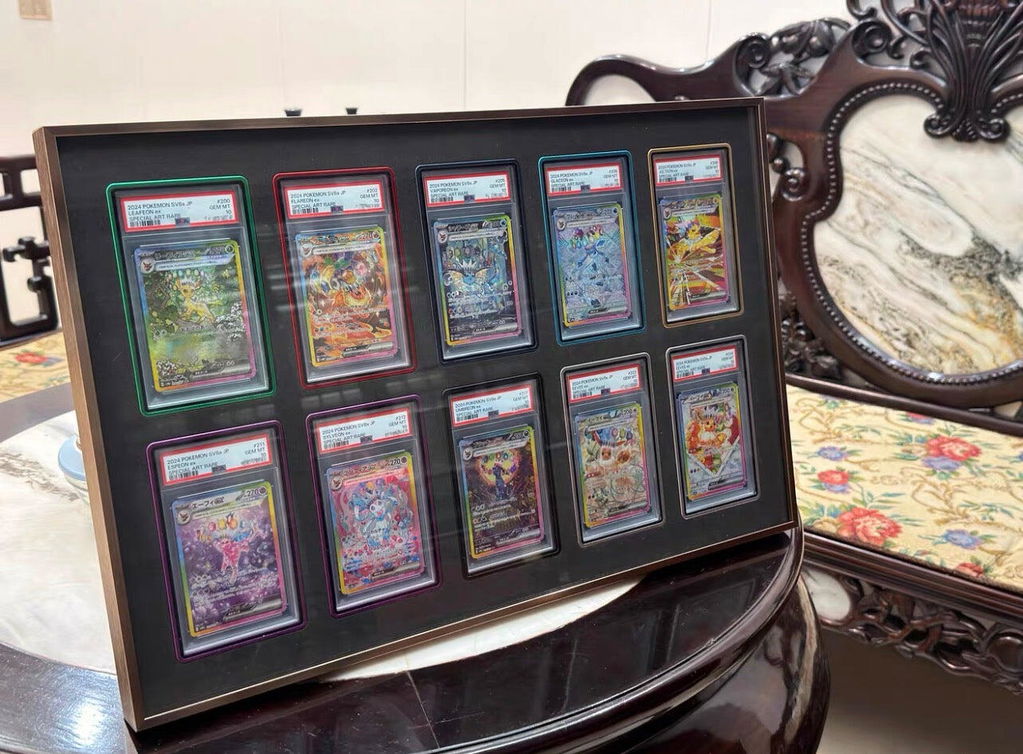
Aluminium Trading Card Display Frames
Related display formats for graded and magnetic trading card collections.

0 comments