


A Nintendo Switch collection can be small enough to fit on one shelf and still represent years of collecting. A few favourite games may bring together The Legend of Zelda, Super Mario, Pokémon and Metroid. A larger physical Nintendo Switch library might include dozens of first-party releases, independent games, limited editions, different regional covers and titles that are no longer easy to find in shops.
Once a collection becomes important to its owner, storage and presentation become separate questions. The most space-efficient way to store Nintendo Switch games is rarely the most effective way to show their cover artwork. A shelf exposes the narrow red spines. A tabletop stand reveals a few favourite covers. A Nintendo Switch game case wall display can give an entire themed selection a consistent arrangement.
This guide explains how to display Nintendo Switch games, Nintendo Switch game case display ideas, Switch 2 case compatibility, game collection wall layouts, bookshelf and stand options, rare-game values and practical preservation. It begins with inexpensive approaches and moves through more specialised presentations. The aim is to help collectors choose a sensible solution for the games they own rather than assume that every physical collection needs a costly display.
Why collect physical Nintendo Switch games?
Physical game collecting is about more than access to software. The case includes artwork, platform branding, release information and a visible record of what someone chose to collect. A case from a launch-era Nintendo Switch release can sit alongside a later special edition, forming a compact history of a console generation. The original cartridge is small, but the packaging often carries much of the collection's visual identity.
Physical games also appeal to different kinds of collectors. Some buy games primarily to play them, preferring cartridges because they can share or resell them. Others collect a favourite series, a particular region's releases or unopened copies. A game that means little to one buyer may be the centrepiece of another person's display because of its artwork, release history or personal significance.
None of those motivations requires a huge budget. Some collections are built one game at a time over several years. What matters for display planning is whether the collector wants easy access, organised storage, visible cover art or an arrangement that protects selected copies from unnecessary handling.
Why Nintendo Switch cases are particularly suitable for display
Standard Nintendo Switch cases are relatively narrow and tall compared with the common disc cases used for PlayStation and Xbox games. That proportion makes their front artwork easy to recognise when displayed individually, while the consistent case shape makes rows and columns possible.
There is an important visual trade-off. On a shelf, the red Nintendo Switch spines can look unified and orderly, especially in a large library. Viewed from the front, however, the same collection becomes much more colourful. Zelda's landscapes, Mario's bright characters, Pokémon's artwork, the darker tones of Metroid and the distinct visual styles of independent releases create more variety than a line of uniform spines suggests.
This is why a collector might keep most games on shelves while displaying a curated selection separately. The goal need not be to move an entire 100-game library onto a wall. A carefully chosen group of six or nine cases can tell a story more clearly than an overcrowded arrangement of every title owned.
What are the best ways to display Nintendo Switch games?
There is no universal best display method. The correct approach depends on collection size, budget, available space, frequency of play and the value of the original packaging. The following comparison is useful before buying anything.
| Display method | Main advantage | Main limitation | Often suitable for |
|---|---|---|---|
| Existing bookshelf | Affordable and easy to reorganise | Mostly shows spines | Large libraries and games played regularly |
| Clear tabletop stands | Places front artwork in view | Uses desk or shelf depth | One to four favourite titles |
| Floating ledges | Can display multiple covers along a wall | Requires dusting and secure support | Rotating selections and gaming rooms |
| Cabinet or bookcase with doors | Reduces casual handling and dust | Can introduce glare and take floor space | Larger collections and mixed memorabilia |
| DIY shadow box or picture frame | Flexible visual design | Requires careful depth, support and materials | Personal projects and unusual layouts |
| Purpose-built aluminium game display frame | Structured, repeatable wall presentation | Higher cost and format-specific fit | Curated collections and presentation-focused buyers |
These methods are not mutually exclusive. A simple shelf for everyday games combined with a smaller framed display for favourites can be more practical than using one method for everything. Displaying games well is a matter of selecting the right amount of visibility, accessibility and protection, not simply choosing the most expensive option.
Budget Nintendo Switch display ideas using shelves you already own
Before purchasing new furniture, try arranging your existing Nintendo Switch cases by franchise, alphabetically or by the order in which you played them. Moving a few titles to the front of a shelf can create a more deliberate presentation without spending anything. A shallow bookcase often works better for small Switch cases than a very deep one because the cases remain easy to reach.
If the shelf has excess depth, consider keeping everyday games in a spine-facing row and positioning a few standout covers at the front. Avoid resting cases where a minor bump can send them falling over an edge. Bookends or stable dividers can keep the remaining cases upright without compressing them tightly.
For a growing collection, simple consistency matters. Matching shelf heights, aligned case spines and enough spare room for future additions can make an inexpensive bookcase look well organised. This is often the strongest option for someone who owns many games and changes them regularly.
Clear acrylic stands and easels for Nintendo Switch cases
A small clear stand can reveal the front cover of a Nintendo Switch game on a desk, media unit or shelf. It is a straightforward solution for a favourite edition, a recently completed game or a sentimental childhood franchise that has followed its owner into the Switch generation.
Choose a stand with a stable base and a support angle that does not place unnecessary pressure on the lower edge of the case. Some inexpensive stands are made for trading cards or small photographs and may not support a full Switch case reliably. Test the stand on a level surface before displaying valuable or sealed packaging.
One disadvantage is the amount of horizontal space required. As more front-facing games are added, they begin occupying an entire desk or shelf. A small group often looks deliberate; many independent stands can start to feel cluttered. Stands are particularly useful when the display changes frequently.
Floating shelves and picture ledges for Nintendo Switch game collections
Wall-mounted ledges are a popular middle ground between ordinary storage and a fully enclosed game case display. They let collectors show the front covers of several Nintendo Switch games while leaving the cases accessible. A ledge can also accommodate amiibo, a controller or a small piece of related memorabilia, creating a themed arrangement rather than a strictly rectangular grid.
The limitations are mostly practical. Cases can accumulate dust, visitors may handle them, and poorly designed ledges can allow objects to tip forward. Wall anchors and shelf loading should suit the surface and the intended weight. A shelf placed above a gaming monitor or console should not block ventilation or become difficult to reach safely.
For a collection that rotates monthly, ledges are often excellent. For a display intended to remain visually consistent for years, collectors may prefer a more defined arrangement.
Using a bookcase or cabinet for large Switch collections
A dedicated game cabinet can handle both display and storage. The majority of games can be arranged spine-out, with select front covers placed at eye level. Adjustable shelves are valuable because Nintendo Switch cases are shorter and narrower than many DVD-sized packages; a poorly sized bookcase can waste substantial vertical space.
Glass-fronted cabinets reduce casual contact and may lower the amount of dust reaching the cases, but ordinary cabinet doors should not be assumed to provide a documented level of UV filtration. Reflections can also make game artwork harder to see in rooms with bright windows or overhead lighting.
Large cabinets are a sensible choice for people who want all their games accessible in one location. They are less suitable when the aim is to use a limited section of wall as a carefully composed feature.
DIY Nintendo Switch wall displays and shadow boxes
A DIY Nintendo Switch display can be made using a suitable deep frame or shadow box, a stable backing material and removable supports. The critical decision is not the decorative finish. It is whether the completed design safely accommodates the actual case dimensions and allows the games to be removed without damaging their packaging.
Do not assume a standard shallow photograph frame is deep enough to hold a closed Nintendo Switch case. Many photo frames are intended for paper prints rather than objects around a centimetre thick. Before purchasing materials, measure the actual case, the internal frame clearance and the distance to the front glazing.
Avoid attaching adhesive tape, glue or permanent fixtures directly to collectible game packaging. For sealed or valuable editions, the ability to remove the case without affecting its surface is especially important. It is also worth testing the finished arrangement with an inexpensive replacement case before risking a valued original.
A handmade project can be an enjoyable and affordable display solution, particularly for one or two cases. Large symmetrical arrangements require greater accuracy because even small variations in spacing become apparent across a row.
Purpose-built aluminium Nintendo Switch game display frames
At the specialist end of the display range are multi-game frames designed around the dimensions of physical game cases. Rather than placing independent stands across a shelf, a purpose-built frame creates one cohesive composition: aligned cover artwork, repeated spacing, a consistent surrounding border and a wall-mounted presentation.
Aluminium is often chosen for its slim profile, finish options and suitability for clean geometric layouts. Acrylic glazing can provide a clear front and keep the overall assembly lighter than an equivalent glass-based design. A precision-cut support system can position cases consistently, provided it has been designed for the exact package format being displayed.
This approach costs more than shelves or simple stands. It is best understood as a presentation choice rather than a storage necessity. A collector with 40 games who wants rapid access may be better served by a bookshelf, while someone displaying nine carefully selected Nintendo favourites may prefer a single structured wall piece. Neither collector is making the wrong decision.
For a comparison of frame materials and broader console formats, see the complete guide to displaying video game cases.
How to compare budget and premium Nintendo Switch display costs
It is tempting to compare display products by the number of games they hold, but this overlooks the purpose of the finished display. A simple shelf might store dozens of cases at minimal cost per game. A specialist wall frame may hold fewer games while making each cover visible. These are different outcomes.
| Budget level | Typical approach | Where the money goes | What to prioritise |
|---|---|---|---|
| Minimal | Reuse existing furniture or storage | Little or no additional equipment | Order, accessibility, stable support |
| Entry | Individual stands and simple organisers | Small accessories | Stable fit and clean presentation |
| Mid-range | Floating shelves, ledges or cabinets | Furniture, mounting and surface finishes | Wall safety, available space, dust management |
| Custom DIY | Shadow box or self-built wall display | Frame, backing, glazing and labour | Accurate measurements and removable supports |
| Specialist | Custom-fit multi-game aluminium frame | Precision materials, finishing and assembly | Alignment, glazing, case compatibility and presentation |
The most expensive method does not automatically offer the best value. If a collector wants fast access to frequently played games, paying extra for a fixed wall display can be unnecessary. If the goal is to turn a finished collection into a visual centrepiece, the cost of a more specialised presentation may be easier to justify.
Nintendo Switch game case dimensions: what should you measure?
A commonly supplied replacement Nintendo Switch case measures approximately 105 × 168 × 10 mm, while other references and compatible replacement products describe cases closer to 105 × 170 × 11 mm. These variations matter for a tightly fitted opening, particularly when measuring the exterior rather than the printed cover insert. Do not treat any one online dimension as an exact tolerance for every original or replacement case.
Measure the physical case you intend to display, ideally at its widest and thickest points. Check whether the hinge, clasp or outer sleeve projects beyond the main rectangular surface. If a protective sleeve or aftermarket cover is fitted, measure that assembled package rather than the bare case.
For a dedicated cutout or frame, three measurements matter: height, width and thickness. Two cases can have almost identical front dimensions while differing enough in depth to affect how they sit behind glazing. For a full comparison with PlayStation and Xbox formats, read Video Game Case Sizes Explained.
Nintendo Switch versus Nintendo Switch 2 game cases
Nintendo Switch 2 brought new physical packaging, including distinctive red cases. Reports from the launch period indicated that ordinary Switch 2 cases were broadly similar in size to the original Switch cases. That visual similarity is useful for collectors mixing generations, but it should not be treated as a guarantee of interchangeable fit in every purpose-cut display.
A Switch 2 case may share approximate external dimensions with a Switch case while differing in colour, sleeve construction, spine presentation or manufacturing tolerance. Special releases, imported versions and replacement cases add further variation. If a frame or foam opening is specified for one format, check actual compatibility before assuming the other will fit.
Collectors can use the visual contrast deliberately. Original Switch cases often show a red platform banner with clear packaging, while Switch 2 packaging may present a fuller red case. Separating the generations into their own rows can create a clean timeline; mixing them by franchise can emphasise how a series has developed across hardware generations.
Physical games, downloaded games and Nintendo Switch 2 game-key cards
The phrase physical game can describe several kinds of release. A standard physical cartridge package, a collector's edition with additional materials and a boxed release containing a download code do not necessarily preserve the same form of software ownership or offline availability.
Nintendo confirms that Nintendo Switch 2 game-key cards are not the same as regular game cards. A game-key card acts as a key that allows the game to be downloaded, and the card remains necessary to launch the software after downloading. A collector who cares about long-term physical preservation may therefore distinguish between a regular cartridge containing game data and a game-key card that requires a download.
For display purposes, two packages may appear similar even though their contents work differently. A collector cataloguing Switch 2 physical releases should record the edition and game-card type rather than assuming that every box represents the same product. Nintendo's official game-key card explanation provides the relevant distinction.
Can Switch and Switch 2 games share one display?
Visually, yes: the two generations can make a coherent combined Nintendo collection. Physically, compatibility depends on the actual cases and the design of the display. A shelf or ledge is flexible because it does not depend on millimetre-specific openings. A fixed-size display needs accurate dimensions.
If your goal is a timeline, arranging cases from original Switch titles through Switch 2 releases makes sense. If your goal is a franchise display, a Switch title and its Switch 2 follow-up can sit side by side. In either case, verify that both boxes fit the chosen support system rather than relying on the console names alone.
How should Nintendo Switch games be arranged on a shelf?
There are four common ways to organise a Nintendo Switch library: alphabetically, by franchise, by release order and by visual appearance. Alphabetical sorting is practical for a large library. Franchise sorting is more personal and can make repeated characters or series artwork stand out. Release order tells a historical story. Colour sorting can look impressive, although it may be less convenient when trying to find a specific title.
Many collections work best with a hybrid system. Keep the bulk of the games alphabetically on shelves, then pull forward a smaller group of favourites as a rotating feature. That allows daily storage to stay useful while maintaining an attractive display.
Front covers versus red spines: which looks better?
The characteristic Nintendo Switch spine creates a strong line of red when many cases are placed together. This works particularly well in a dedicated collection room where the goal is to show the quantity and completeness of the library. The downside is that much of the artwork disappears, and individual games become less immediately recognisable.
Front-facing displays reverse that balance. Each game takes much more space, but its illustration becomes the centre of attention. For game series with distinctive artwork, that can be worth the loss of storage efficiency. A display that features Breath of the Wild, Tears of the Kingdom, Super Mario Odyssey and Metroid Dread communicates its theme without the viewer having to read every spine.
Neither approach is inherently more premium. A carefully organised shelf can look excellent. The right choice depends on whether you want the visitor to notice the library as a whole or the covers of selected games.
How many Nintendo Switch cases should you display together?
The best number depends on the story the group tells. One game can serve as a personal centrepiece. Three games can represent a trilogy or character-focused selection. Four makes a compact square or horizontal line. Six to nine games are useful for themed groups. Twelve to sixteen creates a more substantial arrangement for a dedicated gaming space.
As the number increases, consider two things: physical size and visual clarity. A display that looks compact on a computer screen may be much larger in a room, especially when each case is oriented vertically and given breathing space around its edges. It is often better to measure the planned wall area before choosing a grid count.
| Number of games | Possible theme | Presentation idea |
|---|---|---|
| 1 | A personal favourite or sealed edition | Single cover as a focal point |
| 2–3 | Related games or editions | Horizontal row or compact group |
| 4 | Four major Nintendo franchises | 2 × 2 square or 4 × 1 row |
| 5–6 | Favourite Switch-era releases | Compact horizontal or 3 × 2 arrangement |
| 8–9 | Mario, Zelda or Pokémon theme | Balanced multi-row display |
| 10–12 | Broad Switch library highlights | Large collection feature |
| 15–16 | Curated console-generation collection | Statement-sized wall grid |
These are visual examples, not a rule that every combination is available in every frame or requires a specialist product. Simple shelves and stands can achieve many of the same arrangements with different spacing and accessibility.
Nintendo Switch display ideas for one to four games
Small groups are well suited to favourite games with a clear connection. One copy of Super Mario Odyssey could sit alone in a home office. Two Zelda titles might form a paired display. A three-game selection could show a favourite character or a group of meaningful releases. Four covers could bring together Zelda, Mario, Pokémon and Metroid as a compact representation of Nintendo collecting.
Because the group is small, individual condition and alignment become more noticeable. Keep all cases level and use enough space around the edges that the arrangement does not look crowded. A single mismatched protective sleeve may be more obvious in a four-game display than on a densely packed shelf.
Six-, nine- and twelve-game Nintendo Switch collection layouts
Medium-sized layouts offer room for a coherent series theme without requiring an entire wall. A six-game arrangement could focus on Mario-related releases or titles from different Nintendo genres. Nine allows a 3 × 3 composition with one central cover. Twelve can be divided into rows based on franchise, release year or gameplay category.
When planning multi-row arrangements, avoid choosing titles solely because their colours match. Artwork can provide visual balance, but a collection tends to feel more meaningful when the games have a reason to appear together. Some people prefer the clean geometry of equal spacing; others enjoy a more informal shelf arrangement with space for a figurine or controller.
Fifteen- and sixteen-game displays for serious Nintendo collectors
A 15- or 16-game front-facing arrangement is no longer a small accent. It can become a primary feature in a gaming room or collection space. The selected titles might represent a personal top sixteen, a Nintendo Switch launch-to-late-generation timeline, or a curated selection of first-party and independent favourites.
At this scale, consider the viewing distance. Individual covers should remain readable from the part of the room where the display will be seen. The supporting wall, panel size and mounting requirements matter more than they do for a single-game desk stand. A large display is also less convenient to reconfigure frequently, so choose a layout that you will enjoy for more than a few weeks.
How to create a Legend of Zelda Nintendo Switch collection display
The Legend of Zelda is a natural subject for a themed Switch display because its games and related releases span multiple styles and eras. Breath of the Wild and Tears of the Kingdom make an obvious pair. Link's Awakening, Skyward Sword HD and Echoes of Wisdom can help create a broader group with contrasting art styles. A collector might also include relevant Hyrule Warriors releases if the aim is a wider Zelda-related display rather than a strict mainline set.
Decide whether the collection is arranged by in-universe chronology, release date, artwork or personal preference. Those are not the same order. A pair of favourite games is often more visually powerful than trying to include every related release in a limited space.
Collectors of valuable editions should keep any outer sleeves, special packaging and inserts associated with a game. A standard plastic case may fit an ordinary case display, while the full collector's edition box may not.
Super Mario Nintendo Switch game display ideas
Mario collections benefit from bright, instantly recognisable artwork. Super Mario Odyssey, Super Mario Bros. Wonder, New Super Mario Bros. U Deluxe and Super Mario 3D World + Bowser's Fury provide a strong platforming theme. Mario Kart 8 Deluxe, Mario Party releases and sports titles create a broader Mario universe display with very different cover designs.
For a focused arrangement, choose one category rather than every Mario-related title. Four platforming covers may feel more coherent than a mixture of racing, party and sports games. For a larger display, grouping the titles by genre across rows can help viewers understand the collection quickly.
Collectors may also compare standard releases with later reprints or regional versions, where the artwork or ratings symbols differ. Keep the exact edition information in your collection inventory even if the display arrangement is based primarily on appearance.
How to display Pokémon Nintendo Switch game collections
Pokémon is particularly interesting because the Switch library includes paired releases, remakes, spin-offs and different generations of the franchise. A collector could arrange Pokémon Sword beside Pokémon Shield, Pokémon Scarlet beside Pokémon Violet, and Pokémon Brilliant Diamond beside Pokémon Shining Pearl. The paired covers create an intentional rhythm.
Other Switch titles such as Pokémon Legends: Arceus, Pokémon: Let's Go, Pikachu!, Pokémon: Let's Go, Eevee! and New Pokémon Snap allow collectors to tell a wider story. A themed arrangement could focus on mainline games, remakes, favourite regions or memorable artwork rather than every game with Pokémon in its title.
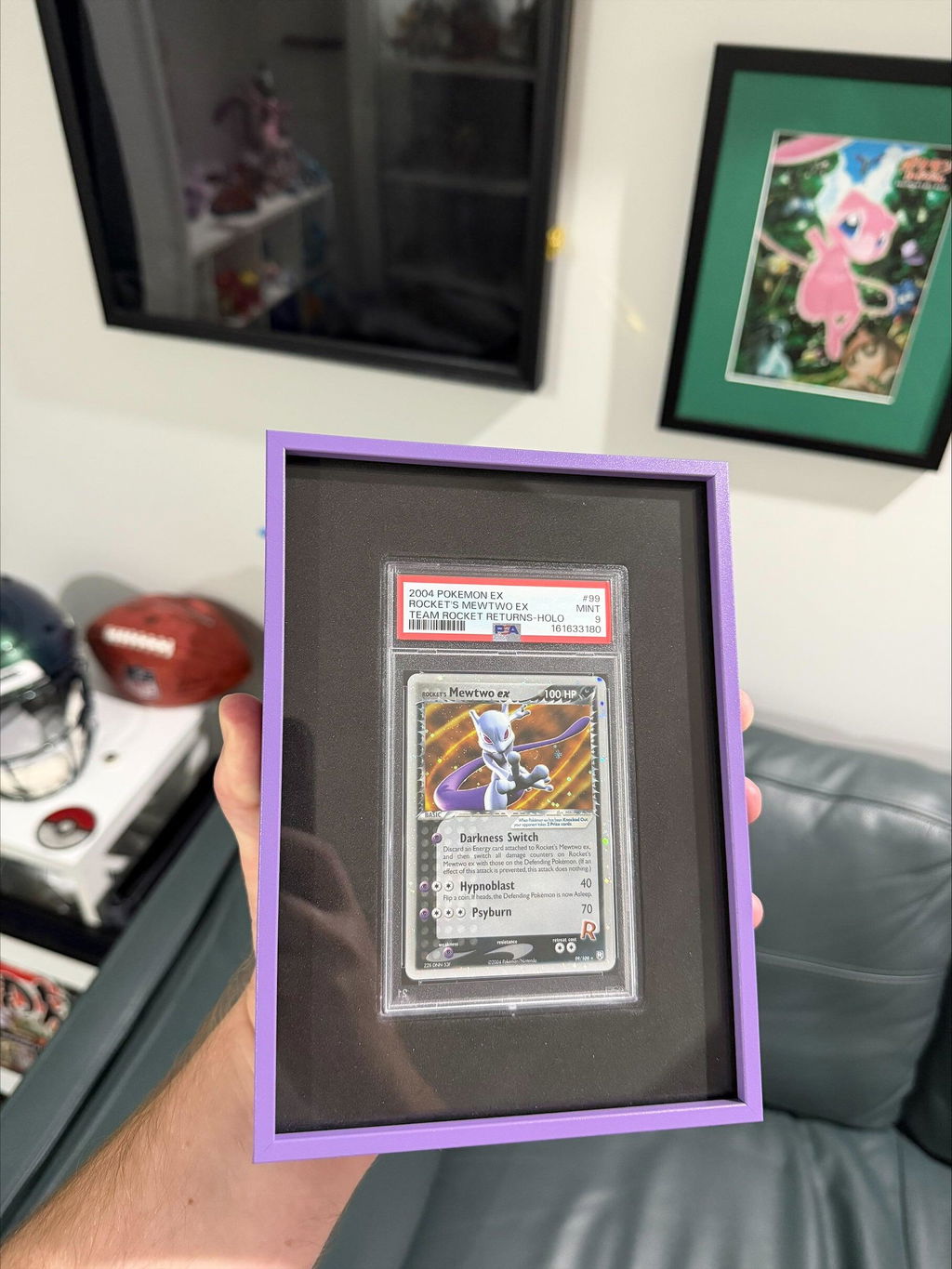
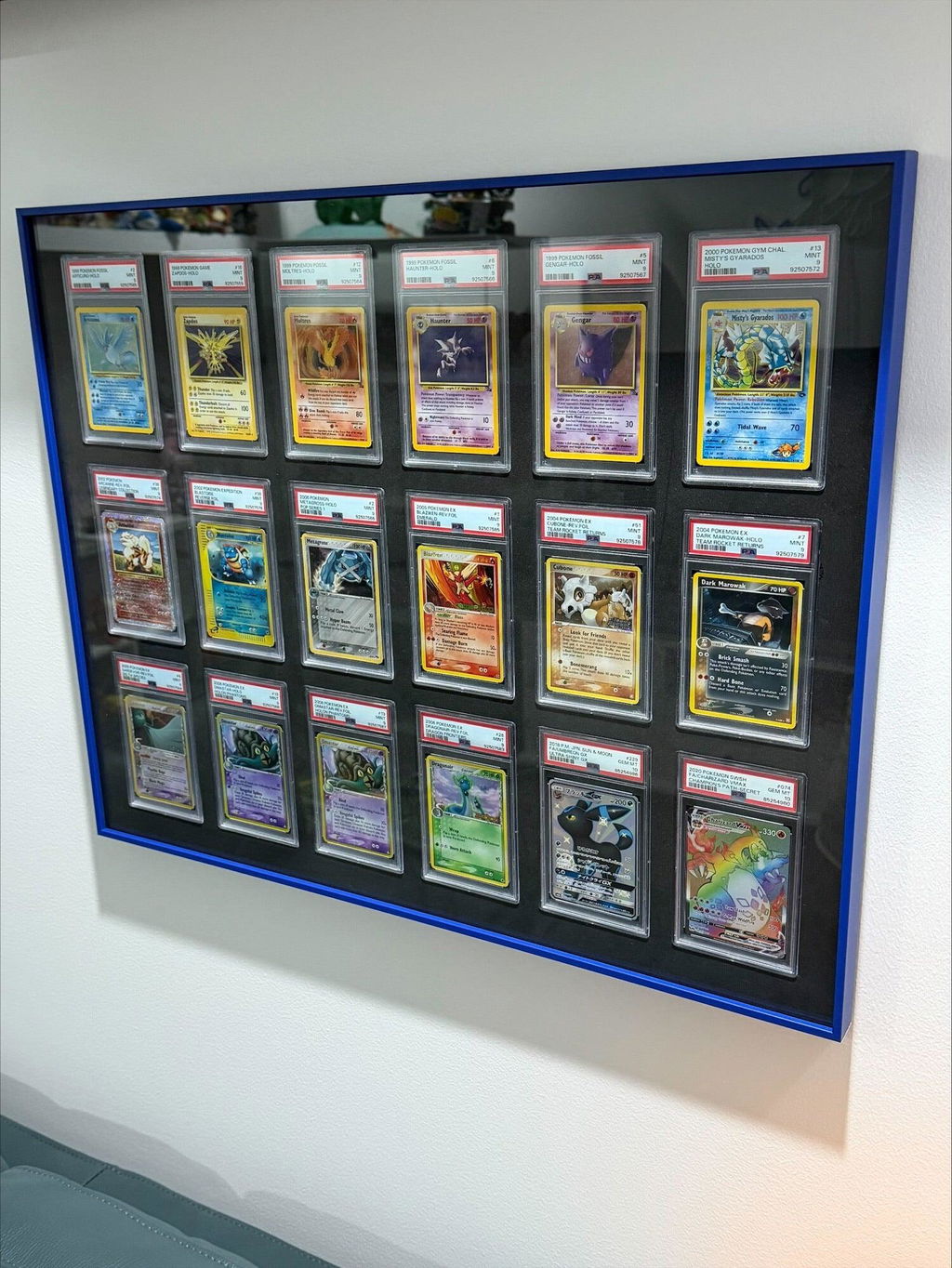
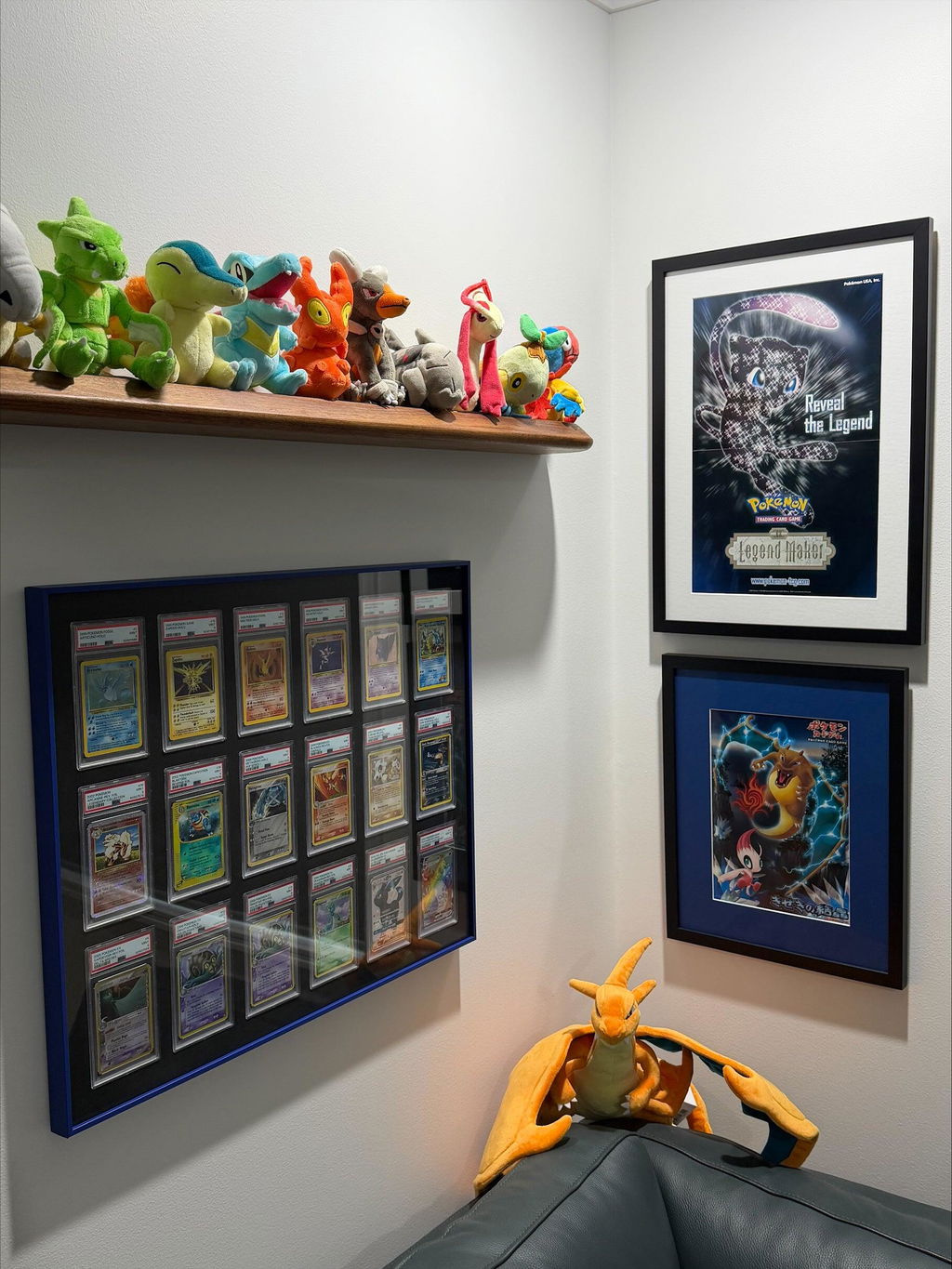
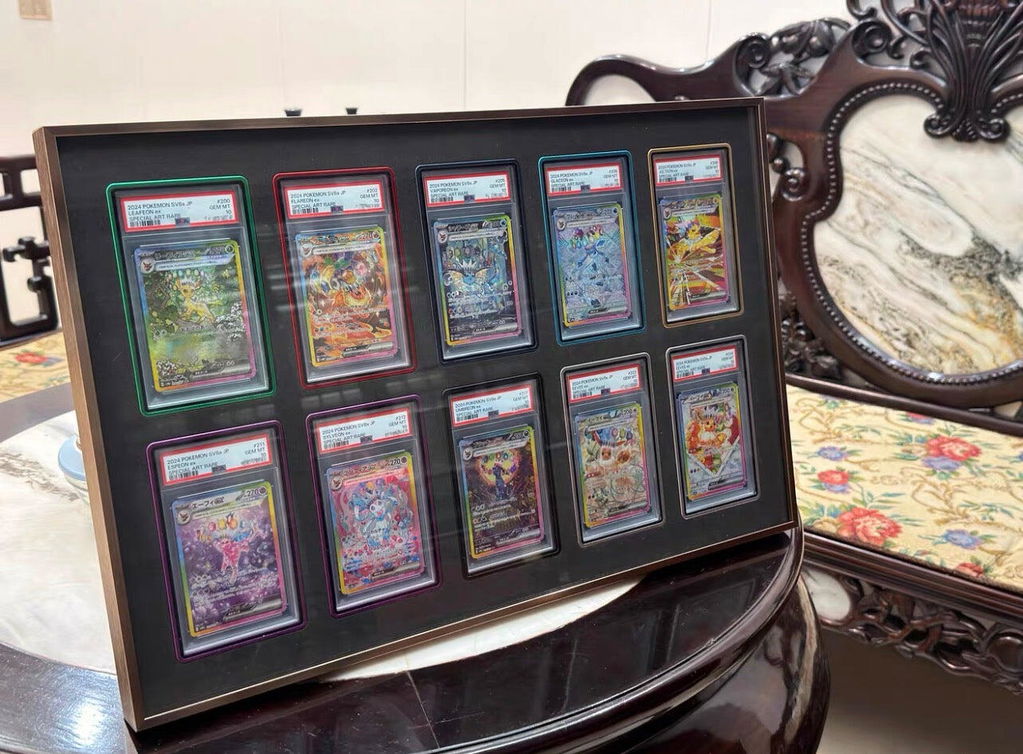
Pokémon collectors also often own trading cards, graded slabs and other memorabilia. Keeping game cases in one display and trading cards in another can make the shared franchise theme clear without forcing different physical formats into a single case opening.
Metroid, Kirby, Animal Crossing and other Nintendo series
Not every compelling Nintendo Switch display needs to focus on Mario or Zelda. A Metroid collection might pair Metroid Dread with Metroid Prime Remastered and other related physical releases. A Kirby display might bring together Kirby and the Forgotten Land, Kirby's Return to Dream Land Deluxe and associated titles.
Other groups can centre on Animal Crossing: New Horizons, Splatoon, Fire Emblem, Xenoblade Chronicles, Pikmin, Luigi's Mansion, Donkey Kong or a personal set of indie favourites. The best theme is usually one that matters to the collector rather than one chosen simply because the games share a publisher.
Nintendo's Australian games catalogue is a useful reference for checking exact game names and supported console platforms when planning a series-focused collection.
How to display limited-run and independent Nintendo Switch games
Independent games can be attractive to physical collectors because a title may have a smaller print run, unusual cover artwork or a release distributed through a specialist publisher. However, a small run does not automatically make a game valuable. Demand, condition, region, reprints and the completeness of the package all matter.
For displaying indie titles, consider grouping by publisher, art style or a shared design theme. A collection of visually distinctive independent releases may look better as a curated group than when scattered alphabetically among dozens of mainstream games.
Be careful with aftermarket replacement cases or printed covers. They may be useful for presentation but should not be described or sold as original packaging. For collectors who value authenticity, the difference between an original insert and a replacement print is significant.
Should Nintendo Switch collections be organised by region?
Some collectors focus on Australian and European releases, while others seek Japanese, North American or other regional covers. Ratings marks, language information and sometimes cover art vary between territories. A region-specific display can become an interesting record of how a title was presented in different markets.
Display compatibility should be considered separately from game compatibility. A cartridge that works in a particular console does not establish the exact dimensions of its retail packaging. Imported editions, slipcovers and special outer boxes should be measured individually.
From a valuation perspective, always record the region and edition before comparing sold prices. Two visually similar games may belong to different markets with different collector demand. A generic search for the game title alone may lead to misleading comparisons.
What makes a Nintendo Switch game valuable or collectible?
A game's popularity is not the same as its resale value. A widely loved Nintendo release can be extremely common in the second-hand market. Conversely, a lesser-known physical edition might be sought after because of its print history or specific packaging. Value is shaped by supply, demand, condition, region and exact variant.
Collectors may place particular value on sealed copies, complete special editions, promotional packaging or games that became difficult to obtain. But none of those labels guarantees a premium. A supposed rare Switch game should be assessed against recent transactions involving the same release and condition, not simply an optimistic online asking price.
The distinction matters when planning a display because an expensive or irreplaceable item may deserve more conservative handling than an easily replaced everyday copy. Monetary value and sentimental value can also point in different directions.
Loose, complete-in-box, sealed and graded Nintendo games
Video game collecting uses several condition categories. Loose commonly means the game card on its own. Complete-in-box (CIB) means the game and the original packaging, plus any original documentation or components expected for that release. Sealed means an unopened original package, subject to genuine seal verification. Graded means the collectible has been assessed and encapsulated by a grading service.
Condition is more nuanced than one label. Two complete copies can differ in cover fading, case scratches, spine damage, artwork condition or missing promotional papers. Not every Switch release originally contained a printed manual, so do not assume a lack of manual makes every game incomplete. Use the original release contents as the reference point.
PriceCharting's condition explanations are a useful starting point, but higher-value transactions should be checked at the individual listing level.
How to research the value of a Nintendo Switch game
Start by identifying the exact game, region, edition, packaging and condition. Search recent completed sales rather than relying on unsold listings. Compare sealed with sealed, complete with complete, and standard editions with the same standard edition. Collector's editions, steelbooks and bonus items may belong to separate markets.
- Record the exact title, platform, region and any edition name shown on the package.
- Note whether the game card, original case, artwork and expected extras are present.
- Inspect cover fading, cracks, scratches, labels, seal condition and evidence of replacements.
- Check recent sold listings that genuinely match the same version.
- Use a price guide as a second reference, not as proof of the price your copy will achieve.
- Account for selling fees, shipping, taxes and the size of the available buyer market.
PriceCharting maintains a Nintendo Switch price guide and explains that its estimates use sold marketplace listings. Such guides can help identify a price range, but an individual game may sell for more or less depending on the exact copy and timing.
Should valuable or sealed Switch games be framed?
Framing is a personal preference, not a requirement for preservation. A sealed game can be displayed, but it may be more sensitive to handling decisions because any damage to the shrink wrap, corners or outer packaging can affect collector value. For particularly valuable or irreplaceable items, controlled storage may be a better long-term choice than permanent display.
If a sealed game is displayed, choose a solution that does not rely on adhesive contact with the packaging, excessive compression or a mounting method that could leave marks when removed. Consider light exposure, temperature, humidity and access for inspection. A frame is not automatically an airtight or conservation-grade storage environment.
For a more detailed discussion of collectible value and display risks, read How to Display Rare, Sealed & Collectible Video Games.
What about Nintendo Switch steelbooks and collector's editions?
A steelbook is a different package format from a standard plastic game case and may have different dimensions, edge characteristics and susceptibility to visible marks. A collector's edition might include an outer slipcase, artbook, soundtrack or substantial display box. These should not automatically be placed in a frame designed for standard Nintendo Switch plastic cases.
Steelbooks are also visually different. Their metallic surfaces can emphasise reflections and fingerprints. Some collectors prefer a shelf or cabinet where they can see the metallic finish, while others display a single steelbook as a special feature. Handling with clean hands and avoiding abrasive contact can help preserve its appearance.
For large collector's editions, the original outer packaging may be more appropriate for cabinet display than a standard game-case frame. Measure the complete package rather than the game inside it.
Does displaying a Nintendo Switch case damage its resale value?
Displaying a game does not inherently reduce its value, but poor handling or environmental conditions can. A cracked case, faded artwork, damaged cover insert or compromised factory seal may matter to a future buyer. The same applies to adhesive residue, scratched steelbooks and altered packaging.
Keeping the original components together, avoiding direct sunlight and choosing removable supports are practical ways to reduce risk. It can also be helpful to photograph important items before displaying them. That creates a record of their condition if the display is later rearranged.
No display method eliminates all risks. The best approach balances the enjoyment of seeing a collection with the importance of retaining its original condition.
Why Nintendo Switch cover artwork can fade
Printed game covers contain inks and other materials that can change after prolonged exposure to light. Ultraviolet radiation is one factor, but visible light and heat can also contribute to deterioration. Even a game inside a closed plastic case is not guaranteed to remain unchanged if it receives strong sunlight every day.
Fading is cumulative, so both intensity and duration matter. The Library of Congress explains that light can cause irreversible changes to printed and other light-sensitive materials. That principle is relevant to game cover inserts, although the precise sensitivity of any particular Switch cover depends on its inks, paper and history.
For that reason, it is sensible to choose a wall away from direct sunlight before considering specialist glazing. More technical detail is available in the Library of Congress guidance on limiting light damage.
Do Nintendo Switch game cases block UV light?
Standard Switch cases are plastic packaging designed to hold a game card and its printed insert. The fact that the outer case is clear does not establish a specific UV-filtration percentage. The performance depends on the material and formulation, and generic descriptions rarely include the spectral measurements needed for a precise claim.
Do not assume the case by itself will protect artwork from years of direct sunlight. Likewise, a frame described as UV-resistant should be evaluated using the specification of the actual glazing rather than a blanket percentage applied to all acrylic.
For general indoor display, selecting an appropriate location and reducing prolonged light exposure are important steps regardless of the packaging material.
UV-resistant acrylic and museum-grade acrylic for game displays
Acrylic glazing can offer a clear viewing surface with relatively low weight. Some general-purpose sheets reduce certain UV wavelengths, while specialist conservation and museum-grade products may offer broader UV filtration and anti-reflective coatings. These are different material grades and should not be described as though they all perform identically.
A quoted UV percentage only makes technical sense alongside the tested wavelength range. An anti-reflective coating is also a separate benefit from UV filtering: it can reduce unwanted reflections without making the contents immune to fading. Visible light still reaches the displayed artwork.
For many collections, well-positioned displays with good clear acrylic can be entirely appropriate. Collectors seeking stronger filtering or reduced reflection can compare specialist products as optional upgrades rather than assuming they are mandatory for every game.
Does LED gaming room lighting affect Nintendo Switch covers?
Many modern LED fixtures emit relatively little UV, but they still produce visible light. The exposure of printed artwork depends on brightness, proximity and how long the lights remain on. An occasional low-intensity accent light is different from a bright lamp aimed directly at the same display around the clock.
Consider soft, indirect lighting instead of harsh spotlights. Keep heat-producing fixtures away from cases and avoid placing light strips in direct contact with original packaging. RGB effects can make a gaming room visually striking, but the lighting should support the display rather than overwhelm the artwork or introduce unnecessary heat.
Temperature, humidity and storage conditions
Physical games contain more than plastic cases. Printed cover sheets, labels, adhesives, booklets, game cards and special-edition packaging can respond differently to temperature and humidity. A room that regularly becomes very hot or damp is not an ideal long-term location for an important collection.
Avoid storing valuable games beside heaters, in direct sunlight or close to condensation-prone windows. Garages, roof spaces and unconditioned storage areas can experience large environmental changes. A relatively stable indoor environment is generally more practical than trying to correct damage later.
Display frames and cabinets may reduce handling, but they are not automatically sealed climate-controlled enclosures. Keep an eye on moisture, mould, surface changes and unusual odours. Collectors with high-value paper packaging should also consider preservation guidance on stable storage conditions.
How to clean Nintendo Switch cases before display
Remove loose dust gently and avoid dragging abrasive particles across clear plastic. A soft, clean cloth is usually a sensible starting point, but always consider the surface: the outside of a plastic game case is different from printed paper artwork, a metallic steelbook or a factory seal.
Do not spray cleaning fluid onto paper inserts, stickers, sealed edges or special coatings. Harsh solvents may damage plastics or finishes. For collectible packaging, conservative handling is usually preferable to aggressive cleaning intended to make an old item look new.
Before assembling a multi-case display, inspect each case for protruding labels, damaged hinges or loose inserts. A minor issue is much easier to address before the cases are arranged together.
Can you display Switch games without the cartridges inside?
Yes, the outer case can be displayed separately from the game card, and some collectors keep frequently played cartridges in a portable organiser. That may make everyday access more convenient, but it also creates the risk of separating the original game from its matching package.
If you store cartridges elsewhere, keep a reliable inventory and avoid mixing game cards between cases. For collectible or resale purposes, the relationship between game card, original case and contents matters. A complete package is often easier to inspect, document and sell than components stored in several different places.
For a collection that is seldom played, keeping the original cartridge in its case may be simpler. For a frequently used library, a deliberate catalogue can help maintain order.
How to display Nintendo games in a small gaming room
In a compact room, wall space often has greater value than floor space. A single shallow shelf or small multi-game display can place selected covers at eye level without requiring a full bookcase. Choose the wall carefully so that the display does not interfere with doors, monitor movement or storage access.
Think about what the display looks like from the normal sitting position. A large frame above a desk can dominate a small room, while a compact four- or six-game selection may create the same personal effect with less visual weight. Leaving some negative space around the display can make the covers easier to appreciate.
How to display a large Nintendo Switch collection
Large collections benefit from having separate storage and showcase zones. A shelf or cabinet can store the full library, while a dedicated section of wall highlights rare games, favourite franchises or recently acquired editions. This avoids the need to display every cover at once.
Some collectors build a chronological library, recording the date each game entered the collection. Others divide games by Nintendo franchise, publishing company or physical edition. Whichever system you choose, leave spare room. A collection that is packed tightly into an exact count can become awkward when one more title is added.
If a large wall display is used, plan the loaded weight and mounting method carefully. A bigger panel requires more attention to support and handling than an individual tabletop stand.
Should a Nintendo Switch display be easy to rearrange?
A rotating display is useful for collectors who frequently buy and play new games. Shelves and stands are easy to update, while a more structured frame may take additional time to access and reconfigure. A permanent themed collection can benefit from that consistency; an ever-changing display may not.
Before choosing a display method, consider whether you will swap games weekly, seasonally or almost never. An elegant arrangement that becomes frustrating to maintain may not be the right solution for the way you collect.
Black, white and coloured backgrounds for Nintendo Switch displays
Background choice changes how the cover artwork is perceived. Black can give a high-contrast, gallery-like appearance and makes brightly coloured Nintendo covers stand out. White can feel lighter and more minimal, particularly in contemporary interiors. Coloured backing can work for a themed room, but it risks competing with the artwork when many different covers are shown together.
Frame finish also influences the result. Black aluminium can blend into a dark gaming room; silver creates a cooler, restrained border; warmer metallic finishes can make a display more noticeable. There is no universally correct combination. The most useful test is to compare the actual game covers against the proposed background in the room where the display will hang.
When displaying many titles with different colour palettes, a restrained border and consistent spacing often help the collection feel organised.
How to make Nintendo Switch game displays look consistent
Consistency comes from repeated spacing, alignment and a deliberate grouping system. Cases should sit at the same height relative to their surrounding supports. Titles with different packaging or outer sleeves can interrupt the rhythm, so decide whether to display them separately or accommodate the variation intentionally.
For a shelf, consistency may mean matching stands and keeping the covers at similar angles. For a wall grid, it means uniform openings and even margins. The goal is not to eliminate personality, but to make the layout feel considered rather than accidental.
Common mistakes when displaying Nintendo Switch games
- Assuming every case is identical. Standard, replacement, imported and special-edition packaging can differ.
- Using an undersized picture frame. A closed game case requires more depth than a photograph.
- Putting the display in direct sun. Printed covers can fade despite plastic packaging.
- Using adhesive on valuable packaging. Removing it later may damage artwork or seals.
- Overcrowding a shelf. Tightly packed cases can be awkward to remove and inspect.
- Ignoring wall mounting. A loaded display needs suitable fixings for its actual weight and wall type.
- Confusing asking prices with sale prices. An expensive listing does not establish market value.
- Mixing game formats without measuring. Switch, Switch 2, DS, 3DS and other Nintendo cases are not one universal size.
- Choosing appearance over access. Frequently played games should remain practical to use.
- Displaying everything at once. A smaller curated selection may be clearer and easier to maintain.
Three practical Nintendo Switch collection display scenarios
A collection of four favourite Nintendo games
A collector owns Super Mario Odyssey, Breath of the Wild, Pokémon Legends: Arceus and Metroid Dread. The games have personal significance but are not necessarily rare or sealed. Two inexpensive picture ledges or a compact four-case display would both let the covers become part of a gaming room. There is no need to buy a large cabinet for four titles.
A growing library of 60 physical Switch games
A collector buys games regularly and plays most of them. A bookcase organised by franchise or alphabetically is likely to be the most practical core storage. A separate six- or nine-game rotating feature can highlight recent favourites without sacrificing the convenience of shelf access.
A collector with sealed and special-edition releases
A third collector owns standard games alongside sealed editions, steelbooks and large collector's boxes. These packages need different supports and may be better displayed in separate zones. Valuable sealed copies deserve particular attention to light, handling and environmental stability. Some may be better stored carefully, with photographs or reproductions used for everyday display.
A practical checklist before mounting a Nintendo Switch game display
- Decide whether the main goal is storage, easy access, cover artwork or a permanent display.
- Identify the exact console generation, region and edition of every game.
- Measure the height, width and thickness of the physical cases you will use.
- Check whether any games have outer sleeves, steelbooks or special packaging.
- Choose a wall or shelf away from regular direct sunlight and concentrated heat.
- Compare budget shelves, stands, cabinets and frames against the actual intended use.
- Keep original game cards, artwork and expected extras together where practical.
- Use removable, non-damaging support rather than adhesives on collectible packaging.
- Plan spacing, mounting and access before committing to a fixed layout.
- Leave room for future purchases or decide that the display will remain a curated selection.
Frequently asked questions about Nintendo Switch game displays
What is the best way to display Nintendo Switch games?
For everyday access, an organised bookshelf is usually the most practical choice. For a small number of favourite covers, clear stands or floating ledges work well. Purpose-built wall frames are a more specialised option for collectors who want a fixed, symmetrical presentation.
How can I display Nintendo Switch cases on a wall?
Picture ledges, suitable wall-mounted shelves, shadow boxes and game-case display frames can all work. Choose a method with adequate depth and secure mounting, then check the actual case dimensions before installation.
What size is a Nintendo Switch game case?
Common replacement cases are approximately 105 mm wide, 168–170 mm tall and 10–11 mm thick. Original packaging and aftermarket replacements may differ, so measure the actual case for a precise fitting.
Are Nintendo Switch and Switch 2 cases the same size?
They are broadly similar in standard retail formats, but fit should never be assumed in a precision-cut display. Check the individual packaging and any case manufacturer's specifications.
Can Nintendo Switch 2 games fit in an original Switch display?
Possibly, if the exact cases and display openings are compatible. A bookshelf generally accommodates both easily. A purpose-cut case display should be checked using the actual dimensions, not just the console name.
Are Nintendo Switch game cases smaller than PS5 cases?
Yes, standard Switch cases are visibly narrower than typical PlayStation game cases. They are different packaging formats and should not automatically share a fitted display opening.
Can I display Nintendo Switch cartridges without their cases?
Yes. Cartridge organisers, small holders and specially designed displays are available. Keep an inventory if cartridges are stored separately from their original packaging, particularly when maintaining complete collectible sets.
How do I display sealed Nintendo Switch games?
Use a stable, removable support that does not damage the seal or apply unnecessary pressure to the packaging. Avoid strong sunlight, heat and humidity. Particularly valuable copies may be better stored than kept on permanent display.
Do Switch game cases protect against UV light?
A clear plastic game case is not automatically a certified UV filter. Its transmission properties depend on the material, so keeping the display out of direct sunlight remains sensible.
Will Nintendo Switch cover art fade in sunlight?
It can. Printed artwork can undergo colour changes after prolonged light exposure, and UV filtering alone does not eliminate all light-related risks.
Are Nintendo Switch games worth collecting?
That depends on the collector's interests. Physical copies have appeal as playable media, packaging and historical objects. Financial value varies widely with title, edition, condition and demand, so popularity should not be confused with investment potential.
How do I check the value of a Nintendo Switch game?
Identify the exact title, region, edition and condition, then compare recent sold listings. Use condition-matched price guides as a secondary reference, especially for sealed or special releases.
What does CIB mean for Nintendo Switch games?
CIB means complete in box. It refers to the original game and the packaging and components expected with that release. Because many modern games did not include printed manuals, check the original contents before deciding whether a copy is complete.
Are sealed Switch games always more valuable?
No. A genuine factory-sealed copy may attract a premium, but demand, availability and the exact edition matter. Some sealed games remain common and inexpensive.
What is the best Nintendo Switch game series to display?
There is no objective best series. Zelda, Mario, Pokémon, Metroid, Kirby and other franchises offer distinctive artwork and coherent themes. Personal significance is a good reason to choose one group over another.
Can I display Pokémon Switch games alongside Pokémon cards?
Yes, as a themed collection, but the two formats have different dimensions and support needs. Separate displays can keep both collections visually connected without assuming card holders and game cases fit the same openings.
Are steelbooks compatible with standard Switch case displays?
Not automatically. Steelbooks and special packaging can have different dimensions or surface characteristics. Measure the complete item and check the display's intended format.
Do Nintendo Switch game-key cards contain the full game?
Nintendo says Switch 2 game-key cards do not contain the full game data. The game must be downloaded, and the card is then needed to play it. They should be distinguished from regular game cards when cataloguing a physical collection.
Can LED lights damage Nintendo Switch game covers?
Visible light can contribute to cumulative exposure even when a light source emits little UV. Use moderate lighting, avoid excessive heat and switch accent lighting off when it is not needed.
Should a Nintendo Switch collection be arranged by colour or release date?
Colour creates a strong visual pattern; release order tells a chronological story. Franchise grouping is often easier for visitors to understand, while alphabetical sorting is convenient for daily storage. Choose the system that serves the collection's purpose.
How many Nintendo Switch cases fit in a wall display?
That depends on the size and design of the display. Some arrangements focus on one to four games, while larger grids can hold nine, twelve, sixteen or more. Measure the wall and assess mounting requirements before choosing a large configuration.
Is acrylic or glass better for displaying Nintendo Switch games?
Acrylic is often lighter and more impact-resistant than ordinary glass, while glass is generally harder and more scratch-resistant. UV filtration and reflection control depend on the exact glazing grade, not simply the material name.
Can I put Nintendo DS or 3DS games in a Switch case frame?
No assumption of compatibility should be made. DS and 3DS packaging differs from standard Switch cases. Use a display designed for those formats or measure them and choose appropriate adjustable supports.
How do I stop Switch games falling from a wall shelf?
Use a properly mounted ledge with sufficient depth or a retaining lip, keep within the manufacturer's load limit and avoid placing cases where they can be bumped or knocked forward.
Should I display every game I own?
Not necessarily. A curated group can be easier to view and maintain than an entire library arranged front-facing. Keep most games in practical storage if that suits how you collect and play them.
Further reading and original resources
These manufacturer, retailer and conservation resources offer useful starting points for verifying console releases, packaging measurements, resale condition terminology and display conditions.
- Nintendo Australia: Switch and Switch 2 game catalogue
- Nintendo Australia: About Nintendo Switch 2 Game-Key Cards
- Analogue Media Technologies: Game case replacement dimensions
- PriceCharting: Video game condition definitions
- PriceCharting: Nintendo Switch game values
- Library of Congress: Limiting Light Damage
- Library of Congress: Preservation Guidelines for Matting and Framing
Final thoughts
There are many ways to display Nintendo Switch games, and the best approach depends on the purpose of the collection. An inexpensive shelf can be ideal for a large playable library. Clear stands and wall ledges allow favourite covers to be seen. Cabinets provide organised storage and reduce some everyday handling. Specialist frames offer a more structured presentation for curated sets of physical games.
The decisions that matter most are straightforward: choose a layout that suits the games, measure the actual cases, avoid unnecessary damage to original packaging, keep important items away from direct sunlight and plan for how often the collection will change. A meaningful collection does not have to be the most expensive collection, and a worthwhile display does not have to hold every game.
Whether the focus is Zelda, Mario, Pokémon, Metroid, Nintendo Switch 2 releases or a personal selection spanning several years, thoughtful arrangement can make the artwork and history of physical gaming much easier to appreciate.
Continue Exploring
These related collector guides explore broader display options, game case sizing, individual console generations and the preservation of valuable physical games.
Collector Guides
-
How to Display Video Game Cases: Complete Guide
Compare shelves, display stands, DIY methods and wall frames for PlayStation, Xbox and Nintendo collections. -
How to Display PlayStation Game Cases
Organise PS5, PS4, PS3 and PS2 collections with practical layout and storage ideas. -
How to Display Xbox Game Cases
Explore displays for original Xbox, Xbox 360, Xbox One and Xbox Series X physical games. -
Video Game Case Sizes Explained
Understand differences in physical case dimensions, thickness and display compatibility. -
How to Display Rare, Sealed & Collectible Video Games
Learn how condition, packaging, light exposure and handling affect valuable collections.
Explore Display Collections
-
GameVault™ Video Game Display Frames
Explore made-to-order aluminium displays for selected physical PlayStation, Xbox and Nintendo game cases in different layouts and finishes. -
Aluminium Trading Card Display Frames
Display options for collectors who enjoy both physical Nintendo games and trading cards.

0 comments