


A trading card collection usually begins with the cards themselves. The accessories arrive later: a pack of sleeves to protect a favourite pull, a binder for a growing set, a rigid holder for an autograph, a box for graded slabs or a display that finally brings a group of cards out of storage. Over time, these small decisions influence how easily a collection can be organised, handled, transported and enjoyed.
Whether you collect Pokémon cards, baseball rookies, basketball parallels, Magic: The Gathering, Yu-Gi-Oh!, One Piece, Disney Lorcana or several games at once, the same basic question keeps returning: which accessories are actually useful for the way you collect? A collector completing a raw Pokémon master set has different requirements from someone carrying a competitive deck, storing a thick sports memorabilia card or assembling a wall of PSA 10 slabs.
This guide brings those decisions together. It covers card sleeves, toploaders, semi-rigid holders, magnetic cases, graded card accessories, binders, storage boxes, shipping supplies, play accessories, display stands, wooden displays, aluminium frames, frameless acrylic displays and collector-room equipment. It also explains where inexpensive options work perfectly well and where spending more can provide a meaningful benefit. The aim is not to build the most expensive accessory collection possible; it is to build a system that suits the cards you already own.
1. Essential trading card accessories: what do collectors actually need?
The most useful accessories are those that solve a specific problem. Think of the collection as four separate activities: protecting individual cards, organising them, moving them and displaying selected favourites. A single product rarely performs all four jobs equally well.
The basic trading card collecting starter kit
For a new collector, suitable soft sleeves, a correctly sized binder or storage box, and a few rigid holders for important cards are usually enough. A clean work surface is helpful when opening packs or sorting cards. A notebook or digital checklist makes it easier to see which cards are missing without repeatedly handling the collection.
Buy the sleeve size for the cards you actually collect, not whichever pack happens to be on sale. Standard Pokémon and most modern sports cards generally use the familiar 2.5 by 3.5 inch format, while Yu-Gi-Oh! uses a smaller format. Thick memorabilia cards need separate consideration. Start with a small quantity and check the fit before ordering hundreds of identical accessories.
What should an experienced collector upgrade first?
Look at where your current system is failing. If you are constantly moving cards between damaged binder pages, a better binder may be more useful than a display frame. If you struggle to locate slabs, labelled storage dividers and a consistent inventory can help. If the main frustration is that your favourite cards are never visible, a dedicated display becomes relevant.
It is tempting to upgrade everything at once, particularly when a collection increases in value. But a cheap polypropylene sleeve that fits properly does not become unsuitable simply because the card inside is expensive. Likewise, a costly accessory is not an improvement if it introduces pressure, glare or awkward handling. Buy for the problem rather than for the price category.
The difference between storage, protection and presentation
A sleeve primarily reduces surface contact during handling. A rigid holder adds physical support. A box groups protected cards and helps limit external exposure. A display presents the cards in a visible arrangement. Some accessories combine two functions, but none should be assumed to provide complete environmental protection merely because it has a lid or clear front.
Separating these jobs also reduces unnecessary purchases. Hundreds of common cards may live in a labelled box, a complete set may remain in a binder, and nine selected cards may sit in a display. Each group receives an accessory appropriate to its use. You do not need to grade, frame or magnetically encapsulate the entire collection.
| Accessory | Main purpose | Useful for | Check before buying |
|---|---|---|---|
| Soft sleeve | Surface protection | Raw cards, binders, rigid holders | Card size and material |
| Toploader | Rigid outer support | Raw favourites, trading, transport | Thickness and sleeve clearance |
| Semi-rigid holder | Flexible support | Grading submissions and transport | Current grader instructions |
| Magnetic holder | Removable rigid case | Selected raw cards | Recess depth, sleeve compatibility |
| Binder | Set organisation | Master sets, trade collections | Pocket size and loaded capacity |
| Storage box | Grouping and storage | Bulk, toploaders, graded slabs | Internal dimensions and support |
| Display stand or frame | Visible presentation | Selected cards or themes | Holder fit, position and light |
How much should you spend on accessories?
There is no sensible universal percentage of a card collection that should be spent on accessories. The amount depends on the number of cards, their dimensions, how often they are handled and the consequences of damage. A player replacing worn deck sleeves has different costs from a collector storing hundreds of graded cards.
A practical approach is to divide the accessory budget into essentials, organisation and presentation. Cover basic protection first, then improve storage and finally decide how much of the collection should be visible. This prevents attractive display products from consuming a budget needed for suitable holders or a stable storage location. It also leaves room for future cards.
2. Trading card sizes, sleeve dimensions and card thickness
Correct dimensions are the foundation of almost every accessory choice. A product labelled standard, Japanese size, 35pt or slab compatible describes only part of its intended fit. The actual card and any existing protection should determine the final selection.
What size are Pokémon, MTG and sports cards?
A common standard-size trading card is approximately 63.5 by 88.9 mm (2.5 by 3.5 inches). Many Pokémon, Magic: The Gathering, One Piece, Lorcana and modern sports cards are within this general format. Exact dimensions can vary with production, unusual releases and older issues. A sleeve described as standard size normally has a little extra space around the intended card.
Do not compare a card's nominal dimensions directly with the external dimensions of a sleeve or holder. Seams, walls, lips and rounded corners reduce the useful internal area. A fitted accessory must accommodate the protected object rather than just the printed rectangle. The manufacturer should identify the intended card format.
What size sleeves fit Yu-Gi-Oh! cards?
Yu-Gi-Oh! cards are commonly around 59 by 86 mm, smaller than the standard trading card format. Small or Japanese-size deck sleeves are therefore generally more appropriate. For example, Ultra PRO lists small sleeves at 62 by 89 mm; these are sleeve dimensions, not the dimensions of the bare card. Japanese-size is a product category and does not mean every card printed in Japan uses that format.
A Japanese Pokémon card is not automatically a small-size card. Conversely, a smaller Yu-Gi-Oh! card can move excessively in a large magnetic recess intended for a standard sports card. When collecting both games, keeping sleeves in separate labelled containers can prevent mistakes during sorting.
What does 35pt mean on a card holder?
Point ratings describe thickness. One point is one thousandth of an inch, or approximately 0.0254 mm. A holder rated at 35pt is intended for a card thickness in that general range, rather than a card measuring 35 mm wide. The exact design and tolerance still matter, especially when sleeves are added.
Sports collectors encounter thicker ratings because cards can include multiple layers, jersey patches, memorabilia, manufactured relics or unusual constructions. The point number is not a measure of quality, protection or UV filtration. A 130pt holder is simply designed for a much thicker object than a 35pt holder. It is not an upgrade for an ordinary thin card if that card moves around inside it.
| Nominal thickness | Approximate millimetres | Typical consideration |
|---|---|---|
| 35pt | 0.89 | Ordinary thin cards; check actual fit |
| 55pt | 1.40 | Thicker cards; measure before choosing |
| 75pt | 1.91 | Thicker cards; measure before choosing |
| 100pt | 2.54 | Thicker cards; measure before choosing |
| 130pt | 3.30 | Thicker cards; measure before choosing |
| 180pt | 4.57 | Thicker cards; measure before choosing |
| 260pt | 6.60 | Thicker cards; measure before choosing |
How to measure a thick sports card without damaging it
Use a manufacturer card-thickness chart or a suitable non-compressive measuring method. Avoid squeezing corners with a calliper, pressing on foil or using a damaged card as a test piece. If you already have a correctly fitted holder, its specified rating is a useful starting point, but measure the actual card when changing brands.
Check the thickest part of the object, particularly around a patch window or raised feature. A card may not be uniformly thick. Also check that the opening is wide and tall enough for the card. A booklet card may need a completely different case rather than a thicker version of a standard rectangular holder.
Why outer holder dimensions matter for storage and displays
A standard card can be enclosed in several different accessories, each with a different external footprint. A 3 by 4 inch toploader is not the same size as a bare 2.5 by 3.5 inch card. A PSA slab includes a label area and a sealed perimeter, and a magnetic holder may have a larger top section for the magnet.
When buying a fitted box, stand, insert or display frame, measure the external width, height and thickness of the complete holder. Include slab sleeves or protective bumpers if you intend to keep them fitted. The outer case is the object the accessory must support. This is especially important for a multi-card display where a few millimetres of mismatch may prevent a whole row from sitting correctly.
3. Card sleeves: penny sleeves, perfect fits and deck protectors
Sleeves are among the most widely used trading card accessories because they are inexpensive, easy to replace and useful in several different storage systems. The right sleeve depends on whether the card is being stored, displayed or actively shuffled.
What are penny sleeves and are they good enough?
Penny sleeves are thin, flexible clear sleeves commonly used to protect raw cards during handling and storage. They are often the first layer inside a rigid toploader. Their simplicity is an advantage when a collector needs to protect many cards without adding excessive thickness or cost.
A soft sleeve does not make a card rigid and cannot reliably prevent bending or crushing. A sleeved card left loose in a bag can still be damaged. Use a suitable binder, box or rigid holder when physical support is needed. For bulk commons, a box may be sufficient without individually sleeving every card, depending on the collection's condition goals.
Polypropylene, polyester and polyethylene sleeves
Clear plastic film is not a single material. Polypropylene is commonly used in trading card sleeves, while suitable polyester and polyethylene films are also used in paper conservation. A transparent sleeve does not identify its composition by appearance alone. Check the manufacturer description, particularly for long-term storage of important cards.
Ultra PRO, for example, specifies polypropylene and non-PVC construction for its standard soft sleeves. That specification belongs to the particular product, not every transparent sleeve sold online. A collector who buys unlabelled bulk supplies should not assume they are made from the same material simply because they look similar.
Are PVC sleeves safe for trading cards?
For direct contact with collectible paper cards, choose sleeves with clearly stated suitable materials rather than relying on an unidentified flexible plastic. Plasticisers used in some flexible PVC formulations can migrate over time; this is one reason conservation guidance treats material selection carefully. Rigid PVC and soft plasticised PVC are not identical products.
Many rigid toploaders are sold for use with an inner soft sleeve. Follow the maker's recommended combination and do not confuse a rigid outer holder with the film that directly touches the card. If a sleeve becomes sticky, cloudy or distorted, separate it from the rest of the collection and replace it carefully rather than rubbing the card surface.
Acid-free and archival-safe: what do these labels mean?
These descriptions are useful starting points, particularly when comparing known manufacturers, but neither phrase establishes a universal lifetime guarantee. Acid-free language may describe a specified material, while archival-safe is frequently used to communicate intended storage suitability. Neither tells you the entire composition, ageing behaviour or light transmission of an accessory.
For a valuable collection, favour products that identify their material and intended use. Keep original packaging or specification records for unusual sleeves. Even a suitable sleeve can trap dust, be damaged by a sharp object or be stored in poor room conditions. Material choice and handling are separate parts of protection.
Perfect-fit sleeves versus regular penny sleeves
Perfect-fit or inner sleeves are designed to sit closely around a card. They are often chosen as the first layer of a double-sleeved deck or to fit inside a compatible outer protector. A regular penny sleeve normally provides more room, making insertion and removal relatively straightforward when combined with an appropriate rigid holder.
A close-fitting sleeve is not automatically safer if the card is unusually thick, slightly oversized or fragile. Tight seams can catch a corner and create resistance during insertion. If a card does not slide into a sleeve comfortably, stop and check the dimensions instead of forcing it. The purpose of the accessory is to protect the card, not to make it fit at all costs.
What are matte, glossy and clear deck sleeves?
Glossy sleeves can present artwork with a bright, clear appearance, but they may show reflections. Matte-backed deck sleeves generally provide a different handling and shuffling feel. Some products also have a matte viewing surface, which can reduce glare but soften the appearance of fine details or foil. Product names differ, so check whether the texture applies to the front, back or both.
Collectors who primarily view their cards in a binder may prefer optical clarity. Players may care more about consistent shuffling, durability and tournament eligibility. Those priorities are not contradictory. It is reasonable to keep separate sleeve types for display, storage and play.
Should you double sleeve Pokémon or Magic cards?
Double sleeving places a card in an inner sleeve and then an outer sleeve designed to accommodate it. It can provide additional separation from dirt and handling, but also adds thickness and may change the way a deck fits in its box. It does not make the card waterproof.
Use compatible sizes, avoid excessive pressure and check tournament requirements if the cards will be played competitively. A double-sleeved card may not fit a conventional magnetic holder or tight binder pocket. For a card that will remain in a rigid outer case, one appropriately sized sleeve may be entirely sufficient.
How to sleeve a trading card without damaging corners
Work on a clean, dry surface with clean hands. Open the sleeve gently without sharply folding it, align the card with the opening and guide it in without dragging a corner along a seam. If the fit is tight, remove the card carefully and select a more appropriate sleeve. Practise with a low-value card when using an unfamiliar accessory.
Avoid stacking an unsleeved card directly on top of loose debris, and do not blow into a sleeve to separate it. Replace sleeves that have torn edges or contamination. For particularly fragile cards, minimise the number of times they need to be transferred between different products.
Do thick cards need special sleeves?
Yes, when the normal sleeve is too narrow at the opening or places pressure on the card. Thick-card sleeves are sold specifically for cards with greater depth. An example is Ultra PRO's thick sleeve range intended for standard-footprint cards up to a stated point rating. A wider or deeper sleeve may also require a compatible toploader or storage box.
Check the card's width as well as its thickness. A large vintage card, oversized promo or booklet can require a dedicated format rather than simply a thick sleeve. Never trim a valuable card or press down a raised memorabilia section to make it fit a standard accessory.
When should you replace card sleeves?
Replace sleeves when they split, become sticky, develop sharp creases, accumulate dirt that cannot be safely removed or no longer fit correctly. For playing decks, uneven wear can also create distinguishable cards, so the entire deck may need a matching replacement set before an event.
A sleeve in a stored binder does not necessarily need annual replacement if it remains clean, stable and suitable. Excessive resleeving introduces handling. Check representative cards periodically and respond to actual condition changes rather than assuming every accessory expires on a fixed date.
| Sleeve type | Best use | Main limitation |
|---|---|---|
| Penny sleeve | Basic storage and rigid-holder inner layer | Little resistance to bending |
| Perfect fit | Compatible double-sleeve system | Tight clearance |
| Matte deck sleeve | Regular play and shuffling | Check tournament rules and clarity |
| Thick-card sleeve | Patch or memorabilia cards | Needs compatible outer case |
| Oversized sleeve | Jumbo, vintage or unusual cards | Not a universal fit |
4. Toploaders, semi-rigid holders and card protectors
A rigid or semi-rigid holder is often the next step after a soft sleeve. Both are useful, but they differ in flexibility, access and intended handling. Choosing between them depends more on the next use of the card than on its value alone.
What is a trading card toploader?
A toploader is a relatively stiff plastic protector with an opening at one end. It helps support a card against ordinary bending and allows a sleeved card to be stored in an upright box or transported with suitable packaging. A common standard model has external dimensions of about 3 by 4 inches, but the thickness rating and internal dimensions vary.
A typical use is a favourite Pokémon pull or modern baseball rookie placed in a suitable soft sleeve before insertion into the toploader. This provides a replaceable contact layer and a supporting outer case. The open end is still exposed, so a toploader should not be treated as a sealed dustproof or waterproof enclosure.
How to put a Pokémon card in a toploader
Choose a clean holder with enough room for the sleeved card. Hold the toploader on a stable surface and gently guide the card into the opening. If the sleeve catches, do not tap the holder hard against a desk or push on a card corner. Check the alignment and whether the sleeve or thickness is compatible.
For removal, avoid sharp tools near the card. Some sleeve designs incorporate a pull feature; if using one, follow the manufacturer's instructions. Do not stick adhesive directly to a valuable card or use a tight tab that could transfer residue. If a card is genuinely stuck, the safer choice may be to seek experienced assistance rather than forcing it.
Toploader thickness: 35pt, 55pt, 75pt and beyond
The thickness rating of a toploader describes the approximate card depth it is intended to accept. Even though two protectors may both measure 3 by 4 inches externally, their internal spaces can differ. Sports card collectors frequently need multiple thicknesses because different releases use different card constructions.
Keep thicker holders labelled in a separate compartment. When sorting a shipment containing mixed rookies, patch cards and standard inserts, test each type of fit independently. Do not use an overly loose holder for every card merely because it can accommodate the thickest item.
What is a Card Saver or semi-rigid holder?
A semi-rigid holder is a flexible but supportive plastic enclosure, often with a larger opening and a shaped lip to assist access. Card Saver is a familiar brand name, while semi-rigid is the broader accessory category. Many grading services specify a semi-rigid style for card submissions because of how the card will be removed and processed.
A semi-rigid case can also be useful for organised temporary storage or transport. However, it should not automatically be inserted into a frame designed around a different holder shape. Measure the actual dimensions and consider whether flexibility makes it suitable for the proposed support system.
Toploader versus semi-rigid: which should you choose?
For general collection storage, a toploader is often convenient because it is stiff and widely supported by storage boxes and binders. A semi-rigid holder may be preferable for a grading submission when the chosen service specifies it. Neither should be regarded as universally superior for every card.
If you plan to grade a card soon, it can be sensible to prepare it in the required submission holder rather than repeatedly moving it between cases. If you plan to keep a card permanently raw in a toploader binder, a semi-rigid case may not match the pocket dimensions. Plan around the next stage of the collection.
Team bags and resealable outer sleeves
A team bag is a larger clear bag with a closure, originally useful for grouping cards and now commonly used around sleeved or rigidly protected cards. It can reduce routine dust entry, help keep a small group together and keep packaging tape away from the inner holder when shipping.
The closure should not contact the actual card, and the bag should not compress or distort the holder. Check the bag material, dimensions and seam quality. A bag can also retain unwanted moisture if the contents are damp, so never seal a visibly wet or condensation-covered accessory.
Toploader binders: are they worth the space?
A toploader binder allows collectors to browse cards without removing their rigid cases. This can be appealing for raw high-value favourites, trade stock or a smaller curated set. The trade-off is bulk: the same number of cards occupies much more space than it would in a standard sleeved binder.
Check whether pockets accept the exact outer dimensions of your toploaders. Thicker sports card holders may not fit an ordinary toploader page. A heavily loaded binder also needs a suitable spine and cover, and should not be forced closed. If a collection is rarely browsed, a properly sized storage box may be simpler.
5. Magnetic trading card holders: One Touch and other hard cases
A magnetic card holder creates a rigid, removable enclosure around an ungraded card. The clear presentation and defined border make it appealing for selected favourites, while keeping the card accessible without professional encapsulation.
What is an Ultra PRO One Touch holder?
ONE-TOUCH is an Ultra PRO product family, often referred to generically by collectors when discussing magnetic card cases. The case usually consists of two mating sections held together by a magnet and a locating feature. The recessed area supports the card without requiring adhesive directly on it.
Other brands manufacture magnetic holders with different profiles, magnet arrangements, materials and external dimensions. A display labelled for a particular One Touch holder should not be assumed to accept every third-party magnetic case. The actual holder dimensions and selected display configuration remain important.
Are magnetic holders better than toploaders?
Magnetic cases provide a more substantial individual presentation and are convenient when a card is intended to remain visible on a stand or within a fitted display. Toploaders are generally more compact and economical for large numbers of raw cards. Both can provide useful physical support when fitted correctly.
The choice is partly about how often you need access. A collector who sorts hundreds of cards regularly may prefer toploaders and a box. A collector who wants six artwork-focused cards in a consistent desktop arrangement may prefer matching magnetic cases. The case should not squeeze the card, regardless of its price.
Should you sleeve a card inside a magnetic holder?
Follow the exact holder manufacturer's instructions. Some magnetic holders are designed for the bare card, while others explicitly provide clearance for a sleeve. For example, Ultra PRO offers a ONE-TOUCH X model specifically intended for a standard card in a compatible protective sleeve. That does not establish that every original ONE-TOUCH model has the same internal space.
Adding a sleeve that overlaps the recess can cause the case to close unevenly or pinch the edges. A collector should not remove appropriate protection merely to force a card into an incompatible case, either. Choose a holder designed around the preferred protection system.
What is the correct One Touch size for Pokémon cards?
Many standard Pokémon cards can be accommodated by a correctly sized standard-footprint magnetic case intended for ordinary thin cards. A common rating in this category is 35pt. However, the particular card and any sleeve must fit the actual recess comfortably. Promotional cards, jumbo cards and unusual formats can be exceptions.
Before buying a group of cases for an evolution line or illustration collection, test one card in one holder. Matching external cases can give the finished group a consistent look. If you later switch to a sleeve-compatible model, check whether it also fits the original stands, storage box or display recesses.
Which magnetic holder fits thick sports cards?
Start with the actual card thickness rather than assuming that all jersey cards need one particular point rating. A manufactured patch, game-used memorabilia card, autograph or multilayer insert may use different construction even within the same release. Holder suppliers commonly offer several point sizes for this reason.
Look for clearance around the card without allowing substantial movement. A holder with a recess that is too shallow can place pressure on a patch, foil or card face when closed. A case that is much too deep may allow movement. Unusual booklet cards and folded formats may need specialist products designed for their full shape.
Magnetic holders versus screw-down cases
Screw-down holders are another traditional form of rigid card protection. Some older flat designs can place pressure directly on the card, while recessed designs may behave differently. The term screw-down alone does not tell you whether the card has adequate clearance.
Magnetic cases are convenient because they can be opened without tools, but they still require a properly fitted recess. If you inherit a valuable vintage card in a tightly compressed screw-down, avoid attempting an aggressive removal. It may be worth consulting someone experienced with fragile cards before changing the holder.
Do magnetic card holders block UV light?
Some products advertise UV filtering, but the extent and wavelength range depend on the exact case. A clear magnetic holder does not necessarily prevent fading, and UV resistance of a plastic can refer to the material's own stability rather than filtration for an object behind it. Ask for the actual product specification if the distinction matters.
An outer display panel provides a separate layer with its own optical properties. Do not add two advertised UV percentages together or assume that two transparent layers make direct sunlight harmless. Lighting location and exposure time remain important even when the individual card has a protective holder.
How to organise and display a magnetic holder collection
A box designed for the external case dimensions works well for storage, while an individual stand makes a single favourite visible. For related cards, a fitted display can create a consistent arrangement with fewer separate supports. Choose a holder family first, then choose a layout around the physical case rather than the printed card.
For SLABBED Studio displays, the One Touch option is a specific holder configuration. Our magnetic card holder display collection is a useful starting point for exploring fitted layouts. Check the exact product compatibility, especially if you collect thick sports cards or non-standard magnetic cases.
6. Graded card accessories for PSA, CGC, BGS and other slabs
Grading changes the physical form of a collection. The sealed case and label become part of the item you handle, organise and display. Accessories should be selected for the slab itself, not merely for the trading card inside.
What accessories do PSA graded card collectors need?
A collector with a few PSA slabs can start with a fitted storage box or individual stands and optional compatible protective sleeves. Larger collections often benefit from dividers, an inventory organised by certification number, and a case designed for the external slab footprint. None of these accessories changes the grade of the card.
If the collection is intended to be displayed, decide how many slabs belong together and whether they should be viewed individually or as one group. A nine-card Pokémon evolution display has different needs from a box of hundreds of slabs intended for trading. Avoid buying a large display simply because the collection contains many graded cards.
CGC and BGS slab accessories
CGC and Beckett (BGS) holders have their own profiles and label formats, and can vary between generations or holder types. A storage case advertised as PSA compatible may not support a BGS slab in the same way. Before buying a fitted accessory, measure the actual width, height and depth, including any outer sleeve.
This matters for a mixed grading collection. Adjustable dividers may accommodate different slabs more easily than rigid identical cutouts, but they must still prevent unwanted movement. For a multi-card display, separate holder-specific groups can be practical when the cases differ noticeably in size.
Are graded slabs scratchproof?
No ordinary clear case should be assumed scratchproof. A slab can protect the card inside while accumulating marks on its own outer surfaces. Fine grit dragged across the case, loose slabs rubbing together and abrasive cleaning can affect visibility. Damage to a holder can also make handling and presentation less convenient.
Optional fitted slab sleeves help separate surfaces during normal storage. Replace a sleeve if grit is trapped inside it, and do not polish a slab with an unknown solvent or abrasive product. Serious cracks, damaged seams or evidence of tampering should be assessed through the grading company's current service guidance.
Slab sleeves, graded card bags and protective bumpers
A slab sleeve is an outer film fitted around a grading holder. A bumper is a more substantial edge accessory, often made from a flexible material. Both change the outside dimensions of the slab. They can be useful for certain handling and storage situations, but they are not essential for every collection.
The key is compatibility. A bumper may make a slab too wide for its previous storage slot, and the overlapping seam of a bag may affect the way a case sits in a close-fitting recess. Do not compress a protected slab into a display that was sized for the bare grading holder. If removing an outer sleeve is necessary, keep it for storage or use a compatible display instead.
How to choose a graded card storage box
Measure the tallest and thickest slabs in the collection, then examine the internal size of the box and the form of its dividers. A nominal capacity of 50 slabs is meaningful only for the type of case used to establish that capacity. Sleeves, bumpers and thicker holders can reduce it.
Support each slab so that the cases do not fall across one another when the box is partially empty. Avoid overpacking, especially where a lid or handle could press on a case. The storage location should remain reasonably stable and accessible without requiring repeated lifting of heavy boxes.
Graded card carrying cases and travel organisers
A padded case may be useful when visiting a card show or transporting a small group of valuable slabs. Look for suitable internal support, handles, closures and enough depth to keep the lid from applying pressure. A waterproof-looking shell does not by itself guarantee waterproofing or protection from every impact.
Keep valuable cards with you when practical and do not leave them in a hot or unattended vehicle. Record which certification numbers travel with you, and check applicable insurance or transport conditions separately. A carrying case is a physical accessory, not a guarantee against loss or theft.
Can you display PSA, CGC and BGS slabs together?
Yes, as part of the same room or collection theme. The important question is whether a particular frame has been designed for the different outer shapes. A standard identical recess should not be expected to accept all three formats. Labels also differ visually, which may influence how you want to group them.
A collector might keep a PSA Pokémon set in one wall display, a Beckett autograph group in another and CGC favourites on a shelf. A purpose-designed mixed layout can be another option if a supplier offers it. Our wooden graded card display guide explains holder fit in more detail.
Should you grade cards just to display them?
Not necessarily. Professional grading can be useful for authentication, condition assessment and certain collecting goals. It also introduces cost, shipping, processing and a permanent case until reholdering or removal. If the goal is simply to see the artwork in a rigid case, a compatible magnetic holder may satisfy that need without grading.
Conversely, a collector whose theme is an authenticated set may actively want the labels and matching grades to be visible. The display should reflect the collecting purpose. A grade is not a requirement for enjoying a card or treating it carefully.
What to do with graded cards after a submission returns
Check that the returned items match your submission records and inspect the outer cases without attempting to open them. Record the certification numbers, photograph the cards if useful and allocate appropriate storage. Keep submission invoices and any relevant documentation separately from the display itself.
Before buying a frame or a bulk storage case, confirm which holder formats were returned. A thick card or unusual item may have a different slab from ordinary trading cards. Choose accessories after the physical format is known, particularly if you have not used that grading service before.
7. Trading card binders, albums and pocket pages
Binders are especially useful when the collection is intended to be browsed rather than displayed all at once. They can organise sets, artist collections, player groups and trade cards with relatively little space. Their design matters most when they become heavily loaded or are used frequently.
What makes a good Pokémon card binder?
Start with pocket dimensions, page construction, capacity and how the binder closes. A standard nine-pocket album can work well for Pokémon set collecting because nine cards are visible on each side of a suitable page. A smaller four-pocket binder may be easier to carry, while a twelve-pocket design may suit a wider layout.
The best choice is not necessarily the binder with the most pockets. If you want to store a complete set, calculate the required space including any reverse holos, promos or variants. Use a binder that closes without compressing the cards and that provides adequate support for its pages when full.
Side-loading versus top-loading binder pockets
Side-loading pockets open along the side of a page, while top-loading pockets open at the top. Side-loading designs can help keep cards seated during certain handling, particularly if the album closes over the openings. Top-loading pages remain useful and are widely available in different formats.
Neither design guarantees that a card cannot fall out. Sleeve friction, pocket size, page orientation and how the binder is carried all matter. Test a low-value sleeved card in a page before transferring an entire set. If cards slide freely or corners catch, use a more compatible pocket rather than relying on the binder's outer closure.
Ring binders versus fixed-page trading card albums
Ring binders allow pages to be added, removed and rearranged. This is useful for expanding master sets, but overfilled pages can press against rings or become caught when the binder closes. A properly sized mechanism and careful page placement are important. Fixed-page albums avoid the ring mechanism and offer a consistent layout, but capacity cannot usually be expanded.
Choose based on how you collect. A set collector who likes moving cards between sections may value the flexibility of removable pages. Someone assembling a defined nine-card artist sequence may prefer a fixed album. Avoid forcing a loaded binder flat or putting heavy objects on top of it.
Zipper binders, elastic straps and closed covers
A zipper can help keep an album closed in a bag and can reduce direct exposure to loose dust. An elastic strap is simpler and often less bulky. Neither feature turns the album into a waterproof case. The cover still needs to close comfortably without bending the outer pages.
Look at the closure when the binder is full, not just when it is empty in a product photograph. If the zipper must be pulled against resistance or the strap bends the cover sharply, the album may be overloaded. A second binder is usually a better solution than increasing pressure on the collection.
How many pockets do you need for a master set?
A master set means different things to different collectors. It can include a main numbered set, secret rares, reverse holos, promotional cards, stamped variants and sometimes regional or special releases. Decide what counts before buying the album. Use a checklist and reserve spaces for missing cards rather than filling the binder randomly.
For example, an album intended for 360 cards may not accommodate a 360-entry checklist if some pockets are reserved for a title page, oversized inserts or different protective formats. Capacity is the number of compatible occupied positions, not merely the advertised number. Plan room for future additions separately if the scope of the set is still changing.
How to store binders without bending the cards
Use a stable shelf or storage surface that supports the loaded binder without squeezing it. Avoid leaning a heavy album at an angle where its weight distorts the pages, and do not pile heavy boxes on top. The appropriate flat or upright orientation depends on the binder construction and support provided by the shelf.
Keep the album away from damp external walls, direct sunlight and places where drinks are regularly spilled. When browsing, support the covers and turn pages gently instead of pulling individual pockets. Large binders become considerably heavier when loaded, so account for the full weight when selecting furniture.
Should you sleeve cards before putting them in a binder?
A compatible soft sleeve is a useful additional layer for many cards because it reduces direct contact with the pocket and handling during removal. Make sure the combined card and sleeve fit the pocket without bending or catching the corners. Some pages are designed for sleeved cards, others for bare cards or a particular sleeve size.
Avoid stacking several cards in one pocket unless the product is expressly intended for that purpose. Multiple cards may increase tension and make removal difficult. If the goal is bulk storage rather than browsing, a dedicated box may use space more efficiently than overloaded binder pages.
Binders for Yu-Gi-Oh!, Japanese cards and small formats
Smaller cards can sometimes be stored in standard pockets with a suitable sleeve, but the fit may allow more movement than a dedicated small-format page. When the collection includes Yu-Gi-Oh! and Pokémon, distinguish the actual card size from the country where the card was printed.
A collector may prefer separate albums for each game because checklist order, visual dimensions and protective sleeves differ. If you share an album, use pockets suited to the full protected object and avoid designs where smaller cards could escape when the page turns.
8. Trading card storage boxes, cases and collection organisation
Storage is where most cards spend most of their time. A good system makes it possible to find a particular card without handling dozens of others. It also leaves room for a collection to change without requiring a complete reorganisation each month.
Cardboard trading card storage boxes
Purpose-made cardboard boxes are an economical way to organise bulk cards, sets and some rigid holders. Their internal width and depth should match the protected objects rather than merely their nominal card size. A multi-row box can accommodate substantial weight once filled, so check the bottom and carry it with appropriate support.
Ordinary cardboard is not inherently a conservation-grade material. For important collections, choose suitable contact sleeves and consider storage materials with clearly stated specifications. Keep boxes dry, off floors susceptible to flooding and away from food, pests and repeated moisture exposure.
Plastic storage boxes and cases with lids
Plastic cases can provide a more durable outer structure and useful protection from routine dust and accidental contact. Their material and closure design vary, and a tightly closed box can retain moisture if its contents are damp. A clear plastic lid may also admit light, so visibility is not necessarily a benefit for long-term storage.
Check internal dividers, hinge quality and whether the case remains supported when stacked. Do not assume that a storage box intended for household items has suitable materials or dimensions for direct card contact. Keep individual cards in appropriate protection and select the box as the outer organisation system.
How to store thousands of trading cards
Start by separating cards into meaningful groups: game, set, year, player, team or collection goal. Label the outside of each box with a range or inventory code. Use dividers that extend far enough to identify sections without interfering with the lid. Leave room for additions rather than filling every compartment tightly.
For large collections, a simple inventory is often more valuable than elaborate new accessories. Record where each group lives, and update the location when cards move into a display, trade binder or submission batch. This turns the collection into a usable system instead of a series of boxes that must all be opened to find one item.
Bulk commons, duplicates and trade stock
Not every card needs the same storage investment. Common duplicates can be grouped in a compatible box, while important variants and cards with delicate surfaces may receive individual sleeves. A separate trade section helps prevent favourite personal cards from accidentally entering a sale or swap pile.
Use dividers that do not press against sharp edges or fragile foils. Periodically review duplicates and unwanted cards so storage grows deliberately. A collection can contain inexpensive cards with personal importance, so decide what deserves extra care based on your own goals rather than market value alone.
How to organise sports cards by player, team and year
Sports collectors often follow several overlapping categories. A player may change teams, a rookie card may belong to multiple sets, and a serial-numbered parallel can be part of a rainbow collection. Choose one primary physical order and record additional categories digitally rather than creating multiple competing storage systems.
For example, a box can be sorted by player and then year, while a spreadsheet records team, manufacturer, set, parallel and serial number. This makes it easy to assemble a temporary display of a particular championship season without permanently rearranging the whole collection.
How to organise Pokémon cards by set or Pokédex number
Set order is useful for master-set collectors because card numbers and variants can be compared against a checklist. Pokédex order is useful for species-focused collectors who enjoy seeing many interpretations of the same Pokémon. An artist-based collection may be organised by illustrator instead.
Choose one method for the main storage system and use a display to bring together a different theme. A Charizard display can contain cards from several sets without requiring the rest of those sets to be reorganised. Record the location of any card removed from its normal binder so that apparent gaps are not mistaken for missing cards.
Dividers, labels and inventory codes
Use labels on the outer box, divider or protective accessory rather than on the card itself. A short code such as P03 for a Pokémon box or S12 for sports storage can make an inventory easier to update. Keep labels legible, consistent and removable where appropriate.
Do not place adhesive labels where they can touch exposed card surfaces or obstruct a fitted holder. For valuable graded items, the original certification number is already a useful identifier. Your own location code can remain separate so you can move cards between boxes and displays without modifying the grading case.
Digital collection trackers and spreadsheets
A basic collection tracker can include the card name, set, card number, language, variant, condition, holder format and storage location. For graded cards, include the grading company and certification number. Photographs can help distinguish similar parallels or printed variants, particularly when purchasing or trading remotely.
A spreadsheet is sufficient for many collectors, while specialist apps may offer additional search, pricing or scanning features. Treat automated identifications and valuations as something to check, especially for unusual variants. Back up important records and avoid making a private inventory of valuable cards unnecessarily public.
Storage for sealed booster boxes and Elite Trainer Boxes
Sealed products have different dimensions and vulnerabilities from single trading cards. Acrylic cases can help reduce scuffs and handling of outer packaging if fitted correctly, while shelves or cabinets can group products by set. Allow clearance around shrink-wrap seams, corners and promotional stickers.
A tight case can create pressure on the packaging, while an overly loose case can allow movement in transport. Do not assume an outer acrylic case provides a documented UV rating or controlled humidity. Keep sealed products in suitable room conditions and choose display locations that limit unnecessary exposure.
9. Trading card protection: sunlight, humidity, dust and handling
A protective accessory is only one part of keeping a collection in good condition. The room, the way cards are handled and the length of time they are exposed to light also matter. These principles apply to inexpensive cards and valuable graded pieces alike.
Can sunlight damage Pokémon and sports cards?
Printed trading cards contain different combinations of paper, inks, coatings, foil and adhesives. Their exact light sensitivity varies, but sustained bright light can change susceptible colours and materials. A card may be physically protected inside a slab while still receiving light through its transparent surfaces.
Avoid choosing a display location where direct sun regularly falls on the collection. Observe the room during the morning and afternoon and consider seasonal changes. A shaded interior wall or cabinet can be more useful than an expensive protective accessory placed in an unsuitable position.
Does UV protection mean a card will never fade?
No. Ultraviolet radiation is only one component of light-related deterioration. Visible light can also contribute to fading, and heat can influence other material changes. A UV percentage must be understood in terms of the material grade and wavelengths covered by its test.
When choosing acrylic or glass, ask for the actual technical specification instead of assuming that every clear panel has the same filtering properties. A slab and an outer frame are separate layers. Neither makes a card immune to damage from uncontrolled exposure. Reducing unnecessary light is a useful precaution whatever accessories you choose.
UV-resistant acrylic and museum-grade acrylic
A premium clear acrylic front is often selected for its clarity, relatively low weight and physical separation between the collection and the room. Specialist museum or gallery acrylic may offer additional wavelength-specific UV filtering and anti-reflective coatings. Those are distinct optical properties: reducing glare is not the same as filtering ultraviolet radiation.
Our standard and optional museum-grade acrylic configurations serve those different priorities across the wooden, aluminium and frameless display ranges. The specific figures and limitations are explained in our acrylic technical specifications. A more specialist glazing option can be useful when its documented characteristics matter to the collector, but a sensible room location remains the starting point.
Do LED lights damage trading cards?
Many LEDs emit relatively little ultraviolet radiation, but their visible output still contributes to total light exposure. Bright lighting used continuously can be more demanding than gentle illumination used only while viewing the collection. The colour of the light alone does not establish its effect on an individual card.
If you use LED strips, cabinet lights or gaming-room lighting, position them to avoid concentrated hot spots and excessive glare. Switch them off when the collection is not being viewed. A timer or ordinary switch is a useful inexpensive accessory for managing exposure without needing to change the entire room.
Humidity and temperature: do collectors need a hygrometer?
A simple room thermometer and hygrometer can help identify repeated dampness, heat or rapid changes in the environment. The most useful information is often the pattern over time rather than a single reading. A room that becomes very humid overnight or overheats every afternoon may be unsuitable even if it looks comfortable at other times.
Keep cards away from condensation, leaks, heating outlets and poorly ventilated damp spaces. Do not introduce abrupt drying or cooling treatments to a valuable card. If you discover mould or moisture damage, separate affected items and seek appropriate conservation advice rather than attempting aggressive cleaning.
Silica gel and moisture-control accessories
A desiccant can help manage moisture within a suitable enclosure, but its effectiveness depends on the enclosure, quantity, condition and surrounding environment. Dropping a random packet into an open shelf is not a reliable way to control room humidity. An exhausted packet may no longer perform as expected.
Keep desiccant packets separate from the cards and use the supplier's instructions. Avoid using loose material that can spill onto card surfaces. If a room is persistently damp, address the room conditions rather than expecting a small accessory to solve the underlying problem.
How to remove dust from holders and acrylic displays
Start by distinguishing the external protective surface from the card inside. Loose dust and grit can scratch clear plastics if dragged across them. Use the cleaning method specified by the manufacturer of the case or acrylic sheet, particularly for anti-reflective coatings, which may require particular care.
Avoid household solvents or abrasive compounds unless specifically approved for the material. Do not spray liquid directly into an open holder or near an exposed trading card. If you remove the acrylic cover from a wooden display, first place the entire display on a stable supported surface and remove the cover carefully before cleaning it.
What should you do if a card becomes warped or curled?
Foil cards, layered card stock and older paper can respond differently to environmental conditions. A curled card should not automatically be squeezed under a heavy book or forced into a shallow holder. Such pressure can introduce additional damage and may not address the underlying cause.
Store the item with appropriate support in stable indoor conditions and avoid improvised heat, moisture or chemical treatments. If the card is valuable or unusually fragile, professional conservation advice is preferable to experimenting with online restoration methods. Keeping a card in its present condition may be more important than making it look perfectly flat.
10. Trading card shipping, travel and grading accessories
The accessories that protect a collection on a shelf do not necessarily protect it in transit. Movement, impact and compression introduce different requirements. A well-fitted inner holder should be supported inside an appropriate outer package.
How to package trading cards for grading
Check the grading company's current submission instructions before buying a bulk pack of protectors. PSA and CGC both publish their own packaging guidance; their general card instructions use sleeved cards with semi-rigid holders. Exceptions and requirements can depend on the item, service and destination. A grader's recommended holder is not necessarily the same case you would select for permanent display.
Prepare the submission documentation and identify each card before packing. Follow the specified order and outer packaging instructions. The PSA shipping guide and CGC card packing instructions are useful starting points rather than relying on an old social media tutorial.
How to ship a raw card sold or traded online
A suitable sleeve and rigid or semi-rigid support can help keep a card protected during ordinary handling. The outer packaging should prevent the protected card from shifting, bending or being exposed to adhesive. A padded envelope alone does not guarantee that a card will remain flat; the package must provide appropriate support for the item.
Use a carrier service that suits the value and size of the package. For important items, record the card condition and packaging before dispatch and review any applicable insurance terms. Avoid placing tape directly across an exposed card or relying on excessive tightness to prevent movement.
Packing graded slabs and magnetic holders
Graded slabs can crack or scratch if they move freely against one another, while removable magnetic cases may separate when subjected to impact. Provide individual separation where necessary and protect the group from movement inside an appropriately sized outer package. Protect edges and corners rather than concentrating padding only over the front surface.
Make sure the outer box has sufficient strength for the combined weight. A collection of twenty slabs weighs considerably more than a stack of twenty raw cards. Keep the packaging material away from open recesses or surfaces where it might leave residue.
Accessories to take to a trading card show
A small organised kit can be more useful than carrying the whole collection. Take compatible spare sleeves, a few holders for purchases, a secure carrying case, a way to record trades and a charged phone if using digital checklists. A compact trade binder can make browsing easier while keeping the rest of the collection at home.
Plan the trip around the weight and value you can reasonably manage. Do not leave valuable cards in a hot car, and keep purchases in appropriate protection before moving through a crowded venue. A dedicated case can help with physical organisation but cannot substitute for sensible supervision.
11. Trading card accessories for playing TCGs
Collectors and players overlap, but playing introduces repeated shuffling, travel and rules that are not relevant to a permanently displayed collection. A competitive deck and a set of display favourites can use entirely different accessories.
Deck boxes and storage for sleeved decks
A deck box must accommodate the complete sleeved deck and any additional cards or tokens permitted in the chosen game. Double-sleeved decks can be substantially thicker than single-sleeved decks, so compare the box's stated capacity with the actual sleeve system. A box that holds one hundred bare cards may not hold one hundred double-sleeved cards comfortably.
Look for reliable closure, easy removal and sufficient internal space without excessive movement. Keep dice or metal counters in a separate compartment rather than allowing them to rub against the cards. If you carry multiple decks, external labels help identify them without repeatedly opening the boxes.
Playmats, dice, counters and other tournament supplies
A playmat creates a consistent working surface and helps separate cards from an unfamiliar table. It is not a rigid protective accessory, but it can make handling more convenient during games. Dice, counters and tokens are useful where the rules permit or require them; what you need depends on the game and event.
Check current organised-play policies rather than assuming that every decorative sleeve, mat or token is allowed at every tournament. Pokémon and Yu-Gi-Oh! both publish official resources for competitive players. Keeping a small set of replacement sleeves in the same colour and model can help if a sleeve becomes damaged during play.
How to keep a playable deck separate from a display collection
Some cards are important because they were played in a tournament or belong to a favourite deck. Others may be expensive alternatives to cards that perform the same gameplay function. Decide which copies are intended for regular play and which will be stored or displayed, rather than repeatedly moving a valuable card between incompatible accessories.
If you want to display a deck's artwork, a selection of its representative cards can tell the story without taking the entire playable deck out of use. A small desktop stand or a three-card display may complement a deck box on a shelf, while the actual tournament deck remains organised separately.
12. Trading card display accessories: stands, shelves, cases and frames
Displaying cards is different from storing them. The accessory must support the complete card or holder in its intended orientation, make the artwork visible and suit the room. A small stand and a purpose-built multi-card frame solve different problems.
Individual plastic and acrylic card stands
An inexpensive stand is often a perfectly reasonable way to display a single favourite slab or magnetic holder. It takes little space, can be moved easily and does not require wall installation. Check the depth of the base, the holder thickness it supports and the stability of the complete arrangement.
Plastic and acrylic stands vary widely in design. A stand with an attractive clear appearance can still be unsuitable if it is too narrow or does not support the holder securely. A larger slab may need a deeper base or different geometry. Keep the stand away from the edge of a desk, particularly where the surface is bumped regularly.
Wooden card stands and desktop displays
Wood is a useful option for collectors who want their display to sit naturally alongside furniture. A wooden stand can be simple, with a suitable slot or support, while a larger wooden display may arrange multiple holders in recessed compartments. The two designs have different support requirements.
At SLABBED Studio, we introduced a birch plywood range because some collectors wanted a natural finish and a presentation method that did not rely on wall mounting. The wood forms the body and individual holder compartments, while a removable clear acrylic cover sits within its own recess. It is a different approach from our aluminium and frameless wall displays, not a replacement for either of them.
Why the orientation of a wooden display matters
Our wooden display design uses shallow recesses and gravity to retain the card holders and acrylic cover. Neither is mechanically secured for vertical use. The display should therefore be adequately supported at a gentle viewing angle, with all components remaining seated. It is not suitable for wall mounting, fully vertical display or steep angles.
Choose a stand rated for the complete weight and dimensions of the loaded display. Stands are not included with our wooden designs because collectors have different furniture, available space and display preferences. Larger displays may require particularly substantial support. A stand intended for one small picture frame should not be assumed suitable for a large wooden multi-card body.
Why birch plywood is used for some wooden trading card displays
Birch plywood has a relatively smooth face and fine natural grain suitable for decorative staining. Its visible layers can also become part of the appearance around edges and machined areas. Different sheets and veneer sections can vary in colour, texture and brittleness, so the finished result is not identical to a moulded plastic surface.
We use nine finish options, including an unfinished choice, because the wood colour is often as important to the room as the outer shape. A walnut-toned finish can complement darker furniture, while a lighter finish may suit a pale desk. Our wooden trading card display collection and complete wooden display guide explain the available designs and natural material characteristics.
Aluminium trading card wall frames
An aluminium frame can be useful where a collection is intended to become an organised wall feature. A metal perimeter, fitted internal support and acrylic front create a structured arrangement around the individual holders. Different finishes and insert colours can change the visual relationship between the cards and the surrounding wall.
The key advantage of the wall approach is that it frees up desks and shelves. It also introduces mounting requirements: the completed weight includes the frame, panels, insert and every card holder. Select an appropriate wall and suitable hardware rather than assuming all frames can use the same fixing. Our aluminium trading card display frames illustrate this construction method across several layout sizes.
Frameless acrylic trading card wall displays
A frameless acrylic display removes the surrounding metal perimeter and places more emphasis on the arrangement itself. The clear viewing surface and internal support can create a more restrained appearance, particularly when the cards are intended to be the most prominent feature of the room.
Frameless does not mean that the holders are unsupported or that the display is necessarily lighter than every metal alternative. The complete acrylic and insert construction has its own weight and mounting requirements. Our frameless acrylic collection offers this alternative to a visible metallic border.
Wooden, aluminium or acrylic: which display material is right for you?
Start with the location and viewing method. If you want a small group to sit on a desk or cabinet alongside wooden furniture, a supported wood display may fit the environment. If you have a clear wall and want to group many slabs together, aluminium or frameless wall designs may be more appropriate. If you only want to display one card, an individual stand might be sufficient.
The visual difference is also important. Wood brings grain and colour variation, aluminium introduces a defined metallic outline, and frameless acrylic reduces the visual prominence of the perimeter. None of these characteristics guarantees greater preservation by itself. For more detailed comparisons, see our guide to wooden, aluminium and frameless displays.
| Display accessory | Useful location | Main strength | Check first |
|---|---|---|---|
| Individual stand | Desk or shelf | Easy rotation, low cost | Stability and holder fit |
| Wooden fitted display | Supported tabletop or cabinet | Natural material and grouped recesses | Weight and gentle viewing angle |
| Aluminium frame | Suitable wall | Structured multi-card arrangement | Loaded weight and mounting |
| Frameless acrylic frame | Suitable wall | Minimal visual perimeter | Support and holder fit |
| Display cabinet | Collector room | Multiple types of collectible | Shelf load and glazing |
| Floating shelf | Appropriate wall | Flexible arrangement | Shelf load and support |
How to choose a display size for a trading card collection
Choose the cards before choosing the grid. A three-card layout suits a natural evolution line, a six-card group can pair two related sequences and a nine-card arrangement can bring together an artist, player or character theme. Larger grids can be useful for a planned set or substantial graded collection.
Leave space around the display and account for the actual holder dimensions. A group of nine slabbed cards needs more space than nine bare cards. For a wooden design, consider the depth and load capacity of the supporting furniture. For a wall design, consider the full footprint and loaded weight before selecting a particular configuration.
Displaying trading cards without drilling into walls
Renters and collectors with limited wall space can use stable individual stands, furniture-based displays and suitable cabinets. This can also be convenient for people who rotate their cards frequently or prefer not to install hardware in a shared room. The display still needs adequate support and protection from accidental contact.
Do not assume that adhesive strips are suitable for a heavy multi-card frame. Follow the mounting requirements of the actual display and the property restrictions that apply. Where secure wall mounting is not practical, choose a design intended for supported freestanding presentation instead.
Cheap versus more expensive display accessories
The simplest display accessory may be the right choice for a particular card. A low-cost moulded stand can provide adequate support for a compatible case without needing a large custom assembly. A fitted display becomes more relevant when you want multiple holders positioned in a deliberate arrangement with a specified outer viewing panel.
More involved construction can include machining, finishing, material selection, internal support, assembly and shipping protection. Those are tangible differences, but cost alone does not measure stability, fit or optical performance. Compare the actual features relevant to your collection rather than assuming that one accessory must be right for every card.
13. Collector room accessories, furniture and display lighting
A collector room often combines cards, furniture, storage and other memorabilia. Rather than treating every shelf as display space, plan which areas should be used for storage, which should remain practical for everyday activities and which should highlight a particular part of the collection.
Pokémon gaming room and home office accessories
A practical gaming desk needs space for equipment, cables, drinks and normal movement. A small supported display can sit away from the main work area, while an appropriately mounted wall arrangement keeps cards off the desk. A cabinet can store sealed products or figures separately from the working surface.
Keep the number of accessories proportionate to the available space. Neutral furniture, restrained lighting and a few well-chosen cards can work just as effectively as an elaborate themed room. For more inspiration around wooden furniture and card arrangements, our wooden Pokémon display ideas guide covers desks, shelves and collector rooms.
Sports card room décor and memorabilia
Sports collections often include jerseys, signed photographs, tickets, balls, caps and trading cards. Giving each format its own type of support creates a more coherent room than trying to place every object into an identical case. A card display may form one part of a larger team or athlete theme.
An office could combine a wooden display of favourite rookie cards with a framed photograph, while a dedicated sports room may have a larger wall arrangement of graded slabs. Allow enough space around memorabilia so that one object does not obstruct another. Keep heavier items properly supported and avoid placing valuable cards directly beneath unstable objects.
Choosing shelves and display cabinets for graded cards
Check the shelf depth, weight capacity, stability and the way the furniture is secured. Graded slabs and fitted multi-card displays can add considerable weight. A narrow shelf may look suitable until a display stand is added, extending the effective footprint beyond the available surface.
A cabinet door can reduce casual handling and some dust, but its glass or acrylic is not automatically conservation glazing. Consider reflections from windows, access to the individual cases and the ability to change the display. Tall furniture should be installed and secured according to the manufacturer's instructions.
Matching display colours with furniture and card artwork
A frame colour does not need to match every card. Black, clear acrylic, neutral metallic finishes and natural wood tones are useful ways of creating a common background for a varied collection. Consider both the printed artwork and the grading labels, which can introduce strong colour differences of their own.
Wood stain names describe a colour intention rather than a guarantee of identical appearance across different woods. Birch plywood will absorb stain differently in different areas, and lighting can alter how it appears. Our wood material comparison explains why wood selection and finishing matter in a fitted display.
Display lighting, glare and cable organisation
Before buying a specialist anti-reflective panel, check whether changing the position of a lamp or the viewing angle reduces glare. A reflective window behind the viewer can interfere with a clear front even in a room that is not particularly bright. Diffused lighting and thoughtful positioning can make the collection more comfortable to view.
Keep lighting cables away from areas where a holder or stand could catch them. Avoid placing hot power supplies inside tightly packed display spaces. Use lighting only when it serves a purpose and keep a simple way to switch it off when the room is empty.
Security, inventory and insurance for a collector room
A display makes cards visible, which is part of its appeal. For valuable collections, think about who can access the room and how you will document the contents. Maintain a separate inventory with photographs and identifiers, and check whether your insurance arrangements actually cover collectibles in the situations that matter to you.
A locked cabinet can restrict casual access but is not necessarily a security-rated safe. A photograph on social media may also reveal more about a collection or its location than intended. Balance the enjoyment of sharing the hobby with appropriate privacy and security for your circumstances.
14. Best accessories for Pokémon, Magic, Yu-Gi-Oh!, One Piece and other TCG collectors
Most trading card games share a number of accessory categories, but different card formats and collecting goals change the best combination. These examples are intended as starting points for a collector rather than fixed shopping lists.
Pokémon card collecting accessories for beginners
A new Pokémon collector can begin with compatible standard-size sleeves, an album or storage box, and a small number of rigid protectors for cards they want to handle separately. Set checklists help organise a collection more efficiently than buying a large number of unrelated accessories. Elite Trainer Boxes sometimes contain useful playing supplies, but check whether the included sleeve type suits your own plans.
For a master-set collector, the binder is often the most important purchase after sleeves. For someone interested in a particular Pokémon or artist, a smaller album and a few individual stands may work better. Our beginner trading card collecting guide explores how to decide which cards to collect in the first place.
Accessories for vintage Pokémon and Japanese Pokémon cards
Older cards may have worn edges, slight size variation or fragile surfaces. Use a sleeve with comfortable clearance and reduce unnecessary transfers between holders. A well-fitting rigid protector may be useful for cards that are handled frequently. Japanese Pokémon cards generally use the standard Pokémon format, but unusual releases should still be measured.
An owner of a vintage Base Set or Japanese promo collection may prefer to store most of the cards in an organised album and display a few meaningful highlights. If the cards are professionally graded, choose the accessories around the returned grading holders rather than the age or language of the card.
Accessories for Illustration Rare and Eeveelution collections
Artwork-focused collections benefit from consistent viewing surfaces and an arrangement that lets related images be seen together. Clear sleeves and matching magnetic cases can work well for raw cards, while graded versions may require a layout designed around their slabs. Decide which cards belong in the group before purchasing a display.
For example, a three-card evolution line can be displayed in one compact group. Eevee and its eight evolutions can make a natural nine-card theme. A larger collection of illustrations by a favourite artist can remain in a binder, with selected artwork rotated into a dedicated display. The accessories should support the theme rather than dictate which cards must be collected.
Magic: The Gathering collecting and Commander accessories
Magic collectors often have a combination of playable decks, trade cards and valuable collectible versions. Deck sleeves, suitably sized deck boxes, playmats and tokens are useful for gameplay, while binders and rigid holders serve separate collection needs. Commander decks in particular can occupy considerable space when double sleeved, so check loaded box capacity.
Cards collected for their artwork, artist signatures or older printings may be better stored separately from regularly shuffled decks. A small display of related legendary creatures or favourite artwork can complement a deck-storage shelf without requiring the playable collection to be dismantled.
Yu-Gi-Oh! accessories for duelists and collectors
The smaller Yu-Gi-Oh! card format is the first distinction to remember when purchasing sleeves. A suitable deck sleeve and deck box should accommodate the actual protected cards. Competitive players should check the current event rules for sleeves, mats and other accessories instead of relying on a general product label.
Collectors of older sets, favourite monsters or special rarities may use suitable small-format protection and compatible rigid holders. If those cards are professionally graded, the outer slab can differ from an ordinary small card. Select a display or storage box for that actual holder, not merely the Yu-Gi-Oh! logo.
One Piece Card Game accessories
One Piece collectors may focus on playable decks, alternate arts, leaders, manga-style artwork, promotional cards or favourite characters. A suitable sleeve and deck box provide a practical starting point for play. For collecting, a labelled binder makes it easier to organise cards by set, character or rarity without repeatedly moving them.
A display of selected leaders or character cards can work well where the holder format and orientation are consistent. If a raw collection uses magnetic holders, check both card thickness and sleeve compatibility before buying a matching multi-card layout. A slab collection should be planned around the actual grading case.
Disney Lorcana, Dragon Ball and other trading card games
The same basic decisions apply to Lorcana, Dragon Ball and other modern card games: determine actual card size, whether the cards will be played or collected, and how much protection is needed. Avoid assuming that accessories marketed for a different franchise necessarily fit every card or unusual promo.
A themed collection can be organised by character, franchise, artist or release. Binders are useful when the collection changes frequently, while individual stands or fitted displays can highlight a stable selection. If you collect several games, use compatible accessories and label separate storage groups instead of buying everything in one brand-specific format.
15. Best sports card accessories: baseball, basketball, football and more
Sports card collectors encounter a wide range of card thicknesses, shapes, finishes and serial-numbered variants. This makes accurate fit and an adaptable organisation system particularly valuable. A standard holder is often a good starting point, but it is not universal.
Baseball card accessories for Topps and vintage collections
Many modern baseball cards use the standard trading card footprint. Soft sleeves and compatible toploaders can be practical for ordinary rookies, inserts and parallels, while thicker or unusual cards should be measured separately. Older issues can vary in size and condition, making the correct sleeve and support especially important.
A collector may organise cards by team, player, season, set or manufacturer. A small display of favourite rookies can sit alongside photographs or signed memorabilia while the wider collection remains in storage. For graded vintage cards, check the actual slab format before purchasing a frame or protective sleeve.
Basketball card accessories for NBA rookies and parallels
Basketball collectors often build around a player, rookie season, colour parallel or numbered rainbow. Matching holders can help a group look consistent, but the card thickness may vary within the selection. Do not assume a premium-looking card always requires a thick holder or that all autograph cards have identical construction.
For frequently traded cards, a fitted storage box and labelled inventory can be more useful than an elaborate individual display. For a completed player group, a multi-card arrangement provides a way to view the cards together. Select the orientation and holder configuration based on the actual cards in the group.
NFL and American football card accessories
Football collections commonly contain standard cards alongside patches, autographs and thick memorabilia inserts. Keep several compatible thickness options available if your collection regularly includes these formats. A recessed holder must not press on a patch or raised card feature.
Collectors can group a quarterback's rookie cards, a favourite team's players or a championship season. If the selected cards are different thicknesses, matching the outer holder dimensions may require more planning than using the same point rating for every card. A custom arrangement can be useful where standard accessories do not provide compatible support.
Soccer, football and Formula 1 trading card accessories
Soccer collections may include club groups, international tournament releases, stickers, autographs and serial-numbered cards. Formula 1 collectors may focus on drivers, teams or seasons. Some stickers and unusual inserts differ from ordinary card formats, so measure before buying rigid cases or fitted binder pages.
A season-based display can combine a few meaningful cards while leaving the larger set in storage. Consider whether the collection is likely to change as drivers transfer teams or new player cards are released. A flexible stand or smaller group of displays may be more convenient than committing immediately to one very large layout.
Hockey, cricket, rugby and other sports card collections
Sports collecting is not limited to the largest international card markets. Hockey, cricket, rugby and regional sports collectors may own releases with different card sizes, packaging and protective needs. Older cards and locally produced sets can be particularly variable.
The most useful accessory system is one that can accommodate the actual collection. Keep unusual formats separate where necessary and use an inventory to connect them to the wider theme. If a card has sentimental importance, suitable storage and careful handling can matter even when it has little resale value.
Accessories for autographs, relics and booklet cards
Signed surfaces and exposed memorabilia windows deserve careful handling. Avoid direct contact with the autograph or raised features, and choose a case that accommodates the complete card without pressure. A booklet or folded card may need an accessory made for its particular open or closed format.
If you want to display a group containing unusual items, consider whether individual stands or a custom enclosure would provide more appropriate support than a standard multi-card frame. A fitted display is only useful if it fits the holders you actually intend to use.
16. Buying trading card accessories: budgets, gifts and quality
A collector can spend very little or a considerable amount on accessories. The useful question is what the extra cost provides: appropriate dimensions, handling convenience, material documentation, visual presentation, customisation or something else. Price alone is not a technical specification.
Budget trading card accessories that are worth buying
Soft sleeves, correctly sized basic holders, storage boxes and dividers are often among the most useful inexpensive purchases. They can solve everyday handling and organisation problems without taking much money away from the collection itself. A basic stand can also be a good solution for a single slab.
Check product specifications and fit rather than selecting purely by quantity. A large pack of inappropriate sleeves is not good value if it cannot be used safely. Start with a few compatible products and repeat purchases once you know they work with your cards.
When higher-end accessories make sense
Additional spending can make sense when it provides a feature you actually need: a more durable loaded binder, a properly sized carrying case, a specialist optical panel or a fitted arrangement for a carefully curated set. A collector who rarely transports cards may not need a costly travel case, while someone attending frequent shows may value it highly.
For display products, part of the cost can be attributable to the chosen materials, manufacturing, individual finishing, configuration options and preparation for transport. A custom-made display is not intended to replace economical bulk storage. It serves a separate presentation purpose, and the collector can decide whether that purpose warrants the expense.
What to check before buying card accessories online
Read internal and external dimensions, stated thickness limits and material descriptions. Check whether a product includes the actual protective holders, sleeves or display stand shown in its photographs. Product images can illustrate several compatible accessories without meaning that all of them are supplied.
Check returns and delivery terms before buying a fitted product. For a large collection, test a representative holder first where possible. Measure the available space in the room or cabinet as well as the card itself. These small checks can prevent a purchase that looks suitable online but does not work with the physical collection.
Gift ideas for Pokémon card collectors
Useful gifts include a suitable binder, compatible sleeves, a small display stand or an accessory that helps organise the recipient's existing cards. If you do not know which cards they collect, ask about their holder type and preferred collecting style. A storage accessory can be more useful than another random booster product for someone who already has a large collection.
A fitted display can be a meaningful gift for a favourite card or completed group, but it depends on the actual holder and available space. If the recipient uses PSA slabs, for example, do not automatically buy a display sized for an ungraded card in a magnetic case.
Gift ideas for sports card and graded slab collectors
A graded-card storage case, appropriate protective sleeves, a useful inventory organiser or a display for a favourite player can all be practical gifts. Sports collectors with thick memorabilia cards may appreciate correctly sized holders, provided the required thickness is known.
When buying for a collector who already owns several accessories, avoid assuming that a more expensive version is needed. Find out which part of their collection remains inconvenient to store or display. A well-chosen small accessory can be more useful than an impressive product that does not fit their system.
17. Practical accessory setups for different types of collectors
The following examples show how the same accessory categories can be combined differently. They are not fixed budgets or requirements, and each setup can be adjusted as the collection changes.
The beginner with 100 raw Pokémon cards
Start with a compatible sleeve size and a binder or box that matches the collecting goal. Use a few rigid holders for cards that are handled separately and a set checklist to track progress. If the collector wants a card visible, a single suitable stand is enough to begin experimenting with presentation.
There is no immediate need for grading accessories, multiple thicknesses of magnetic cases or a large display cabinet. As the collection grows, the collector can identify whether better organisation, more protective holders or a dedicated display would provide the most benefit.
The master-set collector with several binders
A collector working on multiple sets needs a consistent way to record set numbers, variants and missing positions. Use separate albums where appropriate and leave sufficient capacity for the defined master-set scope. Store spare sleeves and duplicates in clearly labelled containers so they do not interfere with the main collection.
A display can highlight a few cards from a completed set without requiring every page to be emptied. Record which cards are temporarily removed. An artwork-focused wooden display or appropriately fitted wall frame can then complement the binder system rather than replacing it.
The sports card collector with a mix of thin and thick cards
Separate ordinary cards from thick memorabilia and unusual inserts when selecting sleeves and holders. A thickness chart, several compatible holder sizes and labelled storage compartments will be more useful than one bulk pack of identical cases. Record the serial numbers and variants in an inventory if they are important to the collection.
For a favourite player display, first select the cards and measure their protected external dimensions. If all are standard graded slabs from the same company, a fitted multi-card arrangement may be straightforward. If they are different magnetic cases or booklet holders, consider separate supports or a custom layout.
The collector with a nine-card PSA or CGC theme
A defined nine-card theme can be organised in a compatible slab storage box and displayed as one group when desired. Choose whether the grading label, artwork or collecting sequence is the main focus. This helps establish the order of the cards rather than filling positions arbitrarily.
A supported wooden display can suit a cabinet or desk if its weight and dimensions are appropriate. An aluminium or frameless wall display can be useful where surface space is limited and mounting is suitable. Both are alternatives to nine individual stands; the choice depends on how you want the collection to interact with the room.
The collector living in a small apartment or rental
Use furniture that is already suitable rather than immediately installing permanent fixtures. A compact binder, labelled box and one or two stable stands can provide storage and presentation without occupying an entire wall. Keep working surfaces clear and avoid using window ledges for valuable cards.
If a larger display is desired, consider a supported freestanding design that fits existing furniture, or a wall display only where appropriate mounting is permitted. A modest, well-planned group of favourites may be easier to enjoy and maintain than a room crowded with separate cases.
The dedicated collector room with a large graded collection
A larger collection benefits from a clear division between storage and display. Keep most slabs organised in accessible boxes, and decide which groups should be visible. Plan the full wall or furniture layout before installing heavy displays. Leave room to move items safely and account for future collection changes.
Different constructions can work together. Aluminium or frameless frames can organise selected wall collections, while wooden displays may complement cabinets or furniture. A separate shelf can support sealed products. This creates a room with different functions instead of requiring every item to be presented in the same way.
18. Frequently asked questions about trading card accessories
These short answers address common questions that arise when choosing sleeves, protectors, storage supplies and display accessories. The longer sections above explain the reasoning and exceptions in more detail.
What accessories do I need to start collecting trading cards?
Start with suitable sleeves, a storage box or binder, and a few rigid holders for cards that need additional physical support. Add display accessories when you know which cards you want to keep visible.
What are the best Pokémon card accessories for beginners?
Compatible standard-size soft sleeves and a correctly sized binder are useful for most beginners. A few toploaders can support favourite pulls, and a checklist can help organise the set.
Do I need expensive sleeves for valuable Pokémon cards?
Not necessarily. An inexpensive sleeve with suitable material, size and construction can be appropriate. The rigid outer holder, storage conditions and handling matter as well.
Are penny sleeves enough for long-term card storage?
They can be a useful contact layer when stored in a suitable box or album. They do not provide much resistance to bending, so add appropriate support where needed.
Are premium card sleeves worth it?
They may be useful if they offer the clarity, fit, handling or material specification you prefer. Compare specific products rather than assuming a higher price always improves protection.
What is the difference between a card sleeve and a card protector?
A sleeve is usually a flexible film around the card. Card protector is a broader term that can also describe rigid toploaders, semi-rigid cases or magnetic holders.
What size sleeves do Pokémon cards need?
Most ordinary Pokémon trading cards use the standard format of approximately 63.5 by 88.9 mm. Choose a sleeve intended for that card size and check unusual or oversized cards separately.
Do Japanese Pokémon cards require Japanese-size sleeves?
Generally no. Japanese-size sleeves usually describe the smaller format used by games such as Yu-Gi-Oh!, not every trading card printed in Japan.
What sleeve size should I buy for Yu-Gi-Oh!?
Choose a small or Japanese-size sleeve designed for Yu-Gi-Oh! cards. Check the actual sleeve dimensions and current tournament requirements if you intend to play.
Can I use Pokémon sleeves for Magic: The Gathering?
Many ordinary cards from both games share the standard footprint, so compatible sleeves can work. Check the exact product and tournament requirements rather than relying on the franchise label.
Are PVC-free sleeves necessary for card collectors?
For direct contact with important paper cards, a clearly specified suitable non-PVC film is a sensible choice. Some flexible PVC formulations can contain migrating plasticisers.
Are clear sleeves better than matte sleeves?
Clear glossy viewing surfaces can preserve the appearance of fine artwork, while matte features may improve shuffling or reduce some glare. The intended use determines which is preferable.
Should I double sleeve cards in a binder?
Only if the combined sleeve system fits comfortably in the pockets. A single suitable sleeve may be sufficient for an album that is primarily used for storage.
Can double sleeving make a card waterproof?
No. Double sleeving can add a protective layer but should not be relied on to prevent damage from water, condensation or sustained moisture exposure.
How often should I replace trading card sleeves?
Replace damaged, dirty, sticky or poorly fitting sleeves. There is no universal replacement interval for clean, suitable sleeves that remain in good condition.
Can I put two trading cards in the same sleeve?
Use individual sleeves for cards you want to protect and handle separately. Stacking cards in a sleeve can introduce friction, pressure and awkward removal.
Do toploaders fit all Pokémon cards?
No. Many standard-size Pokémon cards fit suitable standard toploaders, but check sleeve clearance, thickness and unusual card formats.
Should I use a penny sleeve inside a toploader?
A suitable inner soft sleeve is commonly used to reduce direct contact between the card and the rigid protector. Check that both are compatible.
What size are standard trading card toploaders?
A common external size is 3 by 4 inches for a standard 2.5 by 3.5 inch card. The internal thickness and clearance depend on the specific product.
Can toploaders bend or break?
Rigid plastic holders provide support but are not indestructible. Avoid excessive force, heavy compression and exposure to conditions that could distort the material.
What does 35pt mean for a magnetic card holder?
It describes a nominal thickness of 35 thousandths of an inch, about 0.89 mm. It does not refer to the card width, case quality or level of UV protection.
What is the difference between a 35pt and a 130pt holder?
They are intended for different card depths. A 130pt rating is approximately 3.30 mm, much thicker than 35pt. The correct choice depends on the actual card.
What holder should I use for a jersey patch card?
Measure the complete card thickness and choose a compatible recessed holder that does not compress the patch or card surface. Different patch cards may require different sizes.
Can a thick sports card fit a normal penny sleeve?
Some can, but others require a dedicated thick-card sleeve. If insertion causes resistance or bends the card, change the sleeve rather than forcing it.
Is a Card Saver the same as a toploader?
No. Card Saver is a brand associated with semi-rigid holders, which are more flexible than typical rigid toploaders and commonly used for grading submissions.
What accessories do I need to submit cards to PSA?
Follow the current PSA shipping guide. Its general card instructions use soft sleeves, semi-rigid holders and specified packing materials and documentation.
Can I send cards to CGC in magnetic holders?
Check CGC’s current instructions for the exact service and card format. Its ordinary card packing guidance specifies sleeved cards in semi-rigid protection; do not assume a magnetic case is an accepted substitute.
Are One Touch holders better than graded slabs?
They serve different purposes. A magnetic holder is a removable protective case for a raw card. A graded slab includes professional encapsulation and grading information.
Should I grade every card in my display collection?
No. Grading is relevant when authentication, assessed condition or the grade itself matters. A compatible magnetic holder may be suitable when you simply want to view the card.
Can I put a sleeved card inside a One Touch?
Only if the exact holder is designed to accept that sleeve combination. Some models explicitly provide extra clearance, while others may not.
Do all magnetic card holders have the same external dimensions?
No. Brands, model families and thicknesses can differ. Measure the actual holder before ordering a stand, box or fitted display.
Do all magnetic holders block UV light?
No universal UV performance can be assigned to magnetic holders. Check the exact product specifications, including the wavelength range if stated.
Are screw-down holders safe for vintage cards?
The design and fit matter. Flat cases that compress the card can be problematic, while recessed models may behave differently. Avoid forced removal of a fragile card.
Do I need sleeves for PSA slabs?
They are optional accessories that can help reduce routine surface contact and scuffs. Check fit and whether they change compatibility with your storage or display.
Will PSA slab sleeves fit CGC and Beckett slabs?
Not necessarily. Grading holders differ in width, height and depth. Choose the sleeve for the actual slab format.
Are graded card cases waterproof?
Do not assume they are waterproof or climate-controlled. Protect the holder and its contents from excessive moisture and follow the grading company’s guidance.
Can a scratched graded slab be polished?
Avoid improvised abrasive treatments and solvents. Contact the grading service about suitable cleaning or reholdering options if the damage is significant.
What is the best way to store PSA 10 cards?
Use a compatible supported storage case in stable indoor conditions, with optional individual slab sleeves. Record the certification numbers so the cards are easy to identify.
Can I store different grading companies in one box?
Yes if the internal dimensions and dividers provide appropriate support for every holder. An adjustable case may be more flexible than fixed identical slots.
What is the difference between a slab stand and a slab frame?
A stand usually presents one holder on a supported surface, while a fitted frame can present a group as one arrangement. The correct orientation and holder fit matter for both.
How many Pokémon cards fit in a nine-pocket binder?
It depends on the number of usable pages and whether they hold cards on one or both sides. Use the manufacturer’s stated loaded capacity and check sleeve fit.
Are side-loading binders better than top-loading binders?
Both can be useful. Side-loading pockets can help with retention in certain designs, but pocket fit, album construction and careful handling remain important.
Can ring binders damage Pokémon cards?
They can if pages become trapped against the rings or the binder is overloaded. Use a suitable mechanism, page size and capacity, and close it carefully.
Are zipper binders waterproof?
A zipper helps close the album but does not establish waterproofing. Keep binders away from spills and damp environments.
Is a toploader binder better than a regular card binder?
A toploader binder accommodates rigid protectors and takes more space. A regular binder is often more efficient for a large sleeved set. Choose according to how the cards are used.
How should I store bulk Pokémon cards?
Use a suitably sized box, organise by a consistent category and protect particularly important or fragile cards individually where appropriate.
What is the best way to organise a sports card collection?
Choose a primary physical order, such as player or year, and record secondary categories such as team, set and parallel in an inventory.
Should I store trading card boxes on the floor?
A supported shelf can reduce exposure to floor-level leaks, dampness and accidental impacts. Check the furniture capacity for the loaded box.
Can I store sealed Pokémon boxes with graded cards?
Yes in the same room if conditions are appropriate, but use suitable separate support for each object. Avoid stacking heavy slabs on vulnerable sealed packaging.
Can sunlight fade graded trading cards?
Yes, the card can remain light-sensitive inside a transparent grading holder. Avoid sustained direct sunlight and manage exposure time.
Does museum-grade acrylic prevent all fading?
No. Specialist glazing may reduce specified UV wavelengths and reflections, but visible light and other environmental factors still matter.
Are LED lights safe for Pokémon card displays?
Moderate, well-positioned lighting used only as needed is a sensible approach. LEDs still emit visible light, which can contribute to cumulative exposure.
Do trading card collectors need silica gel?
Not every collection needs it. Use a suitable desiccant system only where it serves a defined moisture-control purpose, and address persistent room dampness separately.
Can I clean an acrylic card display with glass cleaner?
Use the method approved for the specific acrylic or coated glazing. Some household cleaning products can damage plastic or specialist coatings.
What should I take to a card show?
Suitable spare sleeves and holders, an organised carrying case, a way to record purchases and a compact trade binder if needed. Avoid carrying more valuable items than you can manage.
Are trading card deck boxes good for long-term storage?
A correctly sized box can be useful for playable sleeved decks. For a long-term collection, consider material suitability, support, environment and how often the cards will be accessed.
Do I need a playmat if I only collect cards?
No, but a clean dedicated surface can be convenient when sorting or opening packs. The mat is a working surface, not a substitute for a protective holder.
What are the best accessories for MTG Commander decks?
Suitable deck sleeves, a box with adequate loaded capacity, and the play accessories required for your games. Keep valuable collection cards separate if you do not intend to shuffle them.
What accessories should a One Piece card collector buy?
Start with suitable sleeves and a binder or deck box depending on whether the cards will be collected or played. Rigid holders or displays can be added for selected favourites.
What accessories should a baseball card collector own?
Suitable sleeves, rigid holders, a thickness guide for unusual inserts, storage boxes and an inventory. Vintage cards and thick memorabilia may need separate formats.
Do I need a special case for NBA patch cards?
Often the increased thickness requires a different holder from an ordinary basketball card. Measure the actual card and choose a case that does not press on the patch.
What is the cheapest way to display a graded card?
A suitable stable individual stand on an existing piece of furniture can be an economical option. Choose a shaded location and check that the holder is securely supported.
Can trading cards be displayed without a wall frame?
Yes. Stable stands, suitable shelves, cabinets and supported freestanding displays can present cards without wall mounting.
Can I hang a SLABBED wooden card display on the wall?
No. Our wooden design relies on gravity to retain the card holders and acrylic cover in shallow recesses. It is intended for adequately supported presentation at a gentle viewing angle.
Do wooden trading card displays include a stand?
Our wooden displays do not include stands, allowing collectors to choose their preferred arrangement. The chosen support must suit the loaded weight and dimensions and maintain an appropriate gentle angle.
Is MDF always worse than birch plywood for card displays?
No. MDF can suit smooth painted finishes, while birch plywood can offer a visible natural wood grain and layered construction suited to staining. The completed design and intended use matter.
Is an aluminium card frame better than a wooden display?
They serve different presentation goals in our ranges. Aluminium is designed for wall mounting, while our wooden displays provide a natural finish for supported freestanding presentation.
What is a frameless acrylic trading card display?
It is a display that omits the surrounding metal frame profile. Our frameless wall designs use a layered acrylic and internal support construction to organise compatible holders.
Should I buy the largest display frame I can afford?
Choose the layout around the group you actually want to display, its holders, the available space and appropriate support. A smaller complete group may suit your collecting goal better.
What are good gifts for trading card collectors?
Suitable sleeves, storage, a binder, a stand or a fitted display for a favourite group can all be useful. Confirm the recipient’s card and holder sizes before buying.
What is the most important accessory for a valuable card?
There is no single universal answer. Suitable direct-contact protection, adequate physical support, stable storage conditions and careful handling work together.
Should collectors buy all their accessories from one brand?
No. Different brands can provide compatible products, but compare the actual dimensions and specifications before combining them.
How do I know when to upgrade my trading card storage?
Upgrade when you have a specific problem: overcrowding, poor support, difficult retrieval, unsuitable material or changing collection requirements. A new product is most useful when it solves that problem.
Can I use one display to organise every card in my collection?
You can display selected groups while keeping the rest in suitable storage. Display space is limited, and rotating favourite cards can keep the collection visible without putting everything on show.
19. A practical trading card accessory checklist
Use this checklist when starting a collection, purchasing new supplies or reorganising an existing room. It is intended to help identify what you need rather than encourage a purchase in every category.
- Identify the actual card size, thickness and condition before selecting a sleeve or holder.
- Choose appropriate contact materials and avoid forcing cards into tight accessories.
- Separate cards intended for regular play from cards intended for storage or display.
- Select compatible binders, boxes or dividers for the complete protected objects.
- Record sets, variants, certification numbers and storage locations where relevant.
- Check grading-service instructions before packaging cards for a submission.
- Provide suitable outer support and packaging when transporting valuable items.
- Check room conditions, direct sunlight and loaded furniture capacity.
- Choose a display method around the cards, available space and intended orientation.
- Check whether stands, cases or other accessories in product photographs are included.
- Review the collection periodically and replace unsuitable or damaged accessories when necessary.
20. Final thoughts: building an accessory system around the collection
There is no single list of the best trading card accessories for every collector. A player, a master-set collector, a sports memorabilia enthusiast and someone building a graded Pokémon display each use the cards differently. The most useful accessories support those differences rather than treating every collection as the same.
Start with the basics: correct fit, appropriate materials, suitable support and organised storage. Add display and room accessories when you know which parts of the collection you want to see. This is the reason we manufacture several display constructions at SLABBED Studio. A wooden display, an aluminium wall frame and a frameless acrylic arrangement offer different ways to present cards; none needs to replace a suitable binder, box or individual protective holder.
The collection itself remains the starting point. Whether your favourite card lives in a simple sleeve, a magnetic case, a grading holder or a fitted display, the accessories should make it easier to care for, locate and enjoy.
Further reading and technical sources
-
Ultra PRO: standard soft sleeve specifications
Standard card format and example polypropylene sleeve material. -
Ultra PRO: small and standard sleeve sizes
Size distinctions for standard and small-format trading card sleeves. -
Ultra PRO: standard toploader and sleeve bundle
Example of outer holder dimensions and supported card thickness. -
Ultra PRO: choosing toploader thickness
Manufacturer guidance for point ratings and card thickness selection. -
Ultra PRO: thick card sleeves
Example of sleeves designed for thicker standard-footprint cards. -
Ultra PRO: ONE-TOUCH X
Example of a magnetic holder expressly designed to accommodate a compatible sleeve. -
PSA: shipping guide
Official submission packaging and holder requirements. -
CGC Cards: packing and shipping instructions
Official card submission preparation guidance. -
Canadian Conservation Institute: products used in preventive conservation
Material selection and potential issues with particular flexible plastics. -
Canadian Conservation Institute: caring for paper objects
Paper handling, environmental conditions and protective storage. -
Canadian Conservation Institute: ultraviolet filters
Why UV filtration does not remove all light-related fading risk. -
Canadian Conservation Institute: light, ultraviolet and infrared
Different effects of light and radiation on collection materials. -
Play! Pokémon: competitive rules and formats
Official resources for current tournament requirements. -
Konami: Yu-Gi-Oh! new player resources
Official game and tournament information for new players.
Continue Exploring
These guides explore individual parts of the accessory system in more detail, from choosing cards to building a display around a particular holder or material.
Collector guides
-
The Ultimate Trading Card Display Guide
Frames, shelves, stands and different collection arrangements. -
Trading Card Collecting for Beginners
Choosing a collection focus and developing practical collecting habits. -
What Trading Cards Should I Collect?
Different collecting categories and goals. -
Best Trading Cards to Display & Collect
Ideas for selecting a coherent group. -
Best Pokémon Cards to Display
Pokémon, artwork, sets and collecting themes. -
How to Choose the Right Trading Card Display Frame
Size, materials and holder compatibility. -
How to Make a Trading Card Wall Display
DIY options and construction considerations. -
How to Display Graded Cards on a Wall
Wall presentation for graded collections.
Wooden display guides
- Wooden Trading Card Display Frames: The Complete Guide
- Wooden Pokémon & Trading Card Display Ideas
- Birch Plywood vs MDF vs Solid Wood
- Wooden Graded Card Displays: PSA, CGC, BGS & One Touch
- Wooden vs Aluminium vs Frameless Acrylic Trading Card Displays
Explore display collections
-
Wooden Trading Card Display Frames & Cases
Birch plywood designs with recessed acrylic, for supported freestanding presentation. -
Aluminium Trading Card Wall Display Frames
Metal perimeter wall displays for compatible graded and magnetic holders. -
Frameless Acrylic Trading Card Displays
Wall display arrangements without a surrounding metal profile. -
PSA, CGC & BGS Graded Slab Displays
Holder-specific display options. -
One Touch Magnetic Holder Displays
Layouts for compatible magnetic card cases.
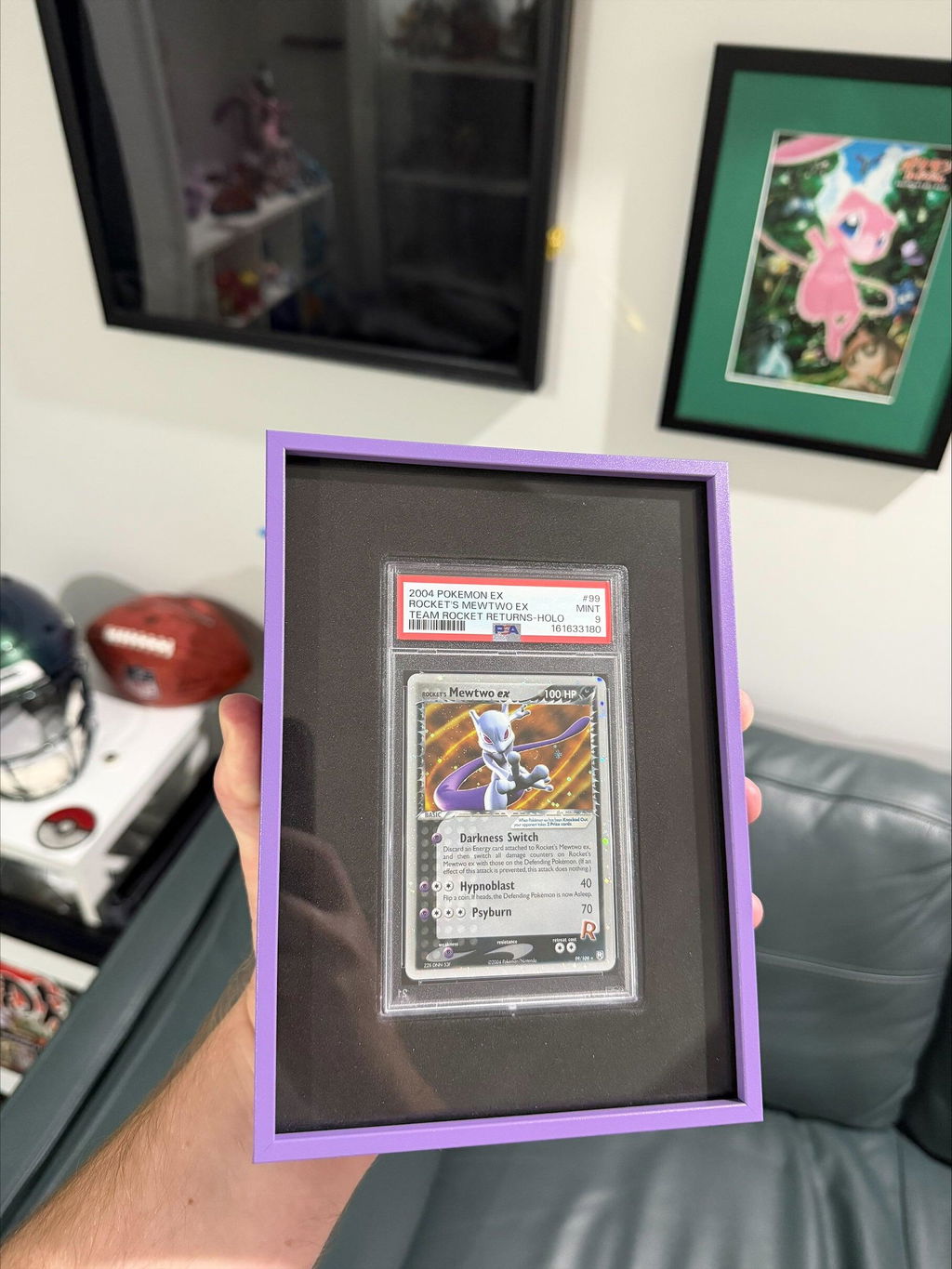
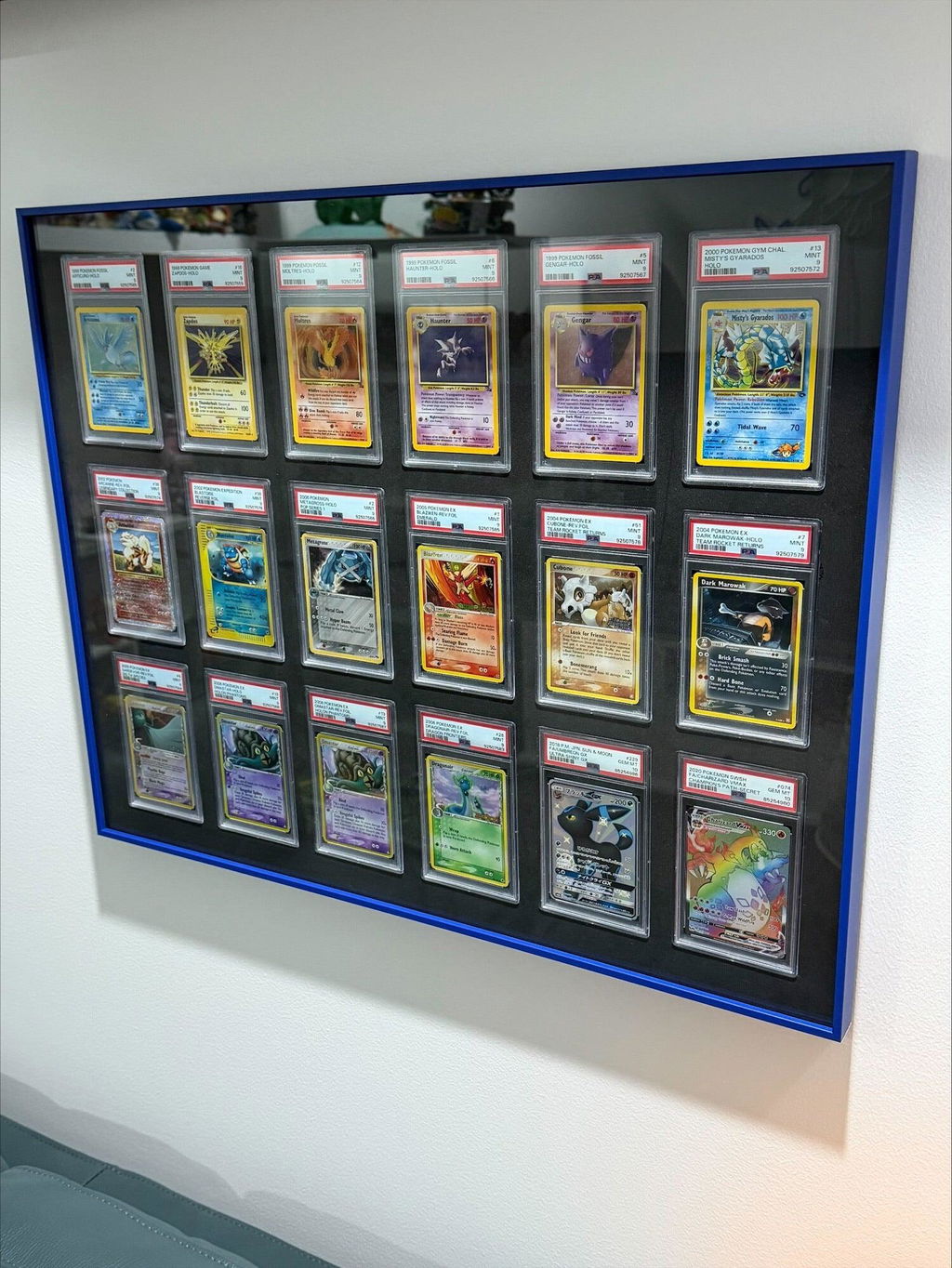
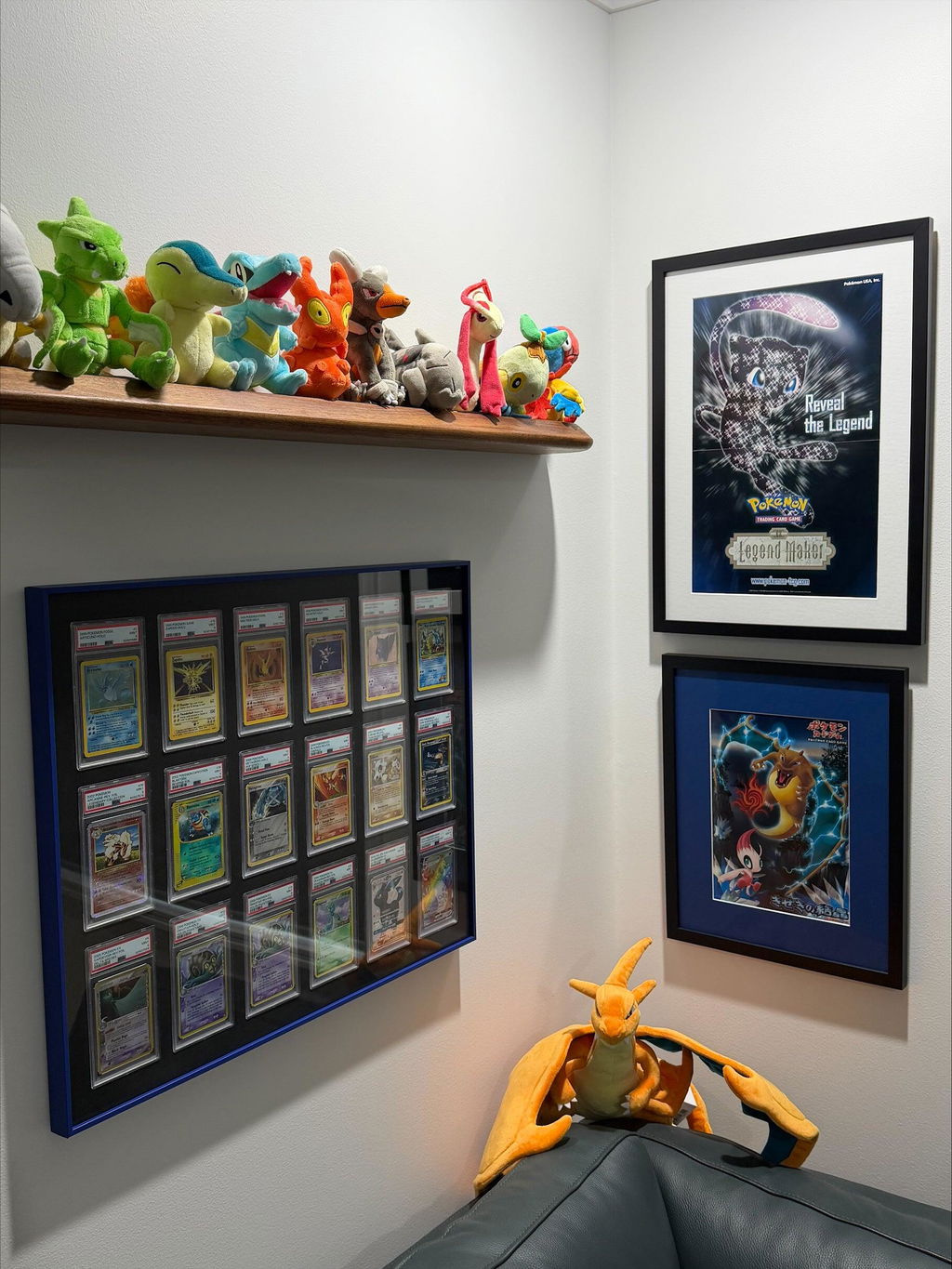
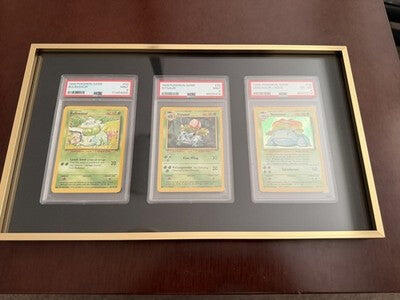
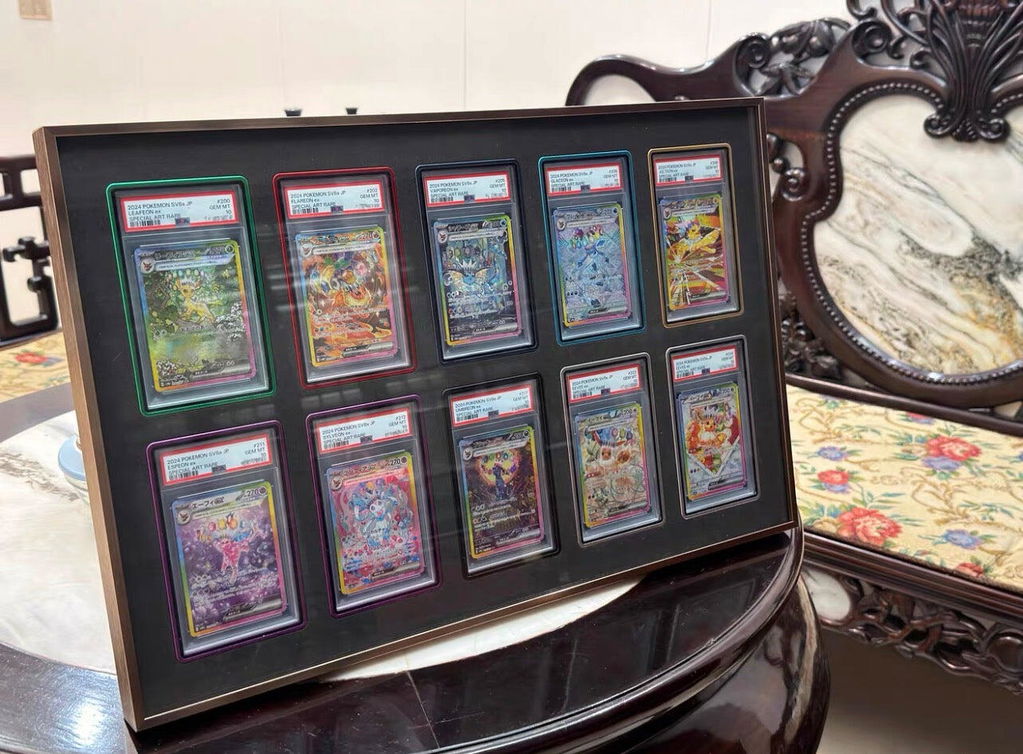

0 comments