


Physical video game collections can be displayed behind clear glazing in several ways: a small picture frame for one favourite title, a protective enclosure around a sealed game, a cabinet with glass doors, or a multi-game wall display. Once a collector decides to put PlayStation, Xbox or Nintendo games behind a transparent front, the next question is usually acrylic versus glass. Which material looks clearer, filters ultraviolet light, resists scratches, weighs less and makes sense for a large game case display?
There is no universal winner. Acrylic and glass each come in ordinary and specialist grades. A clear sheet marketed as 'premium' is not necessarily a UV-filtering material, and the label 'museum-grade' does not identify one fixed optical specification. Choosing the right material means deciding what you are trying to protect, what you want to see and how the display will be used.
This guide compares acrylic versus glass for video game displays, including PS5, PS4, PS3, PS2, Xbox Series X, Xbox One, Xbox 360, Original Xbox, Nintendo Switch, Nintendo Switch 2, retro game boxes, SteelBooks, sealed games and valuable collector editions. It also explains why front glazing is only one part of responsible preservation. The aim is to help collectors compare options on evidence, not to argue that every collection needs the most expensive material.
The short answer: is acrylic or glass better for displaying video games?
For many home displays, acrylic is attractive because it is lighter and generally more resistant to impact than ordinary glass. Those characteristics become particularly relevant when a display covers a large area or is shipped as a finished frame. Glass, meanwhile, is usually harder to scratch, often stiffer at comparable thickness and can be useful in cabinets or smaller picture frames. Specialist UV-filtering and anti-reflective versions exist for both material families.
Neither material solves every preservation problem. Both can protect a collection from some direct handling and dust. Properly specified glazing can reduce UV transmission, but no transparent front should be treated as permission to expose game cover artwork to intense sunlight indefinitely. Visible light, heat and cumulative exposure still matter. The Canadian Conservation Institute explains this distinction in its guidance on light, ultraviolet and infrared deterioration.
The practical choice depends on the size, location and intended life of the display. A single low-cost game frame on an interior wall may not require specialist glazing. A large collection with valuable original packaging and persistent room reflections may justify examining a premium material specification.
What does display glazing actually do?
Glazing is the transparent front of a frame or display enclosure. It may provide a physical boundary against direct contact, reduce the amount of airborne dirt reaching objects and influence how light travels towards them. In a gaming-room display, it also affects reflections, colour presentation and the weight of the finished assembly.
It does not automatically provide an airtight enclosure, controlled humidity, security against theft or guaranteed protection from fading. A frame's construction, backing, openings and wall environment all matter. A shelf with glass doors is a different enclosure from an individually fitted wall frame; neither becomes a museum microclimate merely because the front is clear.
For a PS5 case, the front panel is an extra layer beyond the game's own clear cover sleeve. For a sealed PS2 game or retro Nintendo cardboard box, the glazing may sit in front of a separate protective box. The more layers involved, the more important it is to understand what each one actually contributes.
Acrylic and glass are material families, not single product specifications
The word 'acrylic' generally refers to a transparent plastic glazing product based on PMMA, but cast and extruded sheets, UV-filtering grades and coated anti-reflective sheets need not have identical properties. Glass can mean ordinary float glass, low-iron glass, tempered glass, laminated glass, conservation glass or coated museum glass. Comparing one general acrylic sheet with a high-performance conservation glass product says little about the categories as a whole.
Ask what the exact sheet or glazing product is called, its thickness, its UV transmission and its reflectance. A retail description that only says 'crystal clear', 'UV resistant' or 'museum quality' does not provide enough information for a rigorous comparison. Manufacturer documentation and the conditions of use carry more weight than the marketing name.
The Canadian Conservation Institute's preventive-conservation materials guide describes useful differences between rigid plastic and glass, including weight, rigidity, impact behaviour and sealing performance.
Acrylic versus glass: at-a-glance comparison
| Consideration | Acrylic glazing | Glass glazing | What a collector should check |
|---|---|---|---|
| Weight | Generally lighter at comparable area and thickness | Generally heavier | Finished frame and mounting capacity |
| Impact behaviour | More impact-resistant than ordinary glass | Can break; behaviour varies for tempered or laminated grades | Shipping, handling and location |
| Scratch resistance | Often scratches more easily without a hard coating | Usually harder and more scratch-resistant | Cleaning and repeated handling |
| Rigidity | Can flex over long unsupported spans | Generally stiffer | Panel thickness, support and dimensions |
| UV filtration | Depends on formulation or specialist filter | Depends on formulation, laminate or coating | Wavelength-specific test data |
| Reflections | Standard and anti-reflective grades exist | Standard and anti-reflective grades exist | Total reflectance and viewing geometry |
| Optical clarity | High-quality grades can be very clear | High-quality and low-iron grades can be very clear | Transmission, colour cast and haze |
| Sealed enclosure | Plastic is permeable to water vapour over time | Glass is an excellent vapour barrier | Entire enclosure design, seals and humidity |
| Cost | Varies widely; coated museum acrylic may be expensive | Varies widely; coated conservation glass may be expensive | Actual size and supplier quote |
The table compares general tendencies, not every product. For a reliable purchasing decision, compare two specific sheets, not just two material names.
Why display size changes the acrylic-versus-glass decision
A small 1-game display and a large 16-game wall frame do not present the same engineering problem. As the front-panel area increases, its mass, flexibility, support and handling demands become more important. A glass front that is convenient in a small desktop frame can become cumbersome across a wide multi-game display.
Acrylic is often chosen for larger framed displays because a comparable panel is substantially lighter. However, larger acrylic sheets can flex, so thickness and support still need to be chosen for the actual span. Glass's rigidity can be an advantage, but its extra weight can influence mounting hardware, packaging and installation.
Neither product should be selected by simply scaling up a small-frame recipe. A frame holding a dozen PS3 game cases requires a different assessment from one holding a single Nintendo Switch case, even when the same visual style is used.
How much lighter is acrylic than glass?
Typical PMMA acrylic has a density around 1.19 g/cm³, while many common soda-lime glasses are around 2.5 g/cm³. At identical area and thickness, that makes acrylic roughly half the mass of ordinary glass. This is an illustrative materials comparison, not a finished-frame weight estimate: frame profiles, backing, hardware and game cases also contribute mass.
For example, a one-square-metre sheet at 3 mm thickness would weigh about 3.6 kg in acrylic at the stated density, compared with roughly 7.5 kg for glass at 2.5 g/cm³. A different thickness changes the calculation, and specialist glass laminates may weigh more.
This difference matters most as display area grows. A collector choosing a large wall-mounted frame might value lower front-panel weight, while someone choosing a small tabletop display may barely notice the difference.
Why rigidity matters for large video game wall displays
A front panel must stay suitably supported and avoid excessive bowing. Rigidity is not determined by material name alone: thickness, sheet dimensions, temperature and edge support all matter. A long, wide sheet can behave differently from a compact square sheet of the same thickness.
Glass is generally stiffer than acrylic at comparable thickness, but that advantage must be weighed against mass and breakage behaviour. Acrylic can be an excellent large-panel choice when the sheet thickness and surrounding support are appropriately specified. The ideal thickness for a 2-case wall frame cannot simply be assumed appropriate for a 16-case wall frame.
A collector comparing displays should ask whether the finished front was designed for that layout rather than judging quality solely by the number of millimetres listed on a product page.
Acrylic versus glass impact resistance and breakage
Acrylic normally tolerates impacts better than ordinary annealed glass, and when it fails it does not usually produce the same sharp fragments as broken ordinary glass. This helps explain its popularity in transported displays and certain public-facing applications. It does not make acrylic impossible to crack, chip or damage.
Glass has different options. Tempered glass is stronger in some impact conditions than ordinary glass and breaks in a different pattern. Laminated safety glass can retain fragments through an interlayer. Neither is identical to standard picture-framing glass, and specialist versions can introduce additional weight or price.
If a display will be moved regularly, mailed internationally or installed somewhere it could be knocked, impact behaviour matters. If it remains in a protected cabinet, optical finish and cleaning may be more important than maximum impact tolerance.
Which material scratches more easily?
Ordinary glass is generally harder and more scratch-resistant than untreated acrylic. This can be an advantage for high-touch cabinets or frames cleaned frequently. Acrylic is more vulnerable to fine surface marks, particularly if loose dust is dragged across it with a dry abrasive cloth.
There are hard-coated acrylic products designed to improve surface durability. A comparison between untreated acrylic and hard-coated acrylic is not the same as one between acrylic and glass. Likewise, a coated anti-reflective sheet may require special cleaning precautions irrespective of its underlying material.
For collectors, correct cleaning is often the most practical protection. Avoid rough cloths, paper towels, abrasive pads and household solvents unless the exact manufacturer's care instructions explicitly allow them. A careful owner can keep either glazing type attractive for many years.
Does glass always look clearer than acrylic?
No. High-quality acrylic and glass can both provide excellent viewing clarity. Perceived sharpness depends on material purity, haze, surface finish, thickness, reflections and the distance between the glazing and the object. A generic assertion that glass always looks better is no more accurate than saying every acrylic panel is optically perfect.
Some thicker ordinary glass has a faint green edge tint from iron content; low-iron glass is designed to reduce that cast. Acrylic can look exceptionally clear, but a low-grade or scratched sheet may show haze or marks. If colour accuracy matters for a bright Zelda, Pokémon or Halo cover, look for the manufacturer’s optical data and assess the finished display under realistic lighting.
The front panel is also not the only transparent layer. Disc-based PlayStation and Xbox cases often have a glossy outer sleeve, which can create reflections even when the frame front itself is excellent.
Visible-light transmission: what does 92% or 99% mean?
Visible-light transmission describes the proportion of incoming visible light that passes through a sheet under defined measurement conditions. A material with higher transmission can help the object behind it appear bright, but a single percentage does not fully describe colour neutrality, haze or reflections.
For example, an included premium clear acrylic may be specified by its supplier at up to 92% visible-light transmission. A particular coated gallery/museum-grade acrylic may be listed at approximately 99%. These are product-specific supplier claims, not universal values for all acrylic or all glass. They should be read alongside the test methods and optical behaviour of the exact material.
A collector does not need to chase the highest numerical transmission in every case. An appropriate ordinary front used in a well-lit room may be entirely satisfactory. Specialist optics become more attractive when reflections consistently interfere with viewing or the collection is displayed in a demanding environment.
What causes reflections on game display frames?
Reflections occur when some light is returned from a surface rather than passing through it. Windows, ceiling fixtures, lamps and bright objects opposite a display can all appear as glare on its front panel. Glossy video game cases add more reflective surfaces behind the glazing, which can make dark cover artwork particularly hard to see at certain angles.
The amount of reflection depends on the material's refractive properties, coatings, surface quality and viewing angle. A giant PS5 collection on a wall opposite a window may show more glare than a small Nintendo Switch display in a shaded corner, even if both use the same acrylic.
Before paying for specialist anti-reflective glazing, consider moving the display, changing the angle of lights or adjusting the room layout. Location often produces the most immediate improvement.
Anti-glare and anti-reflective are not always the same thing
'Anti-glare' sometimes refers to a matte or diffusing surface that spreads reflections. This can make bright shapes less mirror-like but may also soften the image when the object sits some distance behind the panel. 'Anti-reflective' commonly describes a coated surface engineered to reduce reflected light while preserving clearer viewing.
Terminology is not perfectly standardised across sellers, so inspect the actual specification. A matte sheet intended for signs viewed at close range may not be a good match for a thick PS5 game case positioned behind an air gap. A multi-layer anti-reflective coating may behave differently.
For a premium collector display, reducing glare is worthwhile only if the result preserves the cover artwork’s appearance. Request samples or inspect demonstrations with a comparable air gap wherever possible.
How museum-grade anti-reflective acrylic works
Some specialist cast acrylic sheets carry anti-reflective coatings on both faces. The coatings are engineered to lower visible reflections, allowing more of the displayed object to be seen with less mirror-like interference. Certain products also incorporate UV filtering.
One Australian supplier's PLEXIGLAS® Gallery & Museum anti-reflective acrylic specification lists approximately 99% visible-light transmission, less than 1% total reflectance across both surfaces, and up to approximately 99% UV blocking below roughly 400 nm. Those figures describe that supplier's product and should not be transferred to unrelated acrylic or glass products.
The supplier also notes that anti-reflective performance is influenced by how close the object sits to the sheet. A game case behind the front panel is not necessarily in the same optical arrangement as a photograph lying very close to museum glazing.
Why an air gap changes perceived clarity
Video game cases are three-dimensional. A framed PS2 case, an Xbox 360 case or a Nintendo Switch case may sit some distance behind the outer glazing. That spacing can affect the appearance of diffusing anti-glare surfaces and the visibility of the case’s own reflections.
Do not assume a sheet that looks nearly invisible when placed against a print will look identical when mounted in front of a thick case or plastic protector. The interaction of multiple clear surfaces, spacing and room lighting determines the finished look.
This is a reason to test important displays with a real case before placing a large order for specialist glazing. A full-size 15-game or 16-game frame is an expensive place to discover that the preferred surface finish reduces sharpness at the intended viewing distance.
UV protection: why the material name is not enough
Both glass and acrylic can be supplied with useful UV-filtering properties. Ordinary clear versions may filter some wavelengths without filtering the full UV range close to the visible boundary. Conservation glazing is designed to provide more predictable reductions across specified wavelengths.
For any material described as 'UV resistant', ask which wavelengths were measured. Acrylic that filters strongly below 330 nm is not technically equivalent to a specialist sheet rated for broad UV reduction toward 400 nm, even though both can truthfully be described as reducing UV. A UV percentage without a wavelength range can lead to misleading comparisons.
The Canadian Conservation Institute's UV-filter guidance distinguishes ordinary materials from conservation filters and explains why measuring transmission is useful.
What ultraviolet light does to video game packaging
Printed cover artwork can contain colourants, papers and coatings that respond to light. UV can contribute to chemical deterioration and changes in some plastics, while visible light also contributes to fading. Cardboard boxes, labels, manuals and factory wrapping each have different material sensitivities.
A collector with ordinary PS4 and Xbox One cases may be more concerned about keeping a colourful row of spines attractive. A collector with a valuable sealed PS2 copy may be especially concerned about the original cover, wrapper and overall condition. In either situation, avoiding direct sunlight is an important first step.
Filtering UV is useful, but nobody can responsibly promise that a game cover will never fade simply because it sits behind a front panel advertised as 99% UV protective.
UVA, UVB, UVC and visible light: what glazing specifications mean
| Band | Approximate wavelength | What it means for displays |
|---|---|---|
| UVC | 100–280 nm | Solar UVC is effectively absorbed by the atmosphere before reaching normal indoor collections. |
| UVB | 280–315 nm | Much is reduced by the atmosphere and common window glazing; exact transmission varies. |
| UVA | 315–400 nm | Especially relevant when comparing glazing that claims UV protection near the visible spectrum. |
| Visible light | Approximately 400–700 nm | Enables viewing, but can contribute to the fading of sensitive inks and dyes. |
Not all UV-filtering products use identical testing bands. Claims around '99% UV blocking' should therefore be connected to the manufacturer’s exact test conditions, not treated as a universal fixed number at every wavelength.
Does ordinary glass block UV?
Ordinary window or picture-framing glass reduces some UV, particularly shorter wavelengths, but it should not be treated as a perfect UV filter. Different glass formulations, thicknesses, laminates and coatings produce different transmission curves. A regular window does not eliminate visible daylight, either.
Specialist conservation glass products may reduce UV much more extensively. The Canadian Conservation Institute's measurements in one comparison found a meaningful distinction between ordinary glass and museum-targeted UV filters, while also noting variation by product and testing conditions. This is evidence for comparing actual grades, not for applying one number to all glass.
If a framed game collection receives strong sunlight, the most reliable initial improvement is choosing a better wall location. Upgraded glazing can complement that decision, not substitute for it.
Does ordinary acrylic block UV?
Many PMMA sheets attenuate part of the ultraviolet spectrum. The amount depends on the exact material, thickness, stabilisers and additives. A product designed to resist outdoor yellowing may be primarily protecting itself, not necessarily providing comprehensive filtration for paper artwork behind it.
Some suppliers provide transmission curves showing strong filtration at shorter wavelengths but increasing transmission in part of the longer UVA range. Specialist museum or conservation grades can be designed for wider filtering. That is why the label 'acrylic' alone does not tell you how much UV reaches a Nintendo Switch cover or a signed PlayStation game sleeve.
For a proper comparison, look for the manufacturer’s spectral transmission graph rather than assuming every clear sheet blocks the same fixed percentage.
UV-resistant, UV-stable and UV-filtering: definitions
UV-stable commonly refers to how well a material withstands UV exposure without yellowing or losing its appearance. UV-resistant can be used broadly and may refer to durability, filtration or both. UV-filtering focuses more specifically on reducing the UV transmitted to an object behind the material.
These words can overlap in commercial descriptions, so they are not a substitute for technical data. A sheet marketed as weather-resistant may be an excellent outdoor material without providing the same wavelength coverage as a conservation glazing product.
The practical question for video game collectors is: does the data describe protection of the front material, or measured filtration for the printed artwork and packaging placed behind it?
How to read a UV transmission curve
A supplier may publish a graph with wavelength in nanometres on the horizontal axis and percentage transmission on the vertical axis. Find the values near 300, 320, 350, 380 and 400 nm. Look for where transmission starts rising. A sheet with little transmission below about 330 nm behaves differently from one with extremely low transmission until near 400 nm.
Also identify the sheet thickness used during testing. The transmission characteristics of one tested product cannot automatically be transferred to a different thickness or grade. Where two products publish UV percentages using different measurement ranges, direct comparison may be misleading.
A graph does not by itself establish how the finished game frame should be installed. It only describes the optical behaviour of the tested glazing under the stated conditions.
What does '99% UV protection' actually mean?
A manufacturer may report that a glazing product blocks up to 99% of UV within a specified band. That can be a valuable specification, but it does not mean that precisely 99% of every wavelength from 100 to 400 nm is stopped, nor that all visible-light fading is prevented.
Two products can use different methods to calculate percentages. Some figures may describe a combined band; others may be based on an industry standard or particular wavelengths. Look for the test range, sheet thickness and measurement method. Avoid multiplying or adding percentages from two different layers to invent a combined lifetime protection guarantee.
A collector deciding whether to pay more for a museum-grade sheet should understand what the number measures and what it does not.
Premium clear acrylic versus museum-grade acrylic
An everyday premium clear acrylic can offer good transparency, useful impact behaviour and supplier-documented UV resistance. A specialist anti-reflective museum-grade acrylic may add broader UV filtering, very low surface reflectance and increased visible-light transmission. The improved optical specification can be attractive for display enthusiasts, but it comes at a higher price and may require more careful surface handling.
The meaningful comparison is between actual published specifications. For example, a supplier may list up to 92% light transmission for one clear acrylic and around 99% transmission for a separate coated museum material. That does not establish that every regular acrylic sheet performs at precisely 92%, or that every museum-grade product performs at precisely 99%.
A shaded indoor display with high-quality standard glazing may already meet a collector's goals. Upgraded materials are options for particular priorities, not requirements that everyone should adopt.
Conservation glass versus museum acrylic
Both material families can have specialist UV-filtering and anti-reflective options. Conservation glass is appealing when scratch resistance, rigidity and a glass surface are preferred. Museum-grade acrylic is appealing when low weight, impact behaviour and particular coated optical properties are valued. Their advertised performance varies across brands and grades.
A proper comparison should include wavelength coverage, visible transmission, reflectance, surface care, weight, thickness and practical installation conditions. Two specialist products with similar UV ratings can still produce different viewing experiences if one is anti-reflective and the other is not.
For owners of expensive sealed games, the deciding issue may be long-term care and presentation. For a large wall display, safe weight and mounting may carry more importance than a fractional difference in optical transmission.
What about low-iron glass?
Low-iron glass is made to reduce the slight greenish cast sometimes visible in ordinary glass, particularly along thicker edges. It can improve colour neutrality in certain applications. This is separate from any promise of UV protection or anti-reflective performance.
A low-iron sheet can still reflect light. A separate UV-filtering or anti-reflective treatment may be required if those properties are important. Collectors should not assume that a product sold as 'ultra-clear glass' has conservation-level filtration.
For a vibrant Nintendo or Pokémon game-cover display, colour neutrality may be desirable, but it should be evaluated alongside lighting and the game's own glossy packaging.
What about tempered and laminated glass?
Tempered glass is heat-treated to change its strength and fracture behaviour. Laminated glass combines layers with an interlayer that may retain fragments and can influence UV transmission depending on its formulation. Neither term automatically guarantees conservation UV protection or low reflection.
If the frame is within reach of children or could receive an impact, safety characteristics matter. However, glass construction must be suitable for the particular display and mounting system. Simply asking whether a sheet is 'strong glass' is not enough to establish suitability for a large wall-mounted game collection.
A small collector cabinet may reasonably use a glass panel designed for its doors. A very large custom wall frame calls for a separate structural assessment.
Acrylic versus polycarbonate for video game display glazing
Polycarbonate is another clear plastic sometimes used in protective barriers and display cases. It generally offers very high impact resistance, but its optical properties, scratch behaviour, UV transmission and surface coatings depend on the exact grade. It is not interchangeable with PMMA solely because both are transparent plastics.
A retailer calling an enclosure a 'clear acrylic case' may sometimes use broad terminology for different plastics. Confirm the actual material if scratches, UV filtration, chemical care or long-term appearance are important. A protective box for a sealed game may serve different priorities from the front glazing of a decorative wall frame.
The same rule applies: compare product-specific documentation, not material names in isolation.
Does acrylic attract more dust or static?
Acrylic can accumulate electrostatic charge, which may attract dust and can be an important conservation issue for friable media such as pastels and charcoal. Most video game case artwork is protected within its own packaging and is not directly comparable to exposed powdery artwork, so those warnings should not be overstated for ordinary boxed games.
However, a static-prone clear front can still be inconvenient to clean. Follow the acrylic manufacturer's handling and cleaning guidance. Anti-static cleaning products should only be used if the exact sheet or coating supplier allows them.
Glass can also attract dust, but routine cleaning behaviour differs. Choose the material you are prepared to maintain properly rather than assuming one requires no care.
Is acrylic always safer for shipping?
Acrylic's lower weight and impact resistance can simplify some shipping challenges compared with ordinary glass, especially for large panels. But acrylic still needs protective packaging against scratching, bending and corner damage. A well-packed glass frame may travel successfully; a badly packed acrylic frame can arrive damaged.
International express shipping can make parcel dimensions and volumetric weight particularly important. Those costs depend on the finished package, not just the density of the transparent sheet. Frame size, foam protection, cardboard and handling requirements influence the result.
For buyers, consider whether the supplier has experience shipping the actual finished size and how the display is protected in transit. There is no material that eliminates the need for thoughtful packaging.
Large panels: why shipping cost is not simply proportional to game count
The difference between 1, 4, 9 and 16 cases is more than the number of objects. A larger grid requires greater total panel area and perimeter, and its shipping box may be assessed by volumetric dimensions rather than actual scale weight. A frame for Nintendo Switch cases may differ substantially in size from a frame for taller disc cases.
Because of that, a 16-case wall display cannot be costed by multiplying the shipping price of a 1-case frame by sixteen. Equally, doubling the glazing's face area does not necessarily double total manufacturing cost, because perimeter-based parts and fixed labour behave differently.
Collectors comparing pricing should examine the complete display, its dimensions and delivery terms. A specialist large frame is a different logistical product from a set of loose plastic sleeves.
How case thickness affects frame depth and glazing distance
Physical disc cases, slim Nintendo Switch cases, retro jewel cases and external protector boxes vary in thickness. These differences determine how far the outer glazing sits from the visible cover and whether the frame can hold the item without unwanted pressure.
A frame designed around one console case format should not be assumed compatible with every other type. Exact-fit arrangements depend on the external dimensions of the case and any additional sleeve or protector. This matters most when switching between PS2 DVD-style cases, newer PlayStation Blu-ray-style cases, Xbox cases and Nintendo formats.
For broader measurements, consult our video game case dimensions guide before planning a fitted wall display.
Does glazing need to touch the game case?
Not necessarily. Contact and spacing should be determined by the design of the case and display. Pressure against a valuable sealed wrapper, cardboard box or fragile insert can create handling risks. A case may also benefit from a removable support that allows safe access without scraping against the front panel.
On the other hand, a large distance between artwork and glazing can affect some diffuse anti-glare surfaces and the visibility of reflections. The best arrangement balances the item’s depth, access requirements, viewing quality and mechanical support.
For a rare or graded game, do not force an item into a display designed for a smaller standard case. Preserve the original packaging rather than altering it to make it fit.
Displaying original PlayStation and PS2 games behind glazing
Original PlayStation releases often use jewel-style or other regional packaging rather than the modern cases familiar to PS4 and PS5 collectors. PS2 games typically use DVD-style cases, with regional variations and special editions. The shapes influence frame depth, surface glare and the amount of wall area needed for a collection.
A simple shelf may be preferable for a large library of common titles. A single rare or sentimental game might suit a small frame or enclosed display. Either approach can work with acrylic or glass if the glazing suits the size and lighting.
The critical preservation point is to protect original inserts, manuals, labels and seals, rather than assuming every copy is replaceable. For collectors, condition can matter as much as the disc itself.
Displaying PS3, PS4 and PS5 game cases
PS3, PS4 and PS5 collections share some broad packaging characteristics, but official cases and replacements are not dimensionally identical in every edition. A collector planning a precise multi-game arrangement should verify the actual physical cases, especially where different generations are combined.
Because blue or clear outer sleeves can be glossy, room reflections may be noticeable even behind an anti-reflective frame front. A premium coating can reduce reflections on its own surfaces, but cannot remove every reflection originating within the game packaging.
For collectors arranging God of War, Uncharted, Gran Turismo, Ratchet & Clank or The Last of Us releases, consistency of layout and spacing may make more visual difference than the choice between two otherwise suitable clear glazing materials.
Displaying Original Xbox and Xbox 360 games
Original Xbox and Xbox 360 cases are frequently associated with distinctive green packaging, but their external dimensions and construction vary by console generation and edition. Classic Halo, Fable, Forza and Gears of War collections can look effective on shelves, inside cabinets or in a carefully arranged wall display.
If the game cases are shown front-on, cover art visibility and reflections become important. If they are stored spine-out on shelves, the amount of transparent glazing in front of the collection may matter less than the ambient light level and ease of access.
For an expensive complete-in-box game, choose protection based on the original packaging's condition, not the assumption that one console brand inherently requires different UV glazing chemistry.
Displaying Xbox One and Xbox Series X game cases
Xbox One and Series X physical releases often use compact modern disc-case packaging, with edition-specific differences. A collector may own steelbook editions, collector sleeves or art variants alongside ordinary retail cases. Those formats should not be forced into an exact-fit display intended for a single standard case.
Glass-door cabinets offer one approach for larger collections, while acrylic-front frames may suit selected favourite titles. The right choice depends on accessibility, display orientation and wall location as much as on the theoretical material advantages.
If reflections are your main problem, assess whether they come from the outside glazing or the case itself before purchasing an anti-reflective upgrade.
Displaying Nintendo Switch and Switch 2 collections
Nintendo Switch packaging is compact and often displayed in colourful runs featuring Zelda, Mario, Pokémon, Metroid and Animal Crossing. Switch 2 cases are similar in concept, but collectors should not assume identical external dimensions or identical packaging materials for every version or special edition.
A narrow shelf can present Switch spines efficiently. An individual wall frame can turn a favourite title into a feature. A multi-game layout can showcase a complete series or favourite set of cover artwork. Acrylic and glass can both make sense depending on the size and use.
The vivid printed inserts remain sensitive to the broader lighting environment. The red colour of the case body is not a quantified UV rating for the transparent cover sleeve.
Retro cartridges, cardboard boxes and clear fronts
Game Boy, NES, SNES, N64 and other retro packaging introduces different concerns from standard disc cases. Cardboard boxes can be vulnerable to crushing, creases, scuffed edges and environmental changes. Cartridge labels may be irreplaceable originals. Transparent protectors can reduce direct handling but have their own UV and scratch properties.
A glazed frame designed for a modern game case should not automatically be used for a loose cartridge or fragile cardboard box. Support, depth, access and the condition of the object matter. In some situations, a fitted protective box on a shaded shelf offers a more cautious approach than a permanently mounted decorative frame.
Do not attach rare packaging with adhesives or mounts that cannot be removed safely simply to achieve a visually pleasing display.
SteelBooks, metallic covers and glare
SteelBooks and metallic collector packaging can create distinctive reflections. Their coated surfaces, printed finishes and the artworks beneath them may react differently to lighting and handling from ordinary paper inserts. Metallic appearance does not establish that the entire object is unaffected by UV or heat.
Anti-reflective glazing may improve the visibility of a reflective case, but can never eliminate all reflections from the object itself. Before choosing an expensive front, evaluate the case at the intended viewing angle with the actual room lighting.
For valuable collector editions, protect edges, hinges and printed finishes from abrasive contact. An enclosure should support the object rather than apply unwanted pressure to its decorative surfaces.
Sealed, graded and expensive video games: do they need museum glazing?
Not always. A high-value sealed game in a dark, climate-stable storage location may experience less light exposure than an inexpensive game displayed in direct sun. Condition and value can justify extra care, but price is not itself a UV wavelength specification.
Museum-grade acrylic or conservation glass may be an attractive choice when a valuable game will remain on display, especially where reflections are intrusive or broader UV filtering is desired. But the correct long-term decision also includes humidity, heat, support, handling, insurance and whether a replica or duplicate can be shown instead.
For more on authenticity, condition and valuations, see our guide to displaying rare and sealed video games.
Game valuations and why packaging condition matters
In physical game collecting, market value can differ dramatically between a loose cartridge or disc, a complete-in-box copy with manuals and original packaging, a factory-sealed edition and a professionally graded example. Condition, rarity, region, demand and authenticity all influence price. There is no fixed premium that applies to every sealed game.
Faded covers, damaged corners or replaced artwork may affect desirability, especially for buyers focused on original condition. But nobody can responsibly estimate the dollar loss from a particular mark without comparable sales of the same edition and condition.
Research recent completed sales, not just ambitious asking prices. Platforms such as PriceCharting can provide useful context, while individual sold listings deserve inspection for condition, accessories and edition differences.
Is anti-reflective glazing worth the extra price?
It depends on why you are upgrading. If your display hangs opposite a bright window, a very low-reflectance coated front can improve the ability to see cover artwork. If your room is already dim, reflections are limited and you are happy with the existing view, the improvement may be less important.
An anti-reflective sheet's appearance should be tested with the actual display depth and cases wherever possible. Read the cleaning instructions, because delicate coatings can change how the surface must be maintained. Do not assume anti-reflective automatically means stronger UV filtration; those are separate specifications.
Premium glazing can be genuinely useful, but its value comes from solving a real optical or preservation problem, not simply from carrying the word 'museum'.
Is budget glass better than expensive acrylic, or the other way around?
These are not always comparable purchases. A low-cost standard glass panel may be clear and scratch-resistant but heavier and more vulnerable to breakage. A premium coated acrylic may be lighter and have documented UV and anti-reflective properties, but cost considerably more and require careful cleaning. Specialist glass might offer similar optical protection with different trade-offs.
Instead of asking which price category is superior, identify the specific need: small frame, frequent cleaning, low weight, difficult glare, valuable paper packaging or large wall span. You may discover that a low-cost solution is entirely adequate. You may also find that the higher-priced option addresses a problem the cheaper material cannot.
A thoughtful collector display is defined by how well the materials serve the objects, not by the highest amount spent on the front sheet.
Display methods from inexpensive to specialised
| Display method | Typical strengths | Limitations to consider | When it makes sense |
|---|---|---|---|
| Existing shelf or bookcase | Low cost, easy access, flexible | Dust, visible clutter, room-light exposure | Large everyday game libraries |
| Simple clear stands | Front-cover display without major furniture | Limited protection; stability varies | Small favourite-game displays |
| Protective sleeves or rigid boxes | Reduce handling and surface wear | UV ratings vary; extra bulk | Sealed and boxed collectibles |
| Cabinet with glass doors | Organised collection, dust boundary, easier access | Weight, glare, shelf spacing | Larger mixed libraries |
| Simple picture frame | Individual cover-art presentation | Fit, access and materials may be basic | Sentimental titles or replica artwork |
| Specialist acrylic-front wall display | Multiple fitted cases, structured arrangement, low glazing weight | Higher cost, exact case compatibility | Curated collections and feature walls |
| Museum-grade glazed display | Specialist optical or UV performance | Cost, coatings, installation demands | Collectors with specific preservation or viewing goals |
The progression is not a ranking of what every collector should buy. A shaded inexpensive shelf may be better for preservation than an elaborate wall frame placed in direct sunlight. Conversely, a carefully designed specialist frame can improve the presentation of a curated collection when its materials and environment are appropriate.
Choosing glazing for a gaming room with windows
A bright gaming room may look attractive in photographs while presenting a demanding environment for printed covers. First examine direct sunlight across the wall or cabinet at different times of day. Seasonal sun angles can change which area receives the strongest light. Blinds, curtains or repositioning the display can reduce exposure without changing the glazing.
After that, consider the specific UV-filtering properties of any panel. Anti-reflective glazing can make the games easier to see, but it does not remove the visible daylight reaching the artwork. UV-filtering window film also should not be treated as complete fading prevention.
For a valuable collection, location often deserves more attention than whether the clear front is 2 mm or 3 mm thick.
Choosing glazing for a dark gaming room with LEDs
LED lighting often produces relatively little UV compared with some older light sources, but visible light still reaches the display. A very bright LED strip left on continually can produce meaningful cumulative exposure even when its UV emission is low. Avoid hot lighting fixtures immediately against packaging or acrylic.
Glazing choice in a darker room may be driven more by reflections, dust and appearance. A straightforward clear acrylic front may be entirely satisfactory. A specialist anti-reflective surface might help if bright LEDs create distracting mirror-like spots.
The Library of Congress's guidance on light exposure reinforces the importance of limiting unnecessary illumination for sensitive collections.
Cleaning acrylic without damaging it
The safest cleaning method depends on the exact acrylic and whether it has a surface coating. Remove loose dust gently, use a clean non-abrasive cloth approved by the supplier, and avoid aggressive solvents, ammonia-based cleaners or alcohol unless the manufacturer explicitly authorises them. Some cleaners can damage acrylic or specialist coatings.
Do not rub dry grit into the sheet, and do not use paper towels as a default cleaning tool. Inspect the surface for any existing damage before wiping a large panel. If a supplier includes a protective film for installation, follow the instructions for removal and handling.
A few careful minutes of routine maintenance can preserve the appearance of a display better than repeated aggressive polishing.
Cleaning glass and coated conservation glazing
Glass is often easier to clean without producing fine scratches, but coated conservation or anti-reflective glass may still require specialist instructions. A product that looks like ordinary glass may have a delicate surface coating that should not be exposed to standard household spray cleaners or abrasive pads.
Avoid allowing cleaning liquid to run into the case, paper inserts or frame edges. For a sealed collectible or valuable cardboard box, it is better to remove the display front for appropriate cleaning only when the enclosure is designed for safe access.
Always follow the glazing maker’s care advice instead of assuming that every glass front tolerates the same treatment.
Can scratched acrylic be polished?
Some scratches in untreated acrylic can potentially be reduced using appropriate polishing methods, but the result depends on their depth, material thickness and finish. Coated anti-reflective acrylic may not tolerate polishing without removing or altering its optical layer.
Do not attempt aggressive polishing on a premium coated display without checking with the supplier. A small surface mark may be less disruptive than a large unevenly polished patch. In serious cases, replacing the front panel may give a better result.
The same caution applies to glass coatings: apparent scratch resistance does not mean a specialised surface is immune to damage.
Does thicker acrylic offer more UV protection?
Thickness can influence absorption in a particular material, but thicker ordinary acrylic is not automatically equivalent to conservation UV-filtering acrylic. The formulation and measured transmission spectrum remain central. A thicker sheet may be chosen mainly to improve rigidity across a large display.
If two suppliers offer 2 mm and 3 mm sheets, compare the correct technical data for each product rather than extrapolating a headline UV percentage. Physical strength and spectral filtering should be assessed separately.
This is particularly important for collectors moving from a compact single-game frame to a large, multi-case wall display, where panel rigidity may change while the preferred UV-filtering material remains the same.
Does thicker glass offer better clarity or protection?
Thicker glass changes mass and structural properties; it does not necessarily improve clarity or UV filtering. Depending on the glass formulation, thickness can also make edge tint more noticeable. Specialist glass might provide filtration through coatings, laminates or other material properties that cannot be inferred from millimetres alone.
A large pane may need sufficient stiffness and secure mounting, but its actual thickness should be selected for the design and installation rather than simply choosing the thickest available sheet. A smaller display may not benefit from unnecessarily heavy glass.
For optical and UV comparisons, use the manufacturer’s data rather than the assumption that weight equals quality.
Can multiple clear layers add protection?
A display may include a transparent game-case sleeve, a protective box and an acrylic or glass front. Each layer can influence the remaining light reaching the artwork. However, two products each described as 99% UV protective cannot simply have their percentages added together to claim something like 198% protection.
The combined effect depends on wavelength-specific transmission of each layer. Some layers may primarily filter the same band; others may filter different bands. The presence of several clear surfaces can also increase glare unless their coatings and geometry are considered.
For most collectors, the useful rule is simple: keep valuable objects away from direct sunlight and choose any additional layers for clearly documented reasons, not arithmetic based on advertising slogans.
Do display fronts protect against moisture and humidity?
Glazing can help separate the object from direct contact and may reduce rapid exchange with ambient air when the entire enclosure is designed for it. But a typical picture frame or wall-mounted game display is not a humidity-controlled case simply because it has acrylic or glass at the front.
Glass itself is a very good vapour barrier, whereas acrylic is permeable to water vapour over time. Yet the seals, backing, joints and openings are often the deciding factors in a real enclosure. A small gap can defeat the idea of a tightly controlled microclimate regardless of the front material.
For valuable cardboard packaging, storage environment and stable relative humidity remain important. A premium transparent front does not solve damp walls, condensation or poor room conditions.
What about heat, direct sunlight and enclosed cases?
Direct sunlight can warm a glazed enclosure and the objects inside it. A dark game case or coloured backing may absorb more energy, while an enclosed display can have limited airflow. UV filtering does not necessarily prevent this heating, because much of the visible and infrared energy may still enter.
Avoid placing valuable games above heaters, beside hot lamps or in persistent direct sunlight. For a large wall display in a warm room, consider overall temperature and location rather than concentrating exclusively on the transparent sheet’s UV number.
Heat can influence paper, adhesives, plastics and factory wrapping. Preventing avoidable heating is part of preservation, not merely a comfort consideration for the room.
Wall mounting: why the whole frame matters
A front sheet is only one part of a display’s weight. The aluminium or timber frame, backing, game cases and mounting hardware all contribute to the total load. Larger displays should be mounted using appropriate hardware for the wall construction and total finished weight.
An acrylic front may reduce mass compared with similar-thickness glass, but it does not make a large frame automatically suitable for weak fixings. Wall studs, masonry anchors and other supports have different requirements. If the display is unusually large or valuable, professional installation may be sensible.
The best visual arrangement is one that can be used safely and maintained without repeatedly removing a heavy, awkward panel.
Accessibility and changing the game collection
Some collectors want a permanent display of favourite titles. Others routinely rotate games or move them between shelves and wall frames. A convenient access system can matter more than a small difference in optical performance if the objects will be handled every week.
Consider whether the display can be opened without putting pressure on cases or protective wraps, whether the glazing can be removed safely and whether the selected format supports the actual items. A tightly fitted frame that requires forcing a case into position is not a good choice for a valuable original.
For rotating collections, the right product may be a shallow cabinet or shelf. For a mostly fixed collection, a framed wall arrangement can be visually compelling.
When a simple shelf is the better display
A shelf is often the best option when a collector owns a very large library, plays the games frequently or wants a low-cost solution. It allows flexible spacing and easy access. Game spines can be arranged by console generation, alphabetically or by franchise, and a cabinet or curtain can reduce dust and light exposure.
There is no need to frame every game. In fact, a collector with hundreds of titles may prefer to keep most in shaded storage and display only a small number of favourites as cover art. This reduces the cost of presenting a collection while keeping the display focused.
That approach can also be useful for rare games: a carefully stored original can remain protected while a reproduction cover or less valuable copy is displayed more prominently.
When a multi-game aluminium wall frame makes sense
Purpose-built aluminium displays become appealing when a collector wants a structured, front-facing arrangement of favourite cases rather than a long row of spines. They can provide consistent spacing, a controlled visual border and a clearly defined place for a small or medium collection.
Acrylic glazing often pairs well with large aluminium frames because of its lower weight and availability in clear or specialist optical grades. The finished display can look restrained, especially when the case artwork supplies most of the colour. However, exact case-format compatibility, size, mounting and budget still have to be checked.
The price is generally higher than basic shelving or individual plastic stands. Whether that premium is worthwhile depends on the collector’s goals, the quality of the materials and the value placed on the finished presentation.
Four practical collector scenarios
Scenario 1: A four-game Nintendo Switch feature wall
A collector wants to show four favourite Switch covers on a shaded interior wall. The collection is not especially valuable, but the artwork is important. A clear acrylic-front wall display may be convenient because of its low weight and straightforward viewing. If the room has no serious glare, specialist museum-grade glazing may not add enough visible benefit to justify the expense. The collector’s first priorities should be correct case fit and avoiding direct sun.
Scenario 2: A large PlayStation collection in a dedicated gaming room
A collector owns PS2, PS3, PS4 and PS5 games but wants to frame a selection of sixteen matching case-format titles. The front-panel area makes weight and rigidity important. Acrylic may offer a practical handling advantage over comparable glass, while anti-reflective options deserve consideration if spotlights or windows produce glare. The collector should still verify that all selected cases are dimensionally compatible before ordering a fitted display.
Scenario 3: A rare factory-sealed Xbox game
A sealed Xbox release carries significant personal or market value. The owner wants to see its cover without risking the wrapper. A rigid protector on a shaded shelf may be a suitable option. If displayed in a more formal enclosure, a documented UV-filtering front could be useful, but safe support, non-abrasive contact and environmental stability may matter more than upgrading to the highest-priced glazing.
Scenario 4: A small museum-style gaming collection
A collector presents a few rare boxed Nintendo or PlayStation titles for visitors. Low reflections and accurate colour presentation are priorities, and the display receives frequent attention. Specialist anti-reflective acrylic or glass could be justified. A comparison should include optical transmission, wavelength data, scratch resistance, weight, cleaning requirements and the enclosure’s backing and seals, not merely its front material.
How to compare two glazing data sheets
| Specification | Why it matters | Question to ask |
|---|---|---|
| Material and grade | Establishes what product is being compared | Is it PMMA, low-iron glass, coated acrylic or another grade? |
| UV transmission | Indicates how much UV passes through | Which wavelengths and test conditions were used? |
| Visible transmission | Influences brightness and view | What portion of visible light transmits? |
| Total reflectance | Influences mirror-like reflections | Is it for one face or both faces combined? |
| Haze and diffusion | Influences sharpness across an air gap | Is the finish coated AR or matte anti-glare? |
| Thickness and panel span | Influences rigidity and weight | Is the sheet appropriate for the actual frame dimensions? |
| Surface treatment | Influences scratch resistance and cleaning | Are there special care requirements? |
| Manufacturer documentation | Helps establish technical credibility | Can the supplier provide the full data sheet? |
If a vendor cannot answer these questions, that does not prove its glazing is poor. It means the buyer has less evidence for claims about conservation performance. For an inexpensive everyday display, that limitation may be acceptable. For a valuable collection, clearer specifications can justify the extra effort.
Common mistakes when choosing acrylic or glass
- Treating all acrylic as one UV-filtering product. Formulations and coatings differ.
- Assuming glass always blocks more UV. Specialist products exist in both materials.
- Assuming a 99% UV claim means no fading. Visible light and heat can still contribute to deterioration.
- Confusing anti-glare with coated anti-reflective finishes. The perceived sharpness may differ.
- Choosing thickness as a substitute for technical specifications. Rigidity and UV filtering are separate questions.
- Ignoring game-case thickness. Air gaps and protectors influence fit and optical appearance.
- Forgetting mounting weight. A large glazed frame needs appropriate structural support.
- Cleaning coated acrylic like ordinary glass. Surface treatments can require different care.
- Believing expensive glazing fixes a bad wall location. Direct sunlight remains a poor choice for sensitive original artwork.
- Assuming a framed collection is airtight. The entire enclosure controls humidity exchange, not just the front sheet.
A practical decision checklist before ordering a display
- Identify the actual game case format and any protector around it.
- Measure the case or verify dimensions for the exact edition.
- Decide whether the display is temporary, frequently accessed or mostly permanent.
- Check the wall position for sunlight, temperature and persistent glare.
- Compare the weight, impact behaviour and rigidity of suitable glazing materials.
- Read UV ratings with their wavelength ranges and product-specific conditions.
- Separate anti-reflective performance from UV-filtering claims.
- Check surface-care instructions and potential scratch risks.
- Confirm that the full frame is suitably supported and safe to mount.
- Spend more only when the upgraded specification addresses a real priority.
Frequently asked questions about acrylic versus glass for games
Is acrylic better than glass for displaying video game cases?
It can be, particularly where low weight and impact resistance matter. Glass may be preferable where scratch resistance and rigidity are higher priorities. The best choice depends on the exact material and display size.
Is glass clearer than acrylic?
Not universally. Both can have very high optical clarity. Compare visible transmission, colour tint, haze and reflections for the specific sheets.
Does acrylic block more UV than glass?
There is no universal answer. Ordinary and specialist products differ, and the tested wavelength range matters more than the generic material category.
Does museum-grade acrylic stop game covers from fading?
No glazing can guarantee that. UV filtering reduces part of the exposure, but visible light, heat and duration remain relevant.
What is the best glazing for a PS5 game display?
A well-specified clear acrylic or glass front can suit a PS5 display. Choose based on frame size, glare, handling, UV data and budget.
What is best for displaying PS4 games on a wall?
Both materials can work. A large multi-game wall frame may benefit from acrylic's lower weight, provided the front is suitably supported.
Can I frame PS3 games behind ordinary glass?
Yes, provided the case fits, the frame supports the weight and the display is located sensibly. Ordinary glass does not offer guaranteed broad UV filtration.
Should a valuable sealed PS2 game have museum glass?
Not automatically. Safe support, minimal handling, stable conditions and avoiding direct sunlight are fundamental. Specialist glazing can be considered for display priorities.
Does Nintendo Switch case artwork need UV-protective acrylic?
UV-filtering acrylic can help reduce UV exposure, but ordinary indoor storage away from direct sun is also important. The need for an upgrade depends on location and the collector's preferences.
Can Nintendo Switch 2 cases use the same frame as Switch cases?
Do not assume so without confirming external dimensions and thickness for the actual cases and intended frame design.
Does a thick acrylic sheet provide better UV protection?
Thickness may affect transmission in a given material, but choosing an appropriately formulated and tested UV-filtering grade is more important than relying on thickness alone.
Is 2 mm acrylic sufficient for a large game frame?
There is no universal answer. Panel span, support and intended use determine the suitable thickness. Consult the frame or material supplier.
Is 3 mm glass heavier than 3 mm acrylic?
Yes, for equal area, ordinary glass is substantially heavier than PMMA acrylic based on typical material densities.
Does anti-reflective acrylic make video game cases look sharper?
It can reduce reflections on the front sheet. The visual result also depends on the case's own glossy layers and the gap to the glazing.
Is matte anti-glare acrylic the same as museum acrylic?
No. Matte or diffusing surfaces can reduce mirror-like glare but may soften images at a distance, whereas coated anti-reflective products aim to lower reflections with less diffusion.
Why can I still see glare through museum glazing?
Reflections may come from the game case behind the panel, other clear layers or certain viewing angles. Anti-reflective coatings reduce reflections but do not eliminate all sources.
Can acrylic break during shipping?
Yes. It is more impact-resistant than ordinary glass but can still crack or suffer damage if poorly handled or packaged.
Does glass protect video games against humidity?
Glass is an effective vapour barrier, but a frame only controls humidity when the enclosure and its seals are designed appropriately. A normal picture frame is not automatically airtight.
Can I use window-cleaning spray on acrylic?
Do not assume so. Some common cleaners can damage acrylic or specialist coatings. Follow the exact manufacturer’s care instructions.
Can scratched museum acrylic be polished?
Polishing can damage specialist surface coatings. Consult the manufacturer before attempting it; replacement may be preferable.
Is UV protection the same as anti-reflective protection?
No. UV filtering concerns radiation transmission, while anti-reflective coatings reduce visible reflections. One glazing product may include both features, but they must be evaluated separately.
Does plastic game packaging already protect against UV?
Some case plastics reduce some UV, but there is no universal verified percentage for PlayStation, Xbox and Nintendo packaging. See our separate guide to game case UV protection.
Do LED gaming-room lights make acrylic unnecessary?
No. Low-UV LEDs still produce visible light, and acrylic may serve physical protection or presentation purposes. Glazing needs should be assessed separately from the lighting source.
Should I choose low-iron glass instead of acrylic?
Low-iron glass may reduce greenish tint in certain applications, but it is not automatically UV-filtering or anti-reflective. Compare full specifications and practical requirements.
Which is more premium: acrylic or glass?
Neither material name is a reliable quality ranking. A specialist coated acrylic can be more technically advanced and more expensive than basic glass; specialist conservation glass can also outperform general acrylic on chosen criteria.
Are aluminium frames with acrylic fronts a good choice for collectors?
They can offer a clean, structured way to display game cases while keeping glazing weight comparatively low. Check actual case fit, material specifications, size, support and wall location before choosing one.
Further technical reading and original sources
These organisations and product data sources provide technical context. Conservation guidance generally discusses artworks and heritage objects rather than controlled testing of every video game case, so the underlying principles should not be mistaken for a game-brand-specific certification.
- Canadian Conservation Institute: Products Used in Preventive Conservation. Material properties, rigid plastics, glass and glazing options.
- Canadian Conservation Institute: Ultraviolet Filters. UV-filtering glass and plastic, measurement and practical limitations.
- Canadian Conservation Institute: Light, Ultraviolet and Infrared. Light deterioration and cumulative exposure.
- Western Australian Museum: Framing. Glazing and supporting sensitive objects.
- Library of Congress: Limiting Light Damage. Sensible lighting and preservation of printed materials.
- PLEXIGLAS® Gallery & Museum AR: Australian supplier specification. Product-specific transmission, reflectance and UV claims.
- PriceCharting. Reference tool for researching historical game sales and market values.
Final thoughts: choose the glazing for the display, not the label
Acrylic and glass are both credible options for showing physical video game collections. Acrylic's low weight and impact behaviour can make it attractive in large wall displays, while glass's scratch resistance, stiffness and use in specialist cabinets can be useful in other situations. Both material families have high-performance UV-filtering and anti-reflective products.
For collectors, the strongest decision combines the actual material specification, the size and weight of the display, the viewing environment, the condition of the games and a realistic budget. A simple shelf away from direct sun can be more appropriate than an expensive frame in harsh light. A carefully specified aluminium-and-acrylic display can be an excellent presentation option when it meets the collection's physical and visual requirements.
Whether the collection centres on Nintendo favourites, PlayStation classics, Xbox franchises, rare sealed games or original retro boxes, appropriate glazing is a tool for enjoying and managing the collection, not a guarantee that it will remain unchanged forever.
Continue Exploring
These related GameVault collector guides provide more detail on game case formats, preservation and display options. The links below use the planned Shopify article handles.
Video Game Display and Collecting Guides
- How to Display Video Game Cases: The Complete Guide. Compare shelves, stands, cabinets and purpose-built displays.
- How to Display Nintendo Switch Games. Layouts and presentation ideas for Zelda, Mario, Pokémon and other Switch titles.
- How to Display PlayStation Game Cases. PS5, PS4, PS3, PS2 and collecting by franchise.
- How to Display Xbox Game Cases. Original Xbox, Xbox 360, Xbox One and Series X collections.
- Video Game Case Sizes Explained. External dimensions, case thickness and compatibility.
- How to Display Rare, Sealed and Valuable Video Games. Conditions, protective approaches and valuations.
GameVault UV and Preservation Guides
- UV Protection for Video Game Cases: The Complete Guide. The preservation cornerstone about UV, glazing and light exposure.
- Can Sunlight Fade Video Game Cases?. Printed cover art, cases and sunlight exposure.
- Do Plastic Video Game Cases Block UV Light?. Standard packaging and aftermarket protector claims.
Explore Display Collections
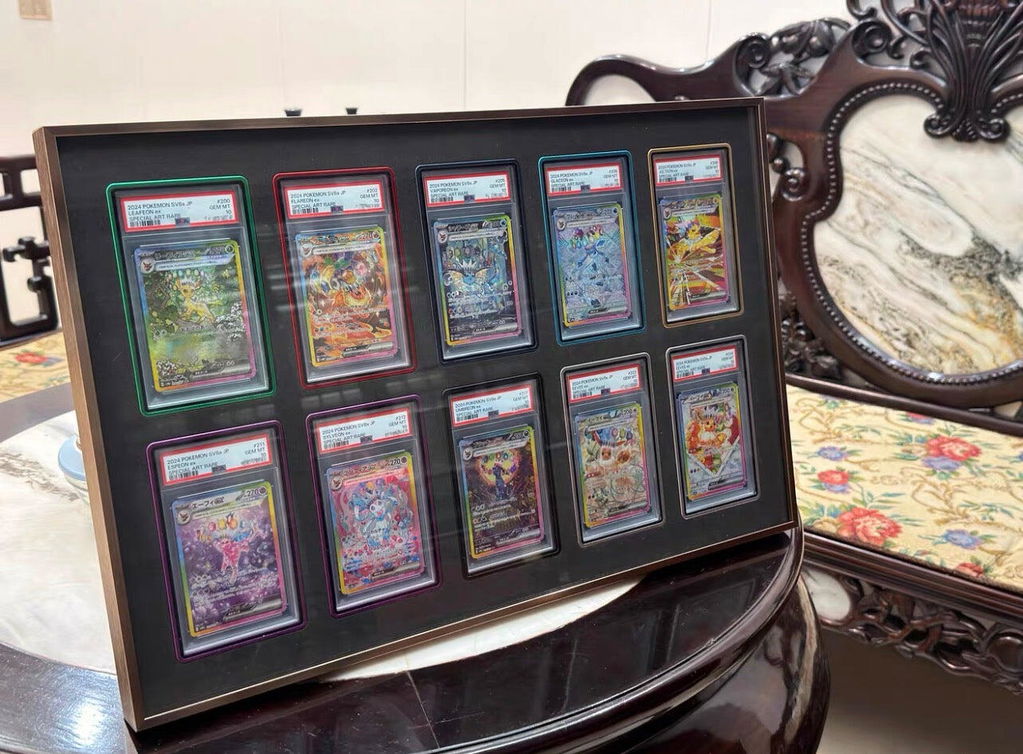
- SLABBED™ Studio. Explore the GameVault™ collection of aluminium video game displays alongside trading card display collections.

0 comments